Tag Archives: Mirage 2700

Wardley’s Sailor’s 2025 cruise to the Kyles of Bute

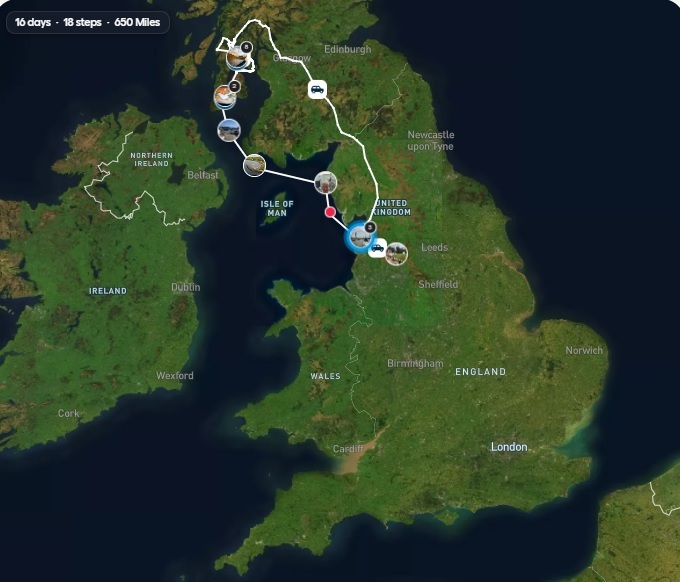
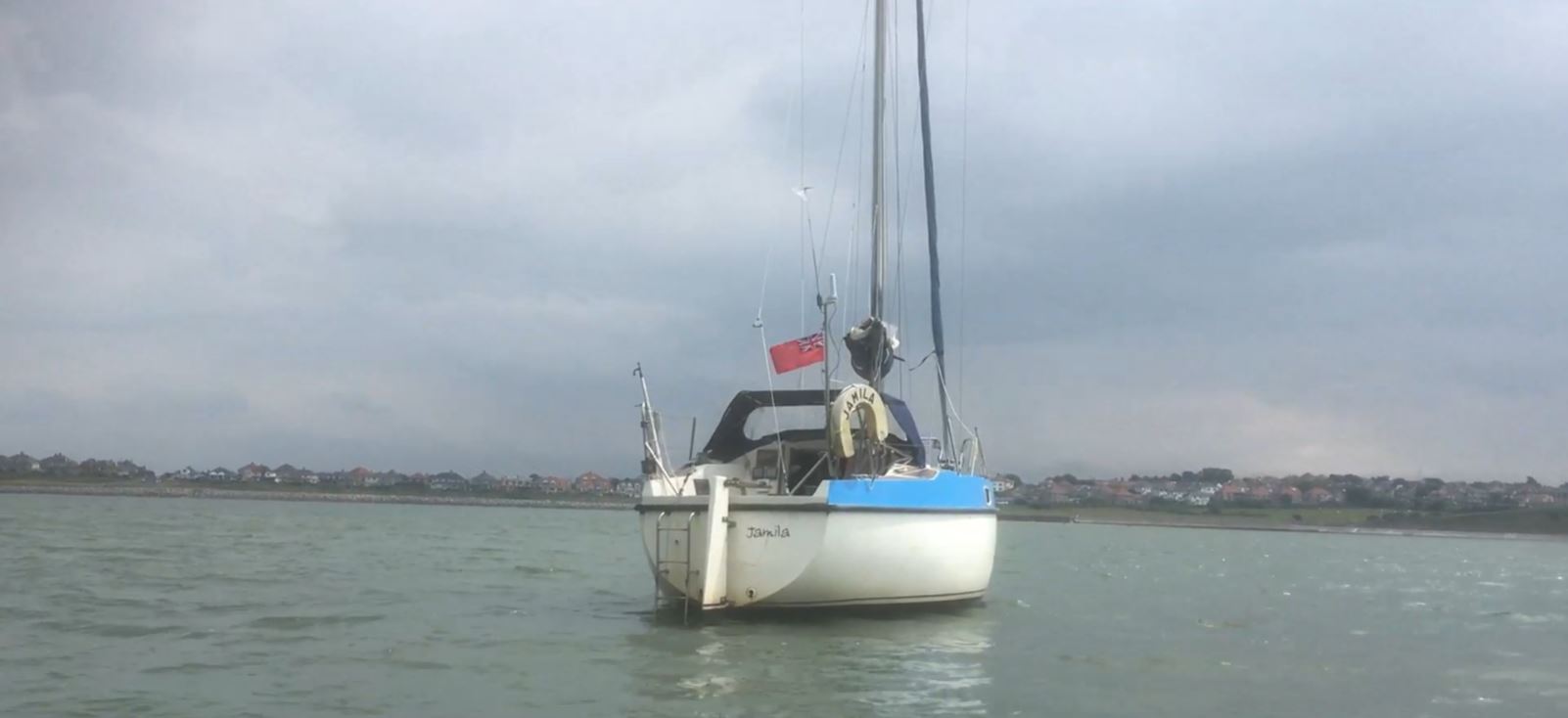
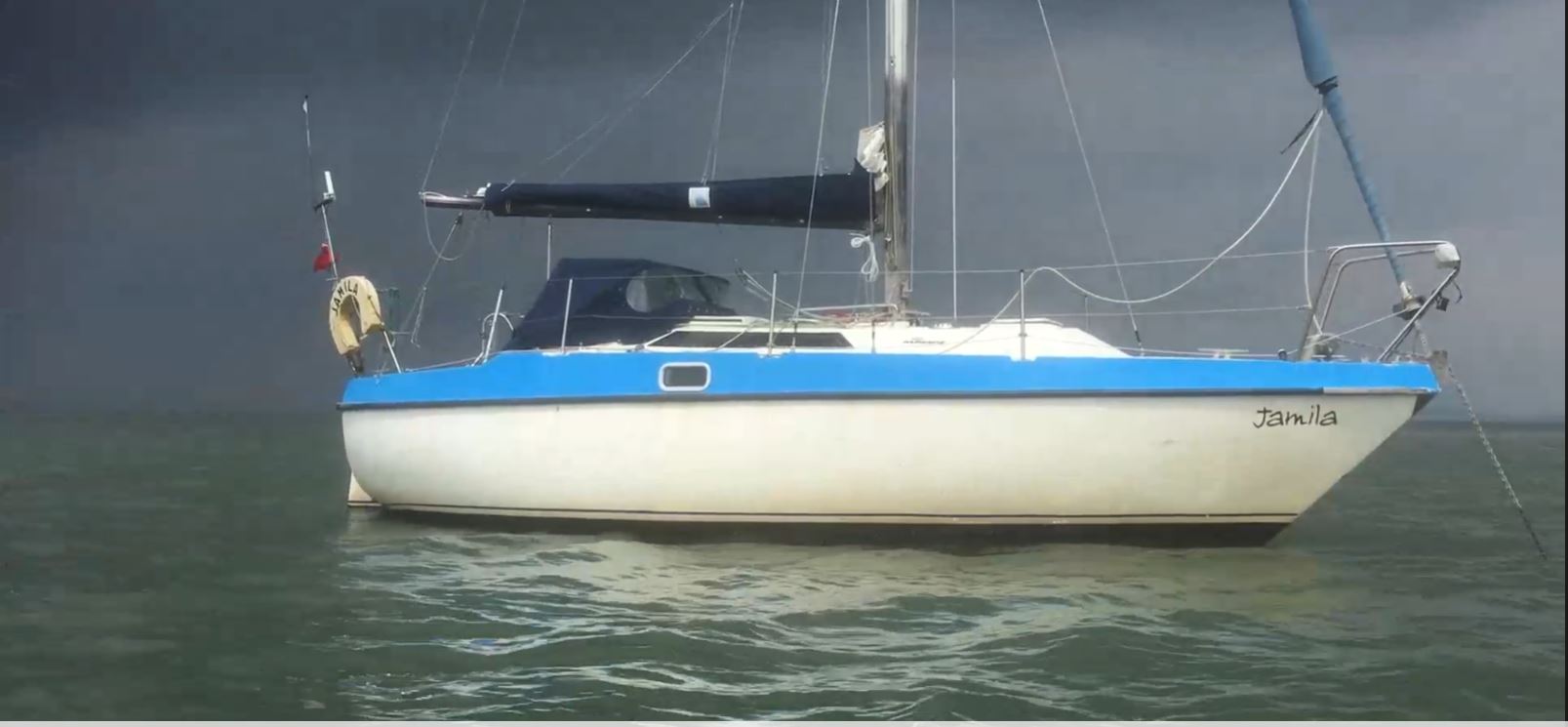
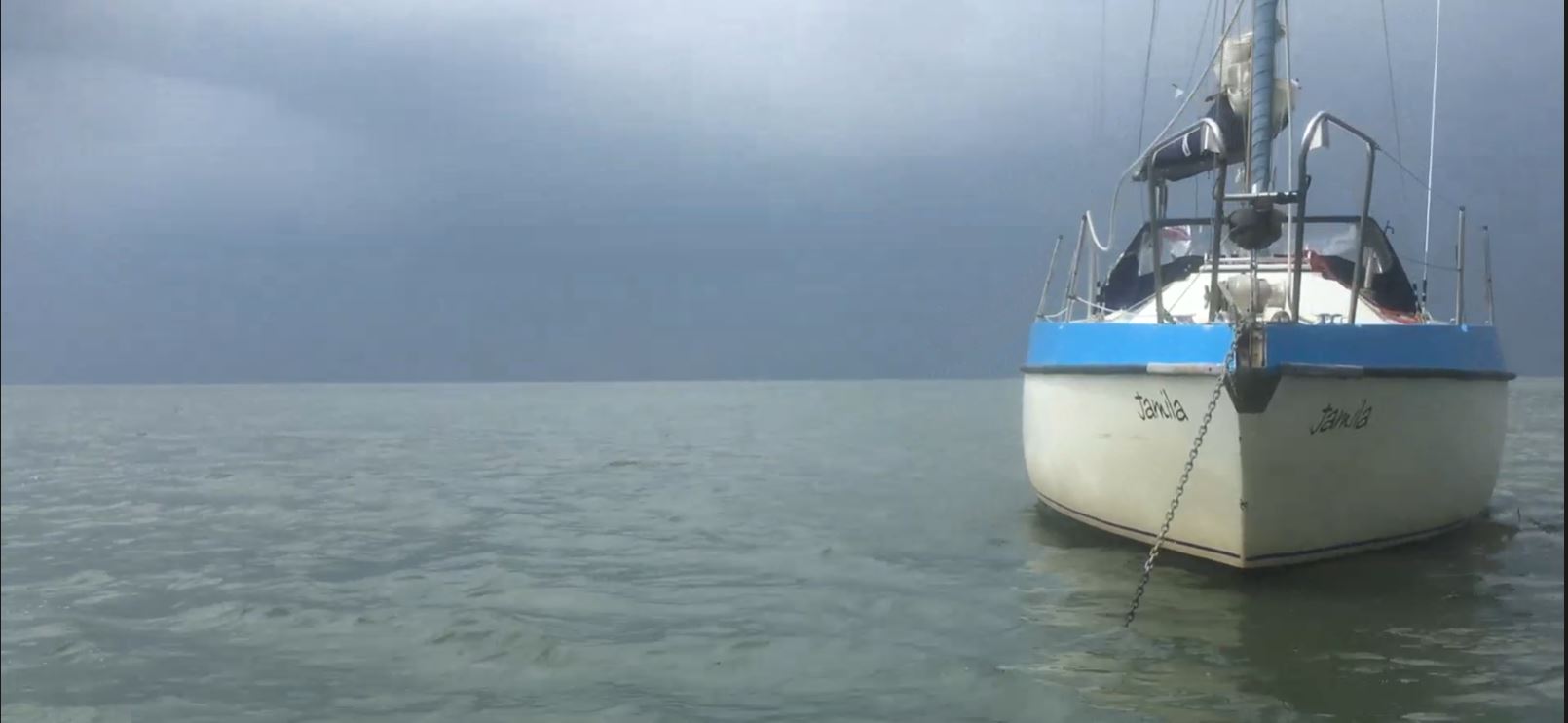
Jamila’s summer cruise took us across the Irish Sea, with the wind pushing north toward Scotland. I hadn’t sailed those waters in years, and knowing that two weeks wouldn’t be enough for a truly relaxed trip, I chose to go slow. The plan was to find a mooring at the end of the holiday and return in September to sail her home.

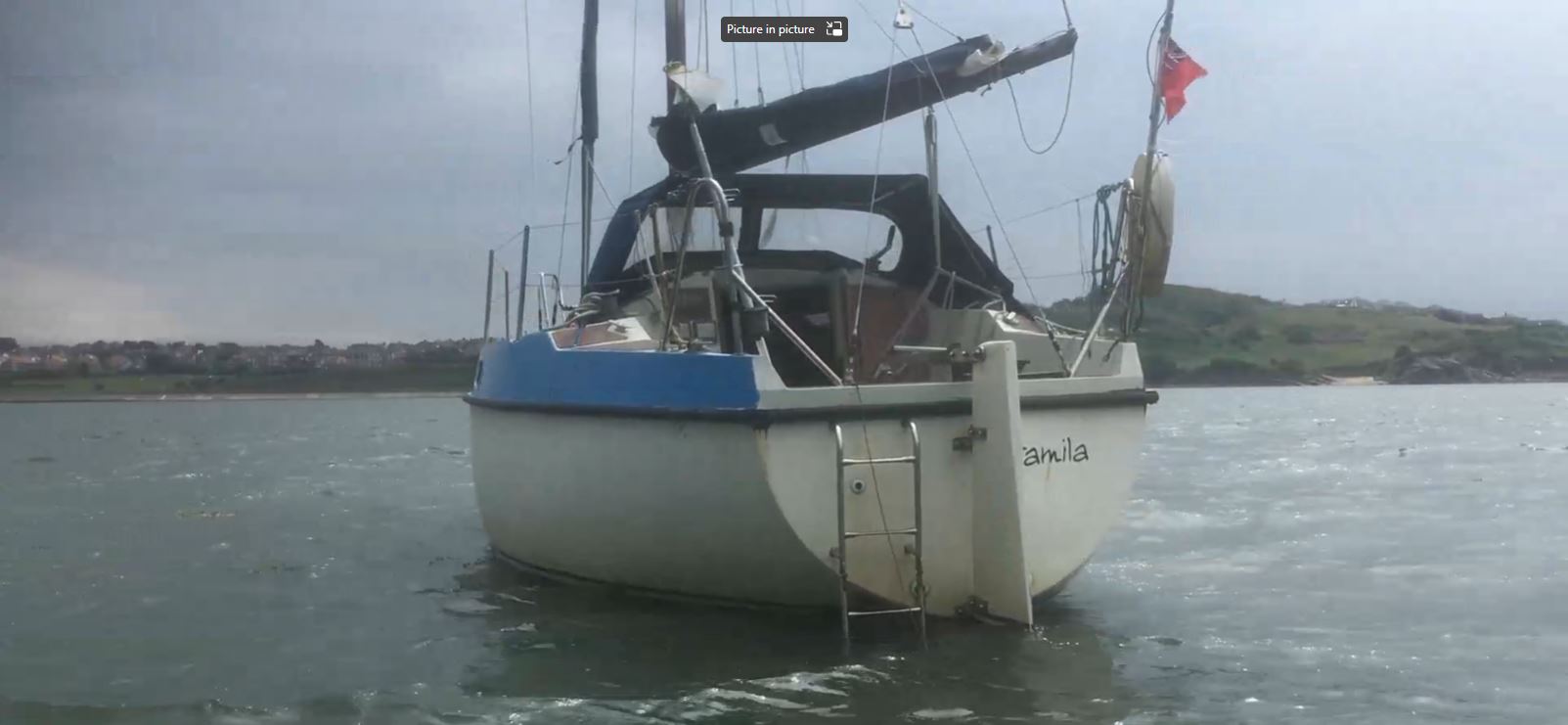
Jamila getting ready

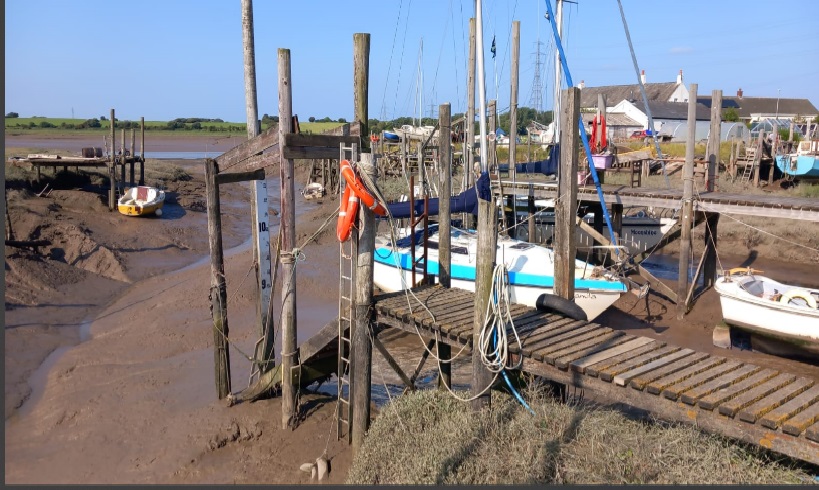
Loading all the supplies onto the boat was a considerable task. I had kit, tools, heating fuel, food, drinks, medical supplies, entertainment, and plenty of diesel. As always, there were items I completely forgot or, even more foolishly, things I had thought of and prepared but had left behind. I finally said farewell and pushed off shortly before an astronomically low spring tide, allowing some leeway to free the keel if I got stuck leaving the creek..

The journey was a lengthy motor sail along the beautiful Cumbrian coast, where I stayed close to the shore to fully appreciate my surroundings. I loved the experience, enjoying the views of serene bays, hidden beaches, and charming coastal towns that dotted the landscape. The wind was almost nonexistent, with only gentle cat’s-paws shimmering on the surface of the sea coming from the east. This eased any anxieties I had about anchoring in exposed waters, a necessity that would inevitably arise as the daylight and my energy began to fade. As night fell, I continued sailing for a while, spending a good hour perched on the bow and scanning the darkening waters for the telltale buoys of lobster pots. The distant sparkle of lights from the seaside villages twinkled like stars against the shore.
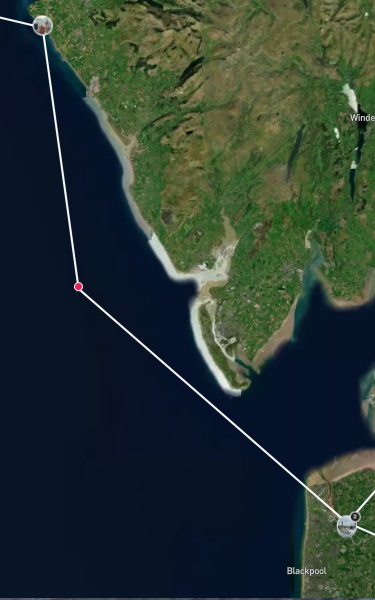
A sunrise start, Port Logan about a mile behind.

I anchored in the bay of St Bees, and it caught on the first try, holding steady all night. The night was calm and beautiful, and I slept soundly. At 6 a.m., I woke to a quiet scene with little happening around the beach. Thirty years earlier, I had arrived one morning and set off on Wainwright’s Coast to Coast walk.

I left St. Bees and headed northwest, passing the Isle of Man on my left and Luce Bay on my right. Before long, the Mull of Galloway appeared on the horizon. With a favourable tide, my boat, Jamila, surged ahead, at times reaching speeds of 8 knots toward the looming cliffs, only to slow to 2 knots due to back eddies. About an hour later, while continuing along the Scottish coast.

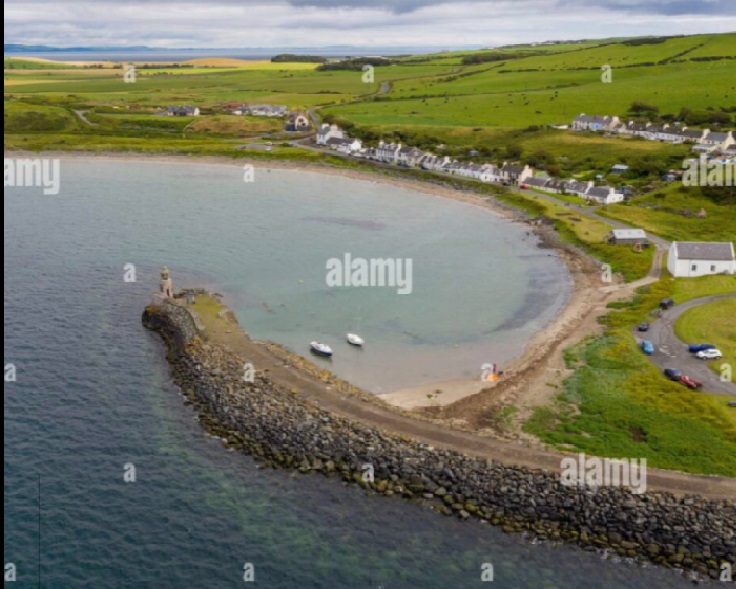
An hour before dark, I arrived at Port Logan Bay. It was a wide bay with white sands, a welcoming spot that provided good shelter from the easterly wind. Eventually, I found the perfect place to drop anchor.
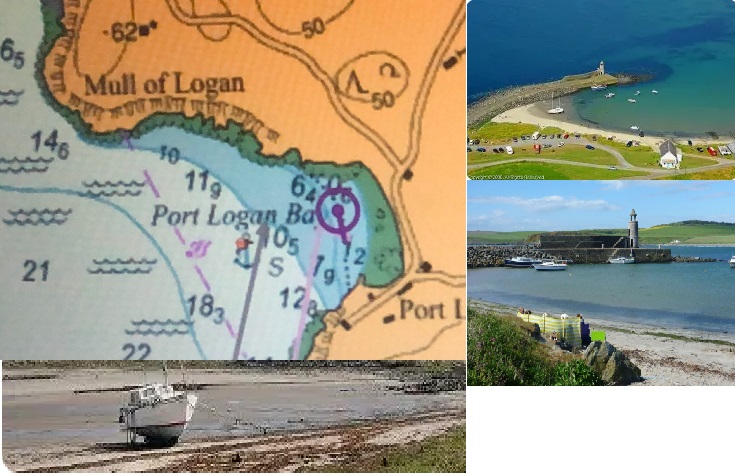
The perfect spot was close inshore, where I could immerse myself in the vibrant scene unfolding before me. The ‘getting a bit shallow’ at low tide wasn’t a worry as there was little swell, and what wind there was came off the land. My two bilge keels and their bolts would get an easy time!

Small boats bobbed gently on the shimmering water, while colourful canoes and lively inflatables wove in and out among them. Fathers and sons, boyfriends and girlfriends, laughter and chatter filled the air as young couples shared tender moments, capturing memories that would linger in their hearts long after the day ended. The sun sparkled on the water’s surface, adding a magical glow to the atmosphere, making each interaction feel truly special.
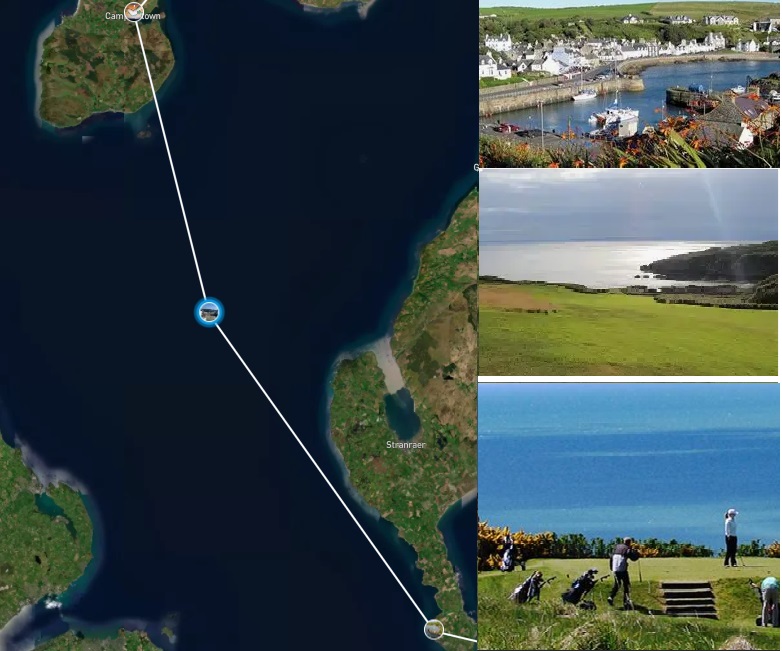
The next leg of the journey was up the North Channel as far as Campbeltown, which is tucked in behind the Mull of Kintyre. A bit of history: during World War II, the North Channel served as the final stage for crucial convoys travelling from the United States, and many sailors felt a palpable sense of elation after surviving the crossing. For Jamila, it was a calm departure from Port Logan. However, as I passed Port Patrick, the wind picked up, and by the time I entered the Firth of Clyde, conditions had changed.
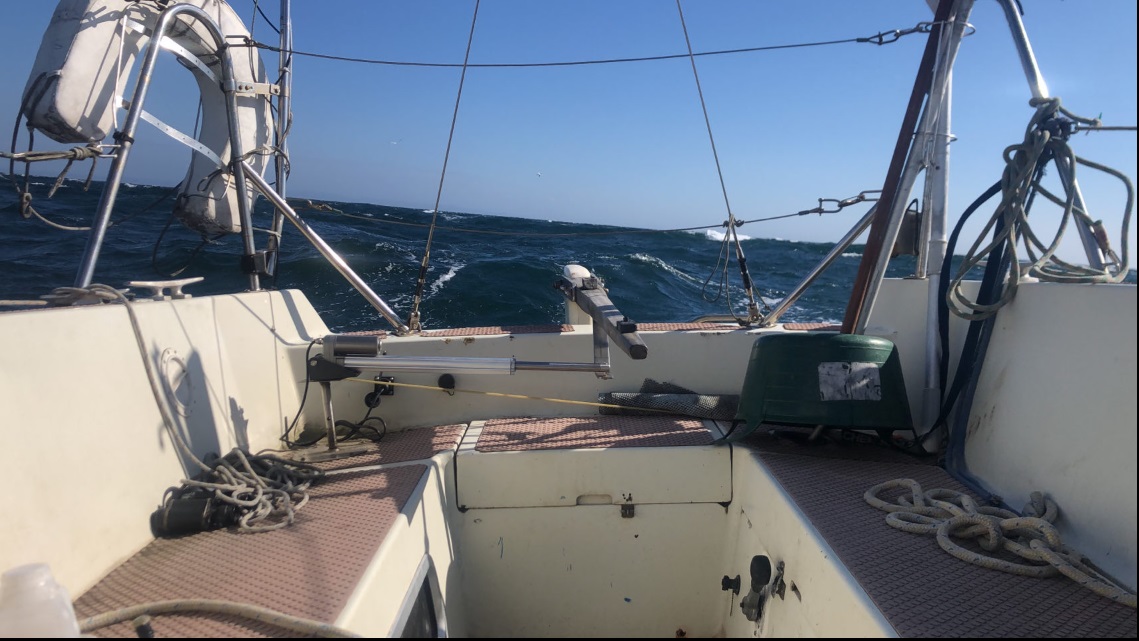
This was the first part of the trip to experience strong winds. Hitherto, the two preceding passages were in light winds, motor sailing to maintain sensible arrival times.
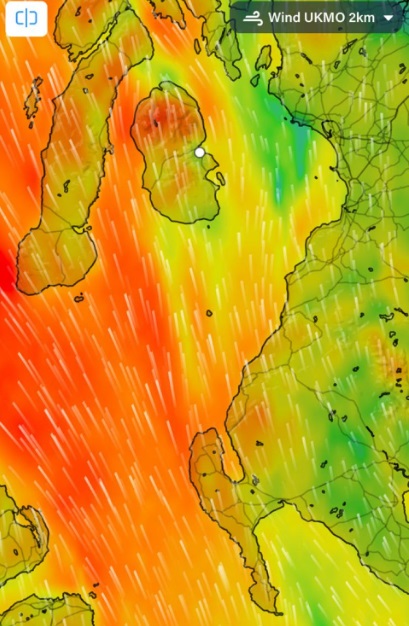
Strong southerly winds, two deep reefs in the mainsail, and enough jib to balance things out.
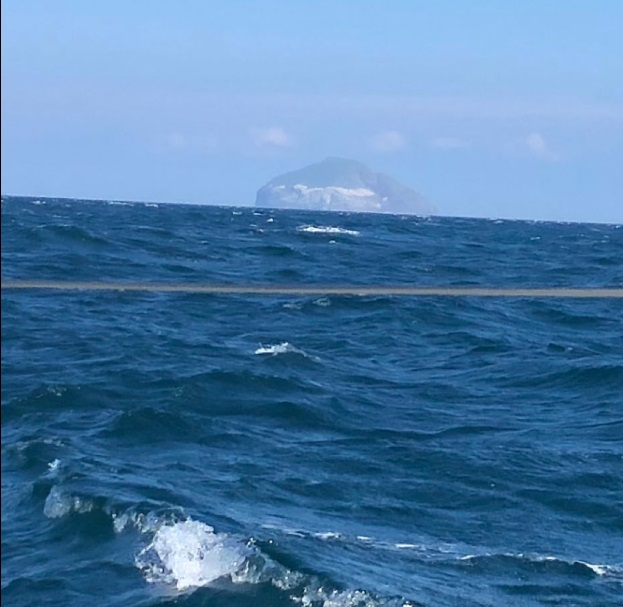
One of the greatest delights of this passage was the breathtaking view of Ailsa Craig, a striking rocky island that majestically guards the entrance to the Firth of Clyde. This solitary island, adorned with a lush canopy of vibrant trees, evokes an aura more reminiscent of a tropical paradise than its Scottish surroundings. Its rugged cliffs rise dramatically from the dark blue waters, suggesting the whispers of hidden treasures buried somewhere within its mysterious embrace. One can’t help but imagine that this enchanting island holds countless secrets waiting to be discovered.

Campbeltown

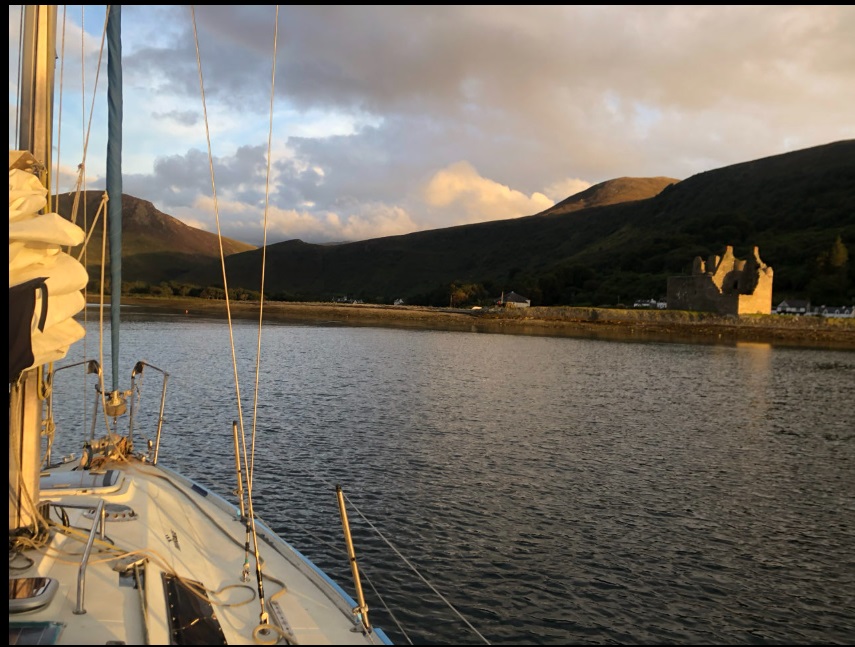
After an excessively windy sail down the east side of Kintyre, I was relieved to find myself in the sheltered waters near the large island that guards the entrance. I managed to reach someone on the VHF radio and located the first suitable finger pontoon, where I tied up with the help of another sailor. The sunny blue sky, which had been quite windy, changed overnight. In the morning, Campbeltown appeared gloomy, leaving me feeling down and reluctant to do anything—an anticlimactic moment. However, my spirits lifted when the sun came out later in the day. I was able to buy twenty litres of 30/70 diesel and some other supplies before leaving Campbeltown for a relatively short passage along the west side of Arran to Lochranza.

I enjoyed a remarkable sailing journey down from Campbeltown. Shortly after departing the marina, I hoisted my creamy white sails and swiftly navigated past the imposing island that stands guard at the entrance. The wind, a robust F4/F5 blowing from the southwest, propelled me forward with enthusiasm. As I set my course northward, with the rugged Kintyre peninsula to my port side and the picturesque Isle of Arran to starboard, I found myself with four hours of uninterrupted sailing. This was the perfect opportunity to delve into the settings of my new Tiller Pilot and juxtapose its performance with my less-than-reliable in heavy weather, Simrad autopilot. The results of my comparisons were quite intriguing. I discovered that the Pelagic Tiller Pilot outperforms the Simrad when a firmer hand is required to maintain course; translate: it works whenever. However, the Simrad truly shines when it comes to making lighter adjustments; it appears to have an inherent ability to recognise cyclical movements in the wind and sea. This means it understands when only a gentle nudge is needed to keep the vessel on track, ensuring a smoother, more comfortable ride.
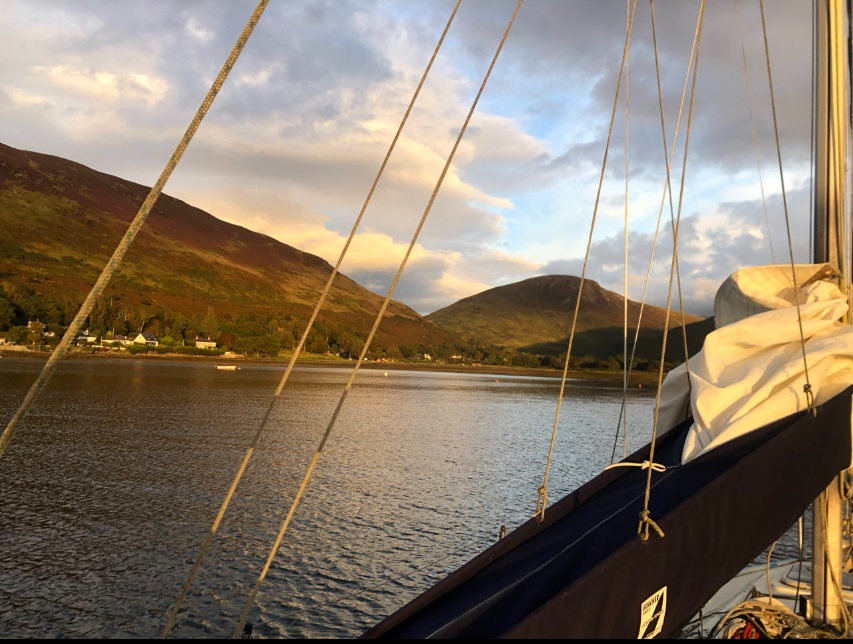
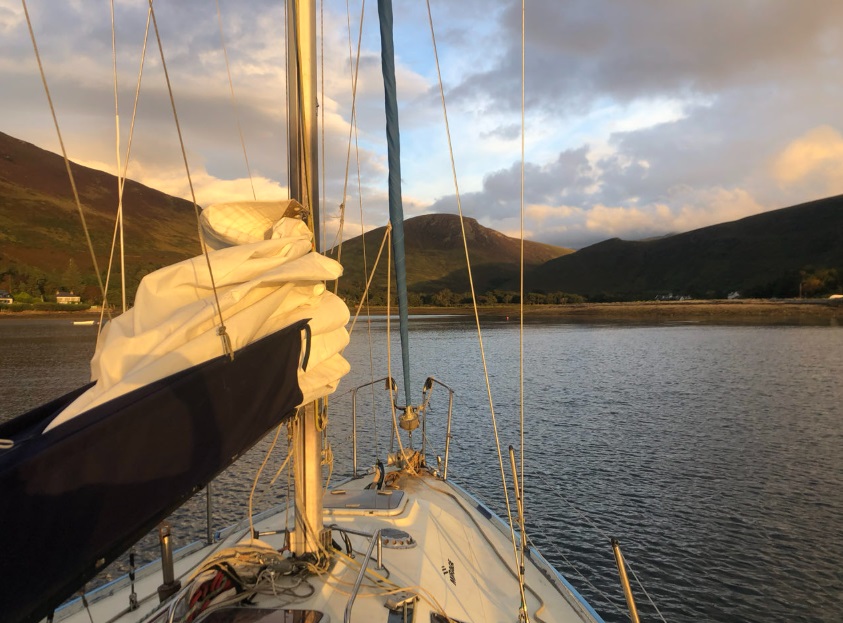
I went ashore and embarked on the scenic Cock of Arran route, which offers stunning views of the coastline. Along my journey, I came across a remarkable geological landmark that holds great historical significance. Nearly 300 years ago, the Scottish geologist James Hutton conducted groundbreaking research here, identifying unconformities in the rock layers that revealed gaps in the geological record. His meticulous observations and analyses led him to propose that the Earth is not merely thousands of years old, as commonly believed based on biblical interpretations, but rather billions of years old. This revolutionary idea challenged the prevailing notions of his time and laid the foundation for modern geology, marking a pivotal moment in our understanding of the planet’s history.
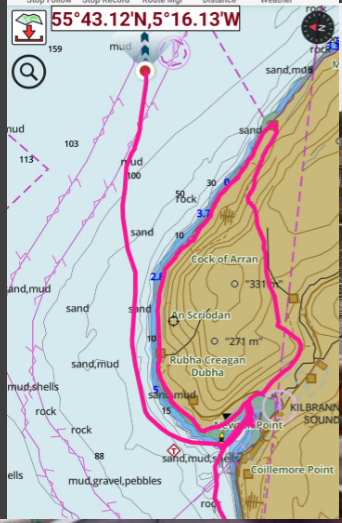
The above image shows my comings and goings, my anchorage and my walk around the ancient rock formations. I came back over the hill, which was extremely challenging, very steep, with thick heather.
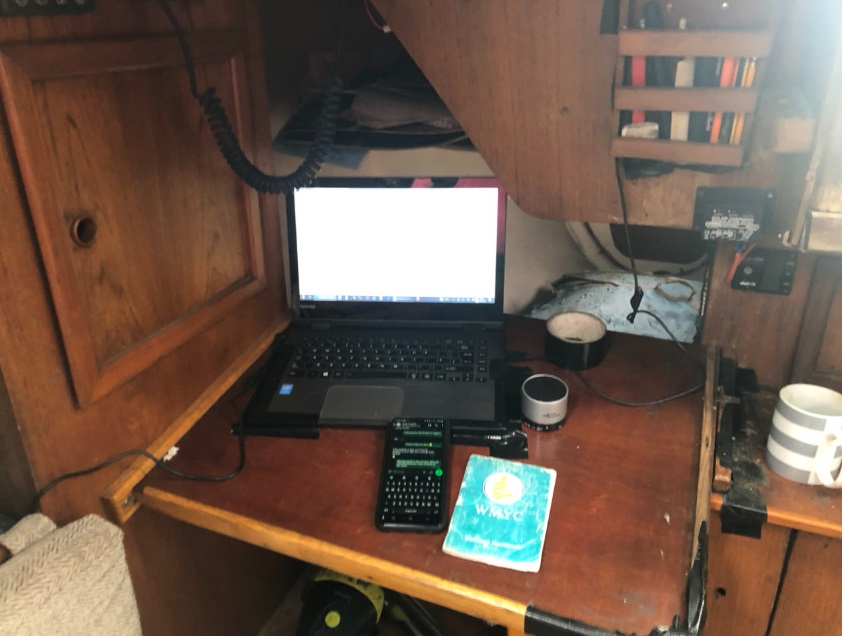
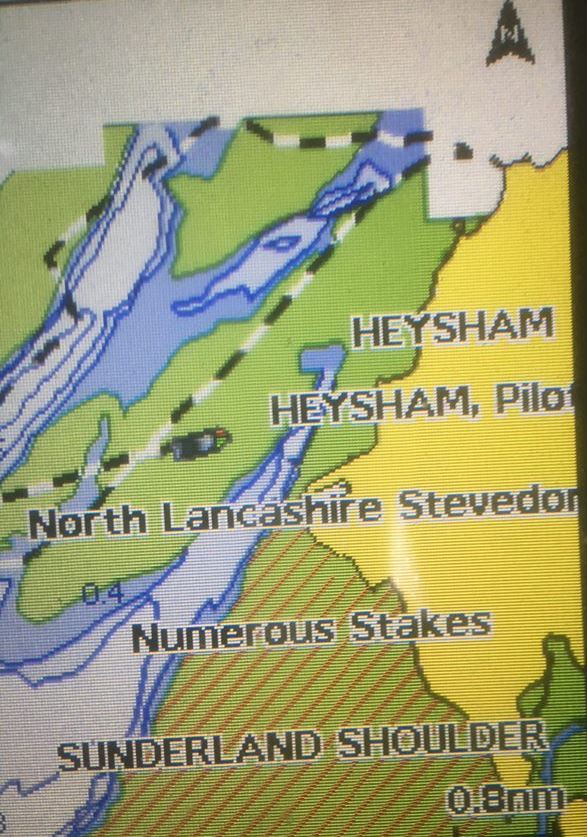
Jamila has an eclectic mix of three chartplotters, eliminating the need for paper charts and traditional RYA coastal skipper navigation skills. The first is a Windows laptop that runs a raster plotter, equipped with all the Admiralty charts for Great Britain. The second is a modern Android smartphone that features vector charts for the Irish Sea and the west coast of Scotland. Additionally, there is an older Garmin plotter from 2012, which is out of sight. All three chartplotters provide accurate positioning within ten meters. Ironically, the software and processors used in billion-dollar satellites orbiting in space are from an older generation.

Rothesay, Kyles of Bute
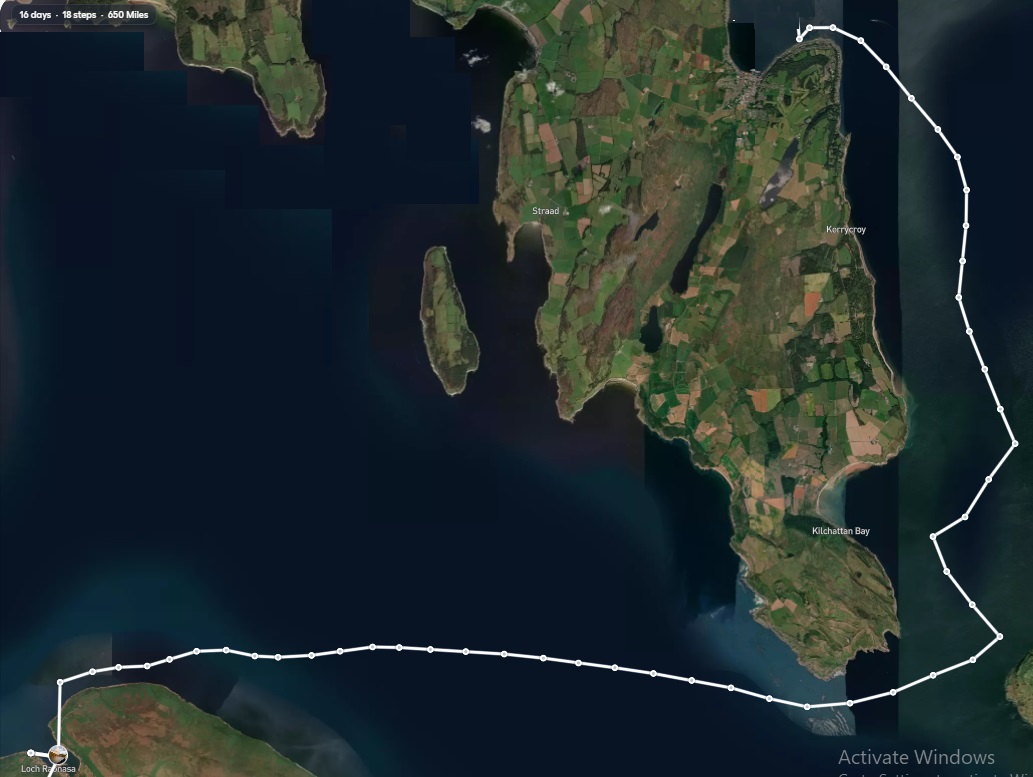
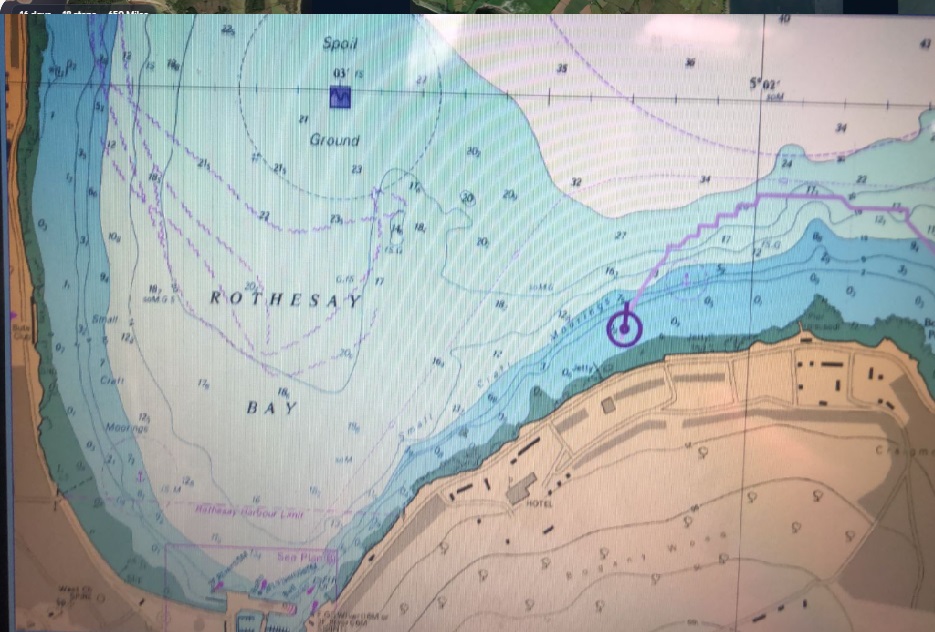
I am now sailing in awe-inspiring scenery. The weather has been favourable, allowing for a broad reach across the head of the Isle of Arran, followed by four tacks—a couple to starboard and then a couple to port—into Rothesay Bay.
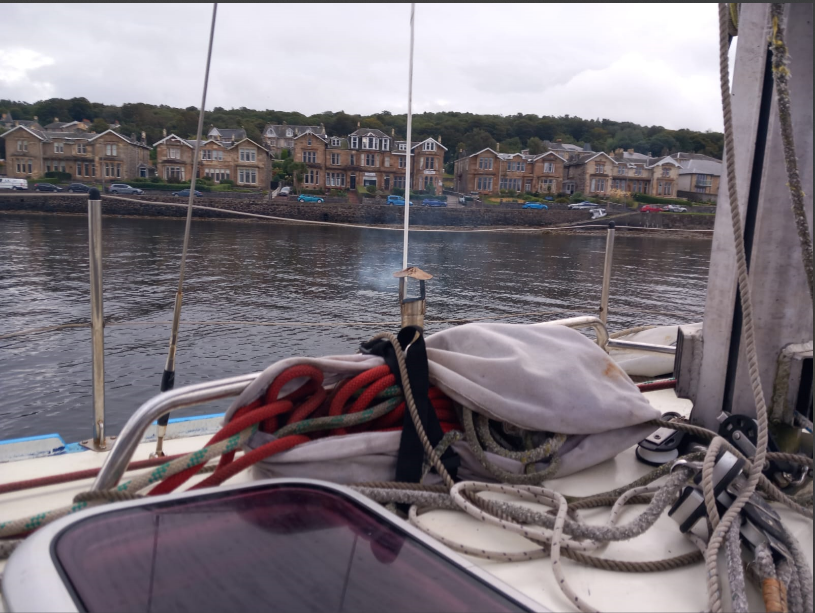
There are many beautifully solid stone houses along the seafront, built by successful Glaswegians during the heyday of the world’s first industrial revolution.

To be continued…
Sailors are best served Warm and Dry.

I used to be one of the first sailors up in the morning. At the crack of dawn, I would have been there exchanging banter with fellow sailors across the anchorage in Piel harbour, shivering, clutching a cup of steaming hot tea as the sun climbed over the local hills.

Recently, things have changed. Now I’m the last club member to awake. And when I do, it is with a feeling of extreme cosiness leading to yet another ten minutes in the bunk. Often, dreams are the most colourful and memorable at that time of the morning when all is warm and well.

What has happened, you might ask? Well, the answer is a recently fitted charcoal stove running silently through the night, keeping the boat warm and dry.

In fact, it is at its best on those miserable rainy mornings when cold, damp condensation is the norm. With a stove burning low in your hull, it is like having central heating in your boat.

Here’s the story in photographs –

Proud owner of a new BENGCO. Thanks, Darren G., for your invaluable help in sourcing it.
This is where the charcoal goes. There’s not really much room. The original seal has broken. However, aluminium foil serves well as a substitute.
How to light: Remove all ash from the previous burn (important). Fill with charcoal. Take off the bottom unit. Physically remove the wick. Soak it in methylated spirit (keeping mine in a marmite pot works well). Slot back in. Open vent. Light. Refit the bottom unit. Wait till you see a strong orange glow. Close the vent to get your desired heat setting.
My not-so-professional design work.  It must be fitted as low as possible so that you are always sucking in the coldest and dampest air, which in turn leads to a long flue pipe that is better for warming the boat.
It is still at the back of an envelope stage. The flash ‘H’ cap is still to be born.
Wardley’s sailor, Billy Whiz, lends a helping hand.
Where to put it? Blend it in with the window. I can increase the window length to cover the hole if required.
Ordered stainless steel from the internet. Toying with new material in garage.

The stove didn’t come with a pipe or a through deck flange. I have to fabricate it myself. Here, I’m offering up the parts. You must get the angle right!

The new flange is now welded up. I must decide how long the pipe should protrude and what is safe and aesthetically pleasing.

What is the right length? Here, I decided to defer welding the pipe until after installation and resolve to be careful not to scorch the deck!
The day arrived to fit into the boat. Cutting and chopping into the original fixtures and fittings hurts! But I want a boat that works for me and, as such, cannot be obsessed with the possible resale value.
Finally fitted, but not yet welded fully.
View outside. It is not yet welded fully, and there is no rain cap yet.
View from inside. Now, the pipe is welded to the flange, trimmed off, and bolted into the deck. The stove is ready to try out now.
It’s going now. It’s hard to see it visually working since it is so well contained in its stainless steel box. But believe me, there is some heat coming out of it! You must be careful going to the heads, but there is quite enough room.
Here, the Bengo stove is keeping a brew warm, and works a treat!  A full load of charcoal and set at max is required to dry out a really wet boat. The stove gets hot and glows in the dark, burning for about three hours. Afterwards, top it up and dial down the heat to a minimum, and it will run through the night, keeping the boat dry and keeping the chill out of the air.
View from the jetty. Eight bolts. Plenty of sealant. The flange works well; little heat gets to the fibreglass, even at full heat.
The design of the Bengco is such that it can be safely used out-at-sea within reason. Hot ashes can’t fall out as all are contained in a precision-made stainless steel box.

NEW March 2022: A visit to Heysham Village

One of the pretty, and dare I say, cute places to visit around the UK coast, is Heysham Village. It is situated right at the far southern tip of the Morecambe Promenade. The broad walk of the promenade, roughly the width of a three-lane highway, runs a massive six miles before petering out at this little village location. There isn’t really much to the ancient village, which dates from the Roman time. It is mainly based around a single main road bordered with an aesthetically pleasing mixture of stone cottages and more substantial villa type houses, with a lovely pub that has encroached onto its adjoining stable building, an ancient church with magnificent views over Morecambe Bay, and where the single road eventually and rather pleasingly becomes a slipway into the sea, or on to the sand, depending on which state of the tide.

Click of any of these following images to see full size: –

View towards the Village and Trobshore Point to the right.

Late August 2018 sail to Piel Island

A flurry of texts were sent out mid week. The usual sailors were up for an over night cruise to Piel. The weather was generally dull and uninspiring, where the wind didn’t blow hard enough to sail until the final hours on Sunday afternoon. A guest sailor from Leigh & Lowton Sailing Club crewed on Jamila. A good weekend was had all by all.

Isle of Man – Wardleys to Derbyhaven – May 2018

In early April an assortment of Wardleys sailors crowded around a small map on the club house notice board and chattered excitedly amongst themselves. The map showed a large bay facing  the north-east with a thin strip of land separating it from yet another bay of equal size on the opposite side.  To the east of these conjoined bays was a thin strip of land, containing a golf-course, jutting out into  the Irish sea. Tom, one of the club’s experienced sea-sailors, clutching a large mug of tea, suggested that this would be the ideal place for a ‘Wardleys flotilla’ to rendezvous, after setting out from the tidal channels of Morecambe Bay. Five Wardleys’ skippers declared they were up for the challenge!

Morecambe Bay to the Isle of Man. A very long day 12 hour sail.

Any anchorage had to be well sheltered from the prevailing south-westerlies, and not-least be somewhere on IOM,  so a quick straw vote was taken and ‘DERBY HAVEN’ bay it was to be.

Derby Heven Bay in the south east of the Isle of Man. Five intrepid Wardley’s sailor on four boats sailed into this bay in the month of May 2018.

Well, as we all know, great plans are easier to make than to realize.  Beers in the club house, a good bit of banter alloyed with collective   desire for adventure can easily give birth to plans, but somewhere between making and executing plans things can happen.  But hey-ho,  a month later two Wardleys boats and three members found themselves sailing with the ebb down the river Wyre,  stocked up with provisions, diesel, and sails aloft.

Simon was on ‘Jamila’ and Darren and Phil on ‘Rivendell’.  The plan was to complete the outward bound cruise in two legs.  First to head over to Piel — not that far in the scheme of things — get an early dinner,  drink a pint or two, and be sleeping by ten o’clock so ready for a half-past three morning departure.

The other skippers in the planned cruise, Nick, Malcolm and Tom, all hoped break their shackles and rendezvous later on in the week.

For ‘Rivendell’ and ‘Jamila’, the first leg went pretty much according to plan. The two Wardleys  boats arrived at Piel in unadulterated sunshine. The scene was the classic ‘summer holiday’. Crowds of tourists, sailors and  campers milled around the Ship Inn. Children were crabbing in the shallows.

Crabbing at Piel

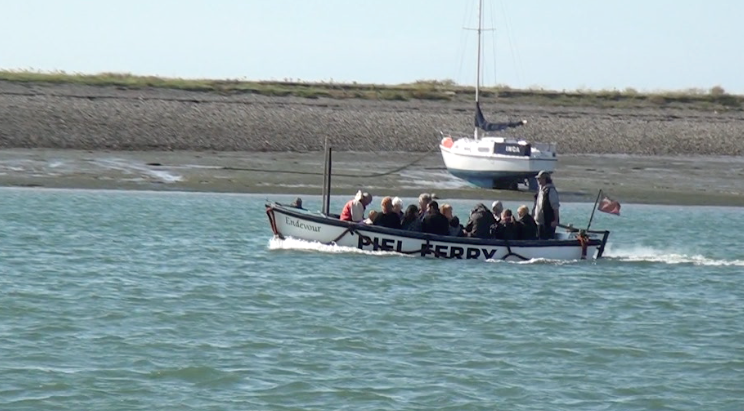
The Piel ferry was at the slipway full of punters with happy smiles, climbing on and off over the gunwales.  Up on the island by the Ship Inn the sounds of joking and laughter,  mothers calling children,  and dogs barking, all came floating down over the water as far as the two Wardley’s boats now sat at anchor.

Piel ferry full of punters

The three sailors decided to wait an hour for the hustle and bustle to clear, then launch the dinghy,  go ashore, dine quietly in the Ship, then retire early in preparation for the early start. In fact, all three sailor fell asleep for a short while!

Unadulterated sunshine at Piel Island

The three sailors packed tightly into Rivendell’s small dinghy to go ashore. As they rowed towards the long pier they could just and so hear, over the rhythmic creaky clattering of the oars, the faint sound of the  ‘put, put, put’ sound from the last Piel Ferry heading into the distance depositing the last of the Island visitors on the main land.

A disappointment was awaiting the three sailors!

The walk up the slipway to the Ship Inn was eerily quiet. The landlord’s 4×4, wasn’t in its usual position adjacent to the kitchen, and looking in through the windows, chairs could be seen upside down on every table. The pub was shut! The transition from ‘busy’ to ‘dead’ had happened so quickly. Well, it was Sunday evening, the landlord had some urgent business to conclude in Barrow, and had to leave quick whilst the tidal path across the sand was passable

A rather forlorn walk around the island ensued.  The evening was idyllic, the views over Morecambe Bay were magnificent but there was a sense of loss and disappointment in the air.

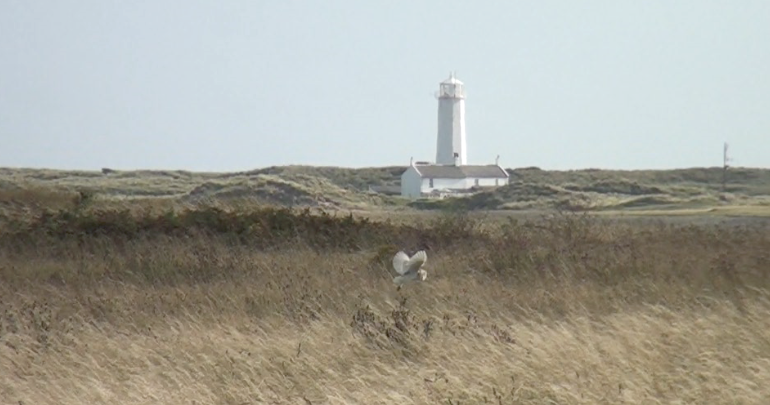
Walk around the island. The sailor were hungry Only the owl was dining that night on the island.

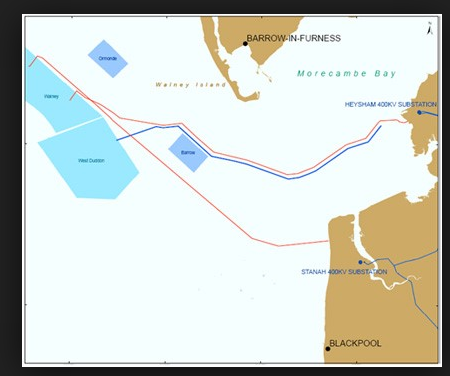
The Wardleys sailors retired back to the boats and set about choosing a route over to ‘Derbyhaven Bay’. After some discussion, a decision was taken on which way to go around the huge wind farm just off Walney Island. One route looked marginally better for the tides, the other route looked better for the winds. A priority was set on sailing and so they selected the southern-route and maybe make a small saving in diesel along the way.

The march of time never stops, dates, deadlines and everything else in life sooner-or-later comes along whether you want it or not. Morning wake-up alarms rang on both boats at half-past three. Luckily, ‘Rivendell’ crew member Phil,  a good solid early riser, was on hand to ensured that his skipper ‘Darren’, who’s solidity here is highly questionable, was up and ready by four o’clock, the allotted time for departure. Simon on ‘Jamila’ also made it out of his bunk, and both boats quietly slipped anchor as scheduled. The sun was still more than six degrees below the horizon, just behind the seaside resort of Morecambe, thus the sky was still a dark shade of black. An early morning dog walker, looking out to sea, would have witnessed the dimly lit sails of two vessels quietly tacking down the Barrow channel out into nothingness.

The first part of the long road to IOM was easy,  the helmsman  maintains a steady path between the red and green channel lights until reaching the ‘Lighting Knoll’ buoy. This last is the main cardinal that marks the start of deep water ahead. During this first leg the sun, still hidden below the horizon,  entered the sub six degree sector and the sky started to lighten dramatically. The far-distant shore lights that could be seen all around started to  disappear one-by-one and were replaced by thin faint strips of coastline.  By the time the two boats arrived at the ‘Lightning Knoll’  buoy a magnificent sunrise over the Northwest coast of England took place. Now…, without doubt, there is no better place to witness this thrilling moment than out at sea.

Sun rise over Morecambe Bay. ‘Rivendell’ making way. Click image to see in full detail.

Over to the west and through the semi daylight gloom a forest of wind-generators started to appear. The first ‘wind-mills’ people see from the shore are just a small farm twenty to thirty strong, but behind those, are three much larger farms that reach-out deep into the Irish sea. Here there are hundreds of them!

The question on the mind of one of the Wardleys skippers was: “Do I go all the way around to the south,  or do I cut through the farm and set a heading direct for Derby Haven bay?” By now, the wind was blowing nicely on the beam, perfect for a fast reach all the way to the Isle of Man.  The question quickly became, “Should I?”

During this decision making process, the skipper of ‘Jamila’ was looking at the big arrow on his GPS. It was pointing confidently across the Irish Sea  towards Derby Haven bay some 50 miles distance.

[It was back in nineteen-seventy-eight that our Americans cousins launched the first of the thirty-three satellites  that give us this marvellous navigational aid — god bless Uncle Sam!]

Quite suddenly a corridor opened up in the grid type arrangement of generators and the said GPS arrow was pointing straight down the middle.  The corridor looked clearly defined as far as the eye could see, help by the closed-up elignment  of the towers on each flank.

Why not?

In an instant Jamila’s tiller was pushed hard to port, her sheets were slackened, her sails allowed to billow, and away she went diving directly into the vast mechanical forest.

Jamila changes course and dives into the forest of wind generators.

Phil on ‘Rivendell’ with first field of generators (closest to Walney) to starboard. The photo illustrates nicely now the towers line up in a grid pattern.

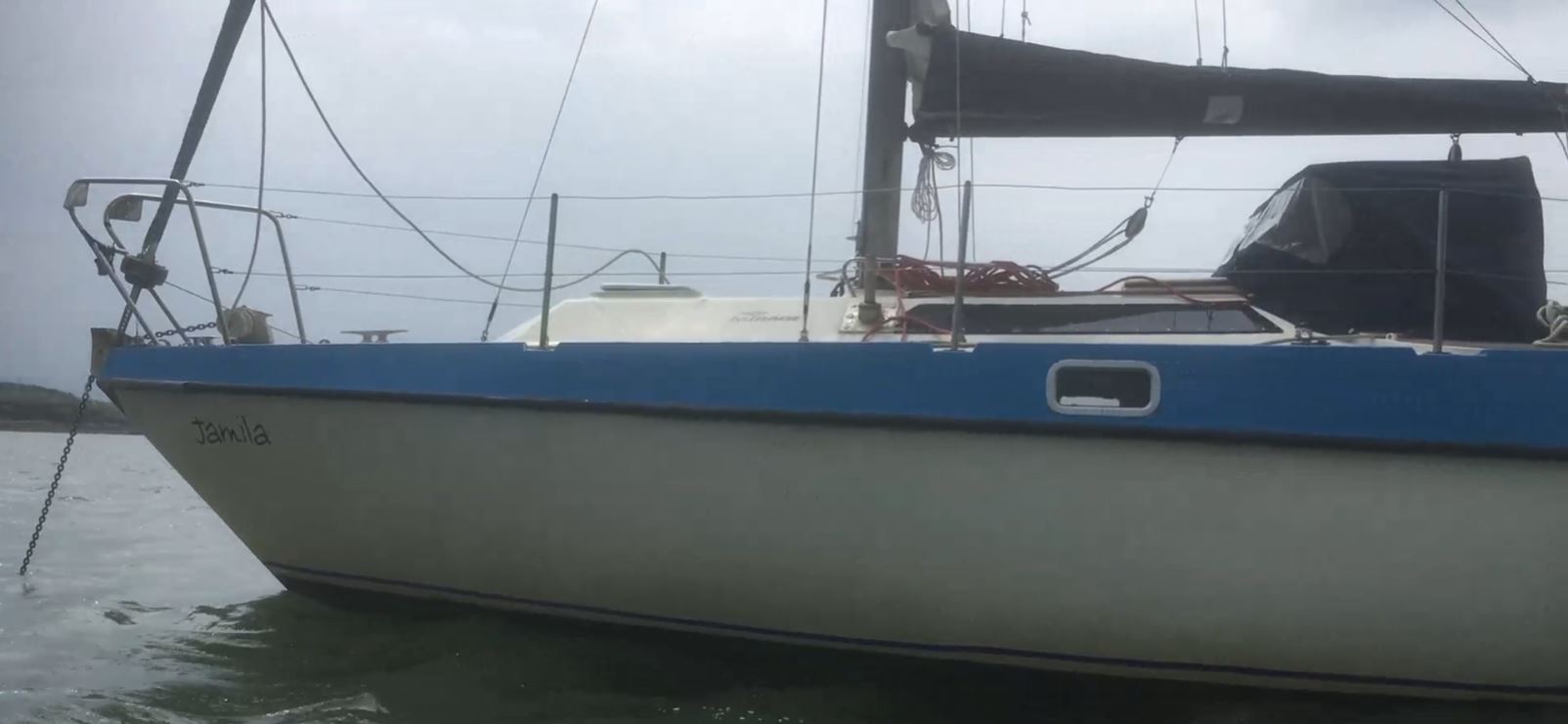
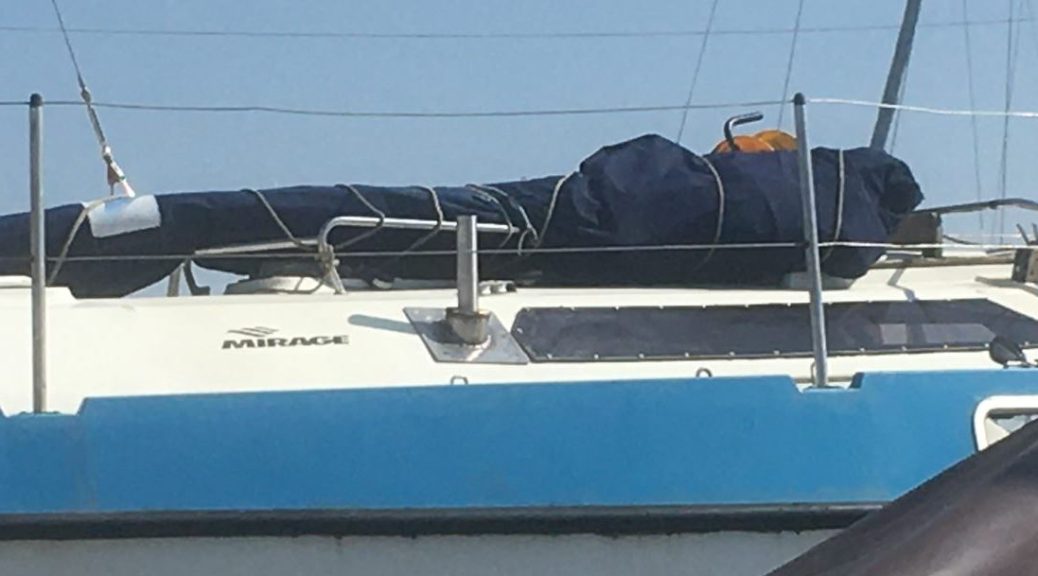
The skipper of ‘Rivendel’ decided to stick to the original plan and head for the GPS way-points that had been discussed the night before on Piel Island. This meant a couple more hours of arduous motor-sailing into the wind and tide in order to skirt the southern edge of the wind-farms.  This wasn’t really a problem though, for ‘Rivendell’ is a Mirage 2700  equipped with a powerful diesel, and with her big blue spray hood pulled up, she makes a comfortable motorboat when the conditions require. ‘Rivendel’s dividend was paid in FULL two or three hours later. By then she had passed the planned GPS way-point, she was well to the south of the wind farm, she was able to change course to west-north-west bringing the wind onto the beam thus providing the optimum angle of attack, but most importantly, the tide had turned in her favour. All the key parameters had come into alignment. Now, it was full speed ahead for Derbyhaven Bay.

But things got even better!

Suddenly ‘Rivendell’ wasn’t alone, but surrounded by dolphins. A whole pod of them for a period of thirty-minutes  headed in the same direction.  It is often said that this particular experience can stir and prick the emotions of the hardiest mariners, Daren and Phil can confirm this!

A dolphin off the starboard bow.

Further to the north ‘Jamila’ was struggling! Advancing beyond the the wind-farms seemed like a losing battle.  The south-westerly force-four winds didn’t really materialize as promised. For far too long she was surrounded by them and they just wouldn’t go away.  This was largely due to  plugging a flood tide still heading towards Morecambe Bay.  And in addition, it was all too easy to get complacent whilst relying on the tiller pilot. On more than one occasion the skipper set a course down a corridor of towers only to find, when emerging from the cabin after say doing a spot of chart-work,  a blooming great tower reaching high out of the sea,  well above the mast and sails, and only yards distance.

Along way up to get to the ground floor!

The bottom of the blade still high above Jamila’s mast top.

The hours passed by. Then three positive events came into conjunction. The tide turned, the wind increased, and Jamila had finally passed the last of the wind-farm generators. Until this point there was still two-thirds of the total distance to sail and four hours had passed by. The GPS was predicting a ETA of eleven o’clock in the evening. It was not a very nice thought, arriving in a strange location late at night in the pitch-black, dropping a hook and hoping for a good night’s sleep. Four more hours passed, during which time Jamila steadily creamed across the Irish Sea, the sky was blue, her white sails pressed hard, and the water around her turned a deeper blue with the odd white crest here and there as the wind steadily increased. Nothing much changed visually until you look behind and traced your eye back along Jamila’s foaming wake to where the wind-farm had been, for now it was but a thin strip of gleaming  pins just visible on the horizon.

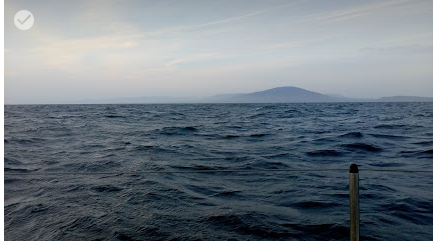
More time passed and still no sign of anything. Its often when you stop straining your eyes looking for something that the something in question comes into sight. Shrouded in mist that is often the case for the Isle of Man the land became visible. Amazing when the Skipper next looked at his GPS the ETA had reduced to seven o’clock in the evening. The combination of the increase in speed and an ebbing tide carrying the boat directly toward ‘Derbyhaven Bay’ had been astonishingly beneficial. The pubs might be still open!

Land appearing shrouded in mist

In the meantime Daren and Phil on ‘Rivendell’ were taking the more southerly route around the farms. With the wind more or less on the nose she had gunned past the wind-farms under engine and made much better time. By the time the favourable beam wind had arrived, she was more than an hour ahead, and had disappeared out of sight of ‘Jamila’.  In the end both boats arrived safely and dropped their anchors, still in bright daylight.

Derbyhaven Bay looking north west towards the aerodrome.

Derbyhaven Bay looking southwest towards Derbyhaven port.

As it happen, visits to pubs was far from what the Wardleys’ sailors really desired. What they all really really wanted was sleep and lots of it!

‘Rivendell’ and ‘Jamila’ with Ronaldsway aerodrome beyond. Taken from Langness golf club the following day

View of Derbyhaven from Langness.

The delights of Derbyhaven, and Castletown just beyond, would be checked-out in the morning.

As for the other Wardleys sailors who had been huddled around the club notice board back in April, Nick arrived a day or two later, Malcolm arrived a week later, and Tom’s dreams of a late May IOM adventure were spoilt by unexpected commitments.

There’s more to come soon: “The middle of the night gale in Derbyhaven Bay”