Spring Craning-In: A Day of High Suspense and Bacon Butties
Date: Saturday, 18th April
Location: Wardleys Yacht Club Creek
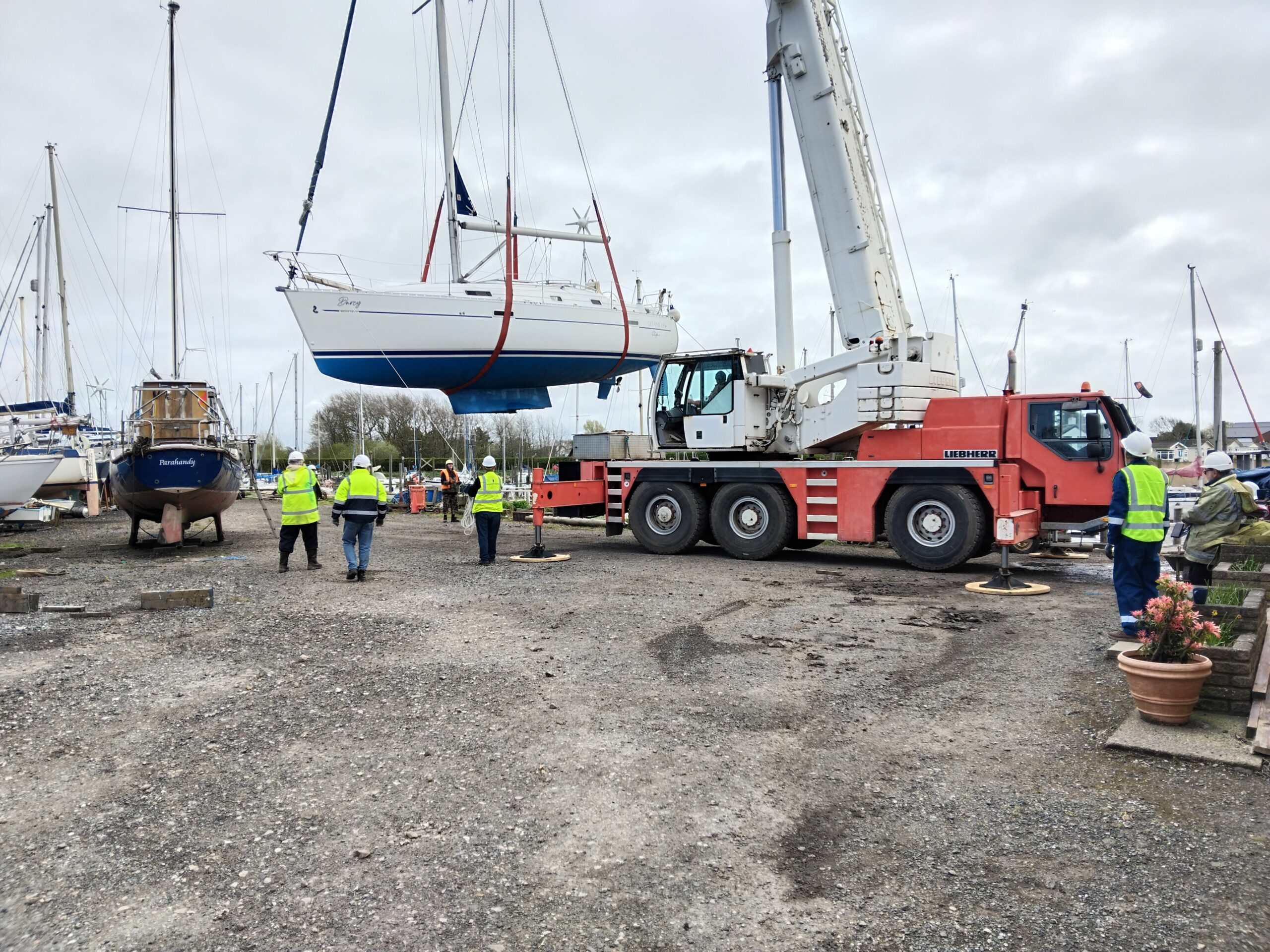
There is always a special kind of energy in the air on Craning-In day. After weeks of winter maintenance, the anticipation of getting the fleet back on the water culminated on Saturday, 18th April, and we are delighted to report it was a resounding success!
Preparation Meets Precision
Leading up to the big day, the instructions were clear, setting the stage for a safe and efficient operation. Members were asked to prepare 6-metre lines fore and aft, slacken handrails, secure all loose objects, and come equipped with hard hats, hi-vis vests, and cash in hand for the 07:30 crane arrival.
We are thrilled to report that the day went incredibly smoothly, largely thanks to every single yacht owner complying perfectly with these safety and preparation guidelines.
A Fantastic Turnout and Thrilling Lifts
The camaraderie on the day was exceptional. We had a brilliant turnout, which wonderfully included a few familiar faces we unfortunately haven’t seen down at the club as often lately. It was great to catch up on the yard as we all worked together.
When lifting commenced at 08:00, the spectacle was as thrilling as ever. There is always a moment of heart-in-mouth excitement seeing our beloved boats dangling seemingly by a thread before being gently and expertly lowered into the waters of the creek. The crane driver was an absolute professional and did a wonderful job navigating the heavy lifts. Most importantly, all boats were launched safely, and not a single member or vessel was harmed during the operation.
A Slight Hitch for the Heavy Machinery
While our boats made it through the morning unscathed, the same couldn’t quite be said for the mobile crane! After completing its duties, the crane suffered a gearbox problem as it attempted to drive away from the club. It ultimately had to return to our yard, where it has temporarily taken up residence while waiting for a replacement part to be shipped over from Germany. At least it picked a scenic spot to break down!
Refreshments and a Spacious Yard
With the fleet finally back in the water where they belong, the club grounds suddenly look remarkably spacious and ready for the summer season.
Of course, hoisting boats is hungry work. A massive shout-out and thank you goes to Barry and the Ladies, who did a grand job keeping the fatigue at bay and spirits high by serving up endless hot drinks and superb bacon sandwiches to the hardworking crews.
Thank you to everyone who pitched in, followed the safety measures, and helped make this an incredibly successful launch day. Wishing everyone fair winds for the season ahead!
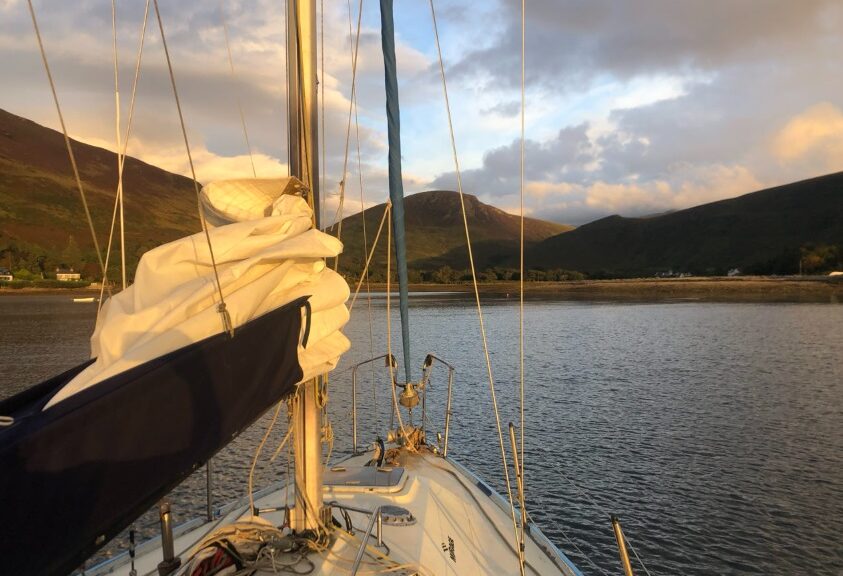
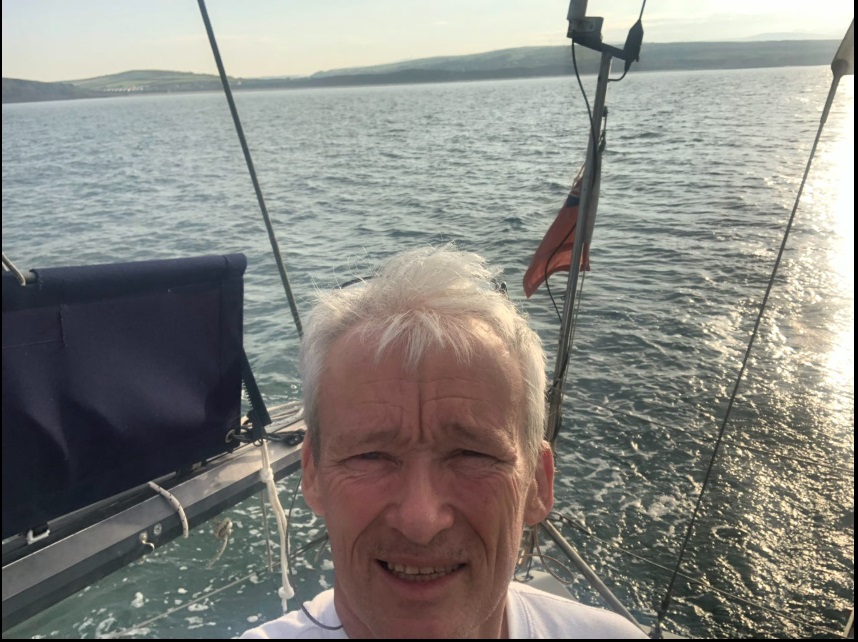
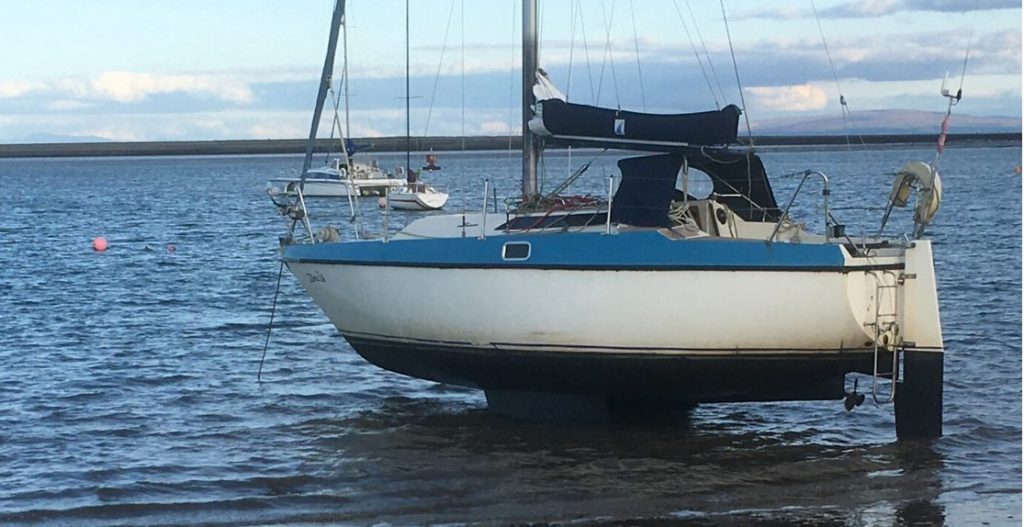
Jamila’s summer cruise took us smoothly across the sparkling Irish Sea. A summer wind pushed us north toward the bonny banks of Scotland. It had been years since I last sailed these waters, and I felt excited about the journey ahead. I knew the two-week trip would be short, but I wanted to take it slow. I aimed to find a nice spot at the journey’s end, where I could enjoy the beautiful landscape before returning in September to bring her back home.
Part 1 of the summer cruise.
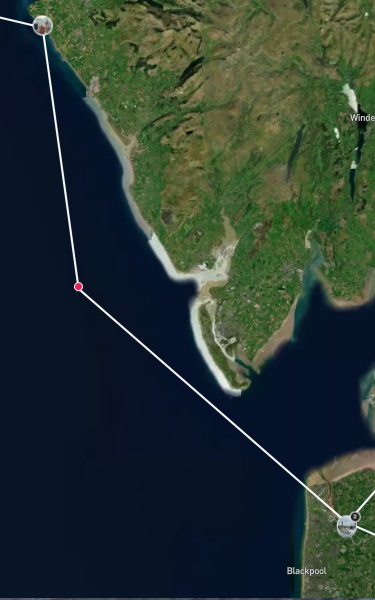
Loading the boat with all the necessary supplies was no easy task. Every item seemed to require its own place, whether it was the gear, tools, or the vital heating charcoal that would keep me warm on cold nights. I had packed an impressive array of provisions—hearty meals, cold beer and gin & tonics, wine, a well-equipped medical kit, and even a few books and games for some downtime. With seven five-litre diesel cans alongside a full main tank, I was ready to untie my moorings. As usual, I struggled with forgetfulness, leaving behind a few important items I had prepared. After giving a farewell wave to some familiar faces on the jetty, I set off on an exceptionally low August spring tide, leaving half an hour early just to be safe—after all, the last thing I wanted was to have my keel stuck in the mud at departure.
The start of the journey was a lengthy motor sail along the beautiful Cumbrian coast, where I stayed close to the shore to fully appreciate my surroundings. I loved the experience, enjoying the views of serene bays, hidden beaches, and charming coastal towns that dotted the landscape. The wind was almost nonexistent, with only gentle cat’s-paws shimmering on the surface of the sea coming from the east. This eased any anxieties I had about anchoring in exposed waters, a necessity that would inevitably arise as the daylight and my energy began to fade. As night fell, I continued sailing for a while, spending a good hour perched on the bow and scanning the darkening waters for the telltale buoys of lobster pots. The distant sparkle of lights from the seaside villages twinkled like stars against the shore.
A sunrise start, Port Logan about a mile behind.
I anchored in the bay of St Bees, and it caught on the first try, holding steady all night. The night was calm and beautiful, and I slept soundly. At 6 a.m., I woke to a quiet scene with little happening around the beach. Thirty years earlier, I had arrived on this beach one morning at the start of Wainwright’s Coast to Coast two-hundred-mile walk.
I left St. Bees and headed northwest, passing the Isle of Man on my left and Luce Bay on my right. Before long, the Mull of Galloway appeared on the horizon. With a favourable tide, my boat, Jamila, surged ahead, at times reaching speeds of 8 knots toward the looming cliffs, only to slow to 2 knots due to back eddies. About an hour later, while continuing along the Scottish coast
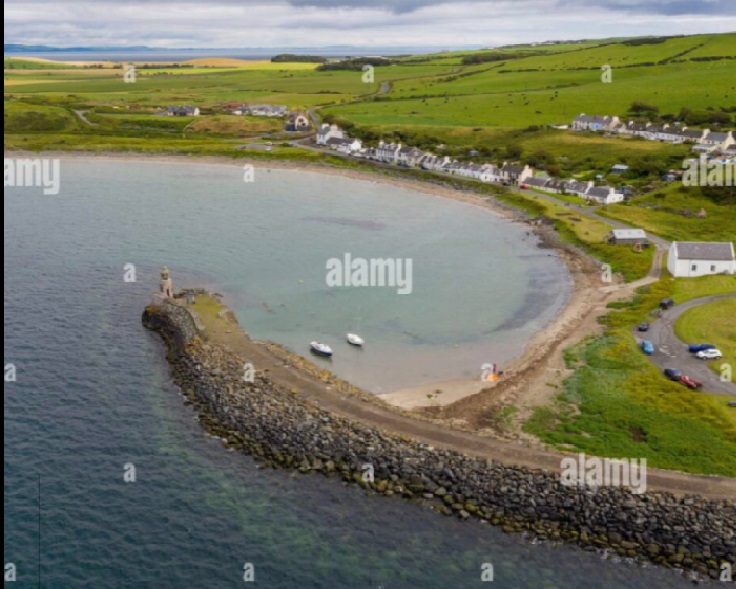
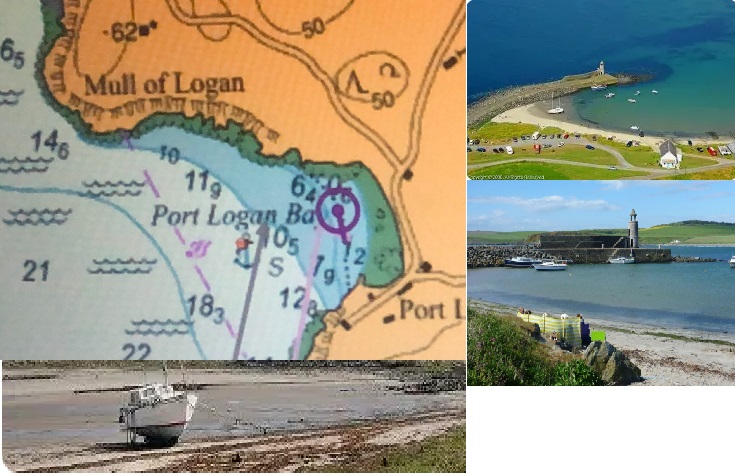
An hour before dark, I arrived at Port Logan Bay. It was a wide bay with white sands, a welcoming spot that provided good shelter from the easterly wind. Eventually, I found the perfect place to drop anchor.
The perfect spot was close inshore, where I could immerse myself in the vibrant scene unfolding before me. The ‘getting a bit shallow’ at low tide wasn’t a worry as there was little swell, and what wind there was came off the land. My two bilge keels and their bolts would get an easy time!
Small boats bobbed gently on the shimmering water, while colourful canoes and lively inflatables wove in and out among them. Fathers and sons, boyfriends and girlfriends, laughter and chatter filled the air as young couples shared tender moments, capturing memories that would linger in their hearts long after the day ended. The sun sparkled on the water’s surface, adding a magical glow to the atmosphere, making each interaction feel truly special.
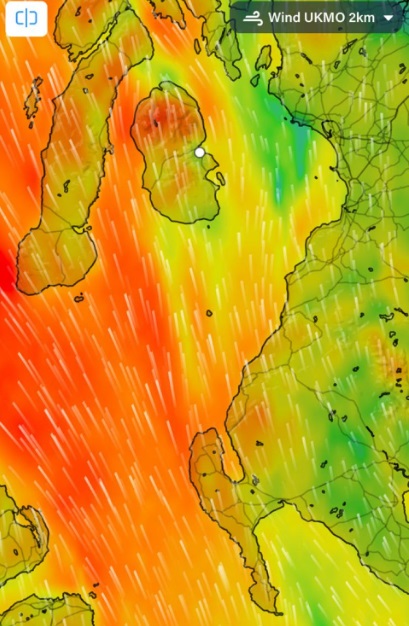
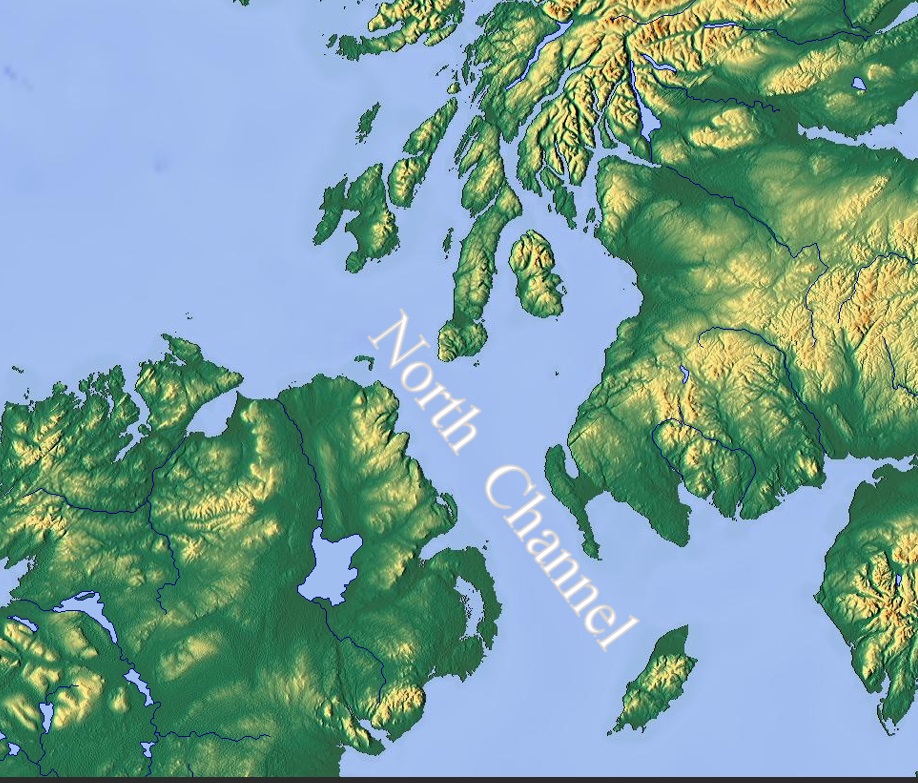
The next leg of the journey was up the North Channel as far as Campbeltown, which is tucked in behind the Mull of Kintyre. A bit of history: during World War II, the North Channel served as the final stage for crucial convoys travelling from the United States, and many sailors felt a palpable sense of elation after surviving the crossing. For Jamila, it was a calm departure from Port Logan. However, as I passed Port Patrick, the wind picked up, and by the time I entered the Firth of Clyde, conditions had changed.
This was the first part of the trip to experience strong winds. Hitherto, the two preceding passages were in light winds, motor sailing to maintain sensible arrival times.
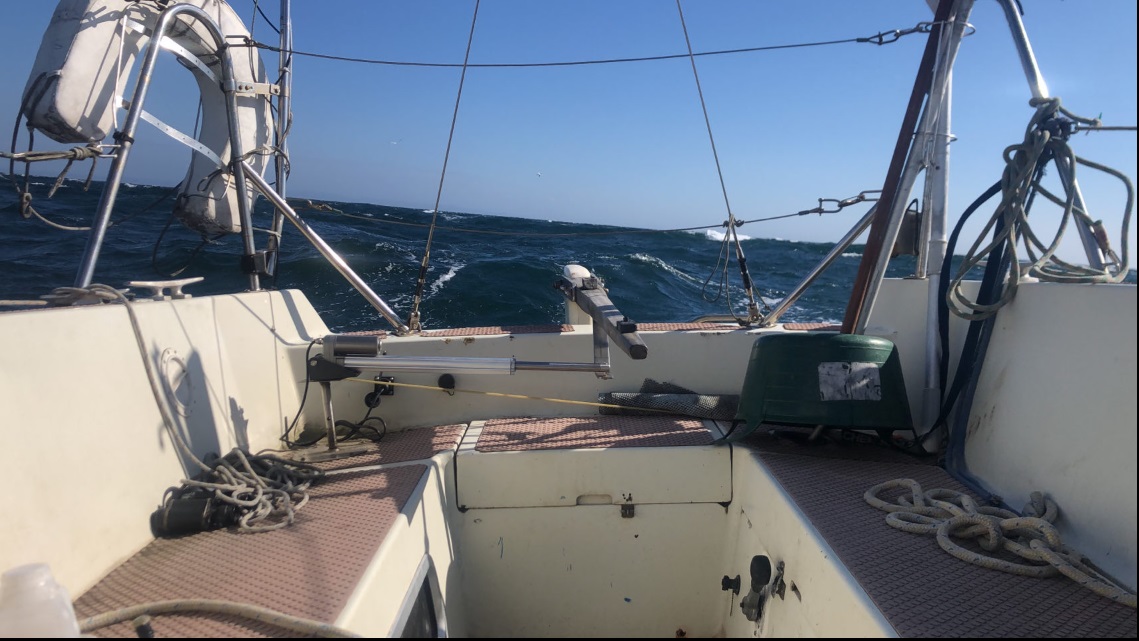
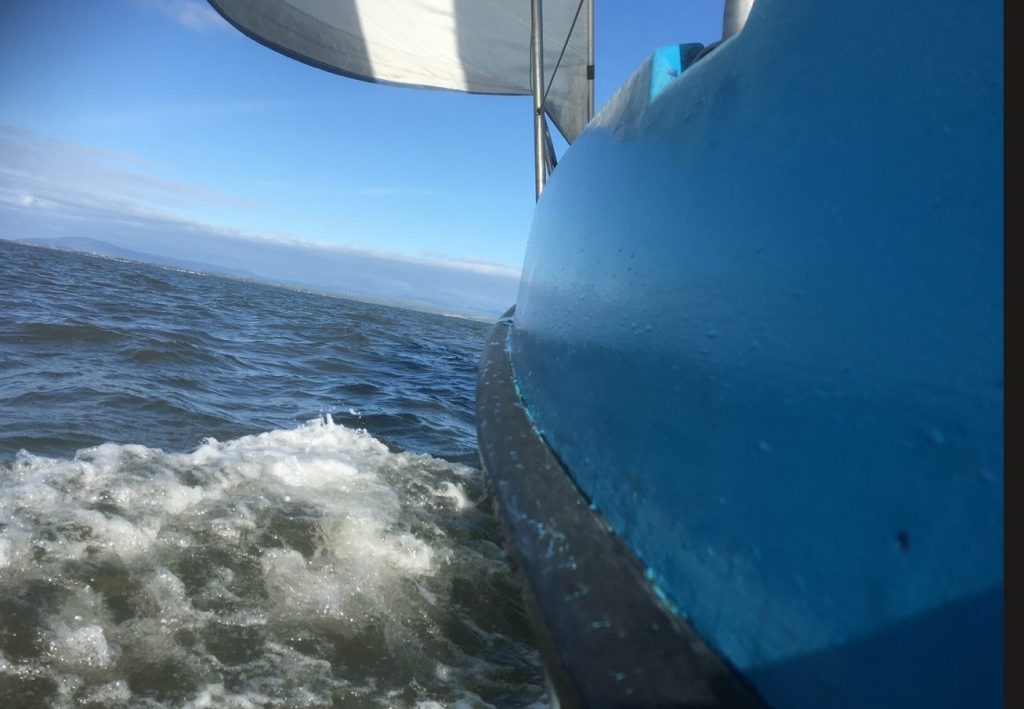
Strong southerly winds, two deep reefs in the mainsail, and enough jib to balance things out.
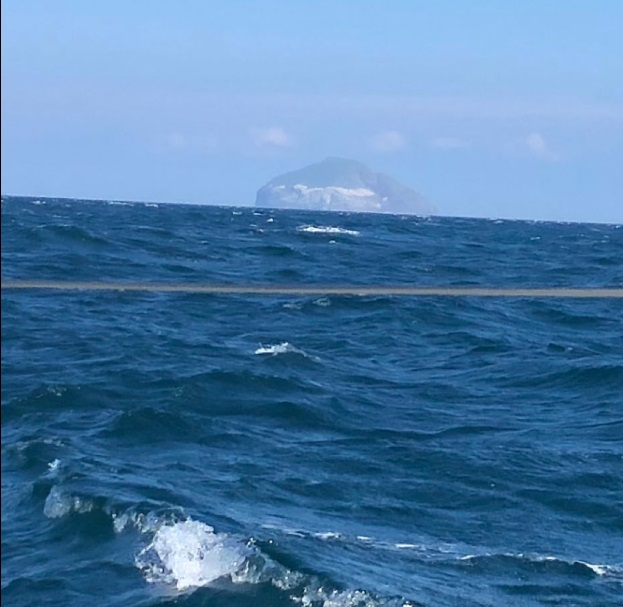
One of the greatest delights of this passage was the breathtaking view of Ailsa Craig, a striking rocky island that majestically guards the entrance to the Firth of Clyde. This solitary island, adorned with a lush canopy of vibrant trees, evokes an aura more reminiscent of a tropical paradise than its Scottish surroundings. Its rugged cliffs rise dramatically from the dark blue waters, suggesting the whispers of hidden treasures buried somewhere within its mysterious embrace. One can’t help but imagine that this enchanting island holds countless secrets waiting to be discovered.
Campbeltown
After an excessively windy sail down the east side of Kintyre, I was relieved to find myself in the sheltered waters near the large island that guards the entrance. I managed to reach someone on the VHF radio and located the first suitable finger pontoon, where I tied up with the help of another sailor. The sunny blue sky, which had been quite windy, changed overnight. In the morning, Campbeltown appeared gloomy, leaving me feeling down and reluctant to do anything—an anticlimactic moment. However, my spirits lifted when the sun came out later in the day. I was able to buy twenty litres of 30/70 diesel and some other supplies before leaving Campbeltown for a relatively short passage along the west side of Arran to Lochranza.
I enjoyed a remarkable sailing journey down from Campbeltown. Shortly after departing the marina, I hoisted my creamy white sails and swiftly navigated past the imposing island that stands guard at the entrance. The wind, a robust F4/F5 blowing from the southwest, propelled me forward with enthusiasm. As I set my course northward, with the rugged Kintyre peninsula to my port side and the picturesque Isle of Arran to starboard, I found myself with four hours of uninterrupted sailing. This was the perfect opportunity to delve into the settings of my new Tiller Pilot and juxtapose its performance with my less-than-reliable in heavy weather, Simrad autopilot. The results of my comparisons were quite intriguing. I discovered that the Pelagic Tiller Pilot outperforms the Simrad when a firmer hand is required to maintain course; translate: it works whenever. However, the Simrad truly shines when it comes to making lighter adjustments; it appears to have an inherent ability to recognise cyclical movements in the wind and sea. This means it understands when only a gentle nudge is needed to keep the vessel on track, ensuring a smoother, more comfortable ride.
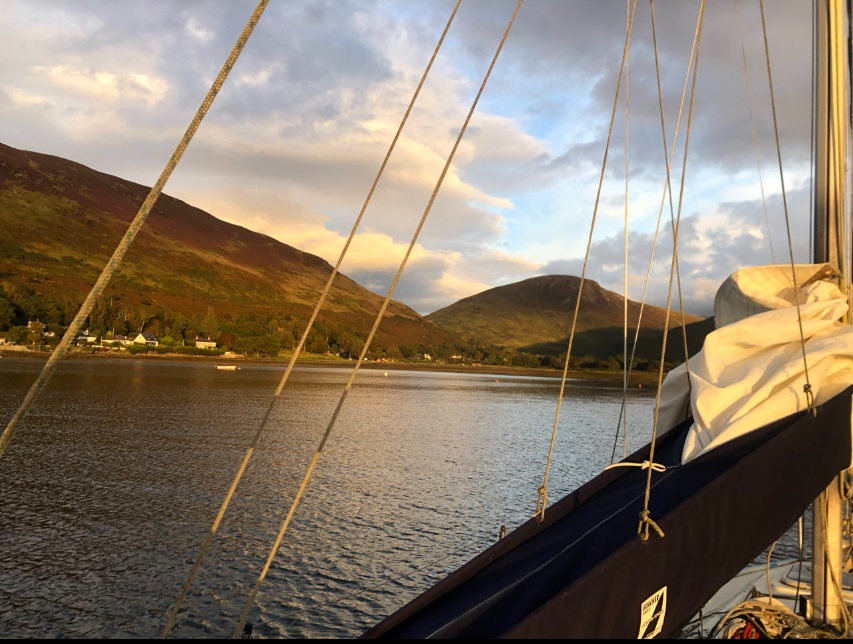
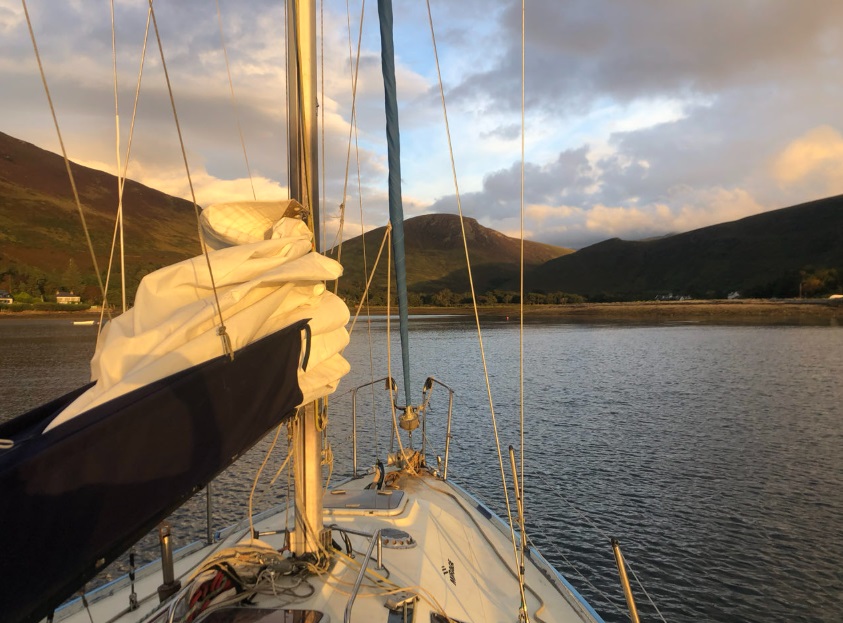
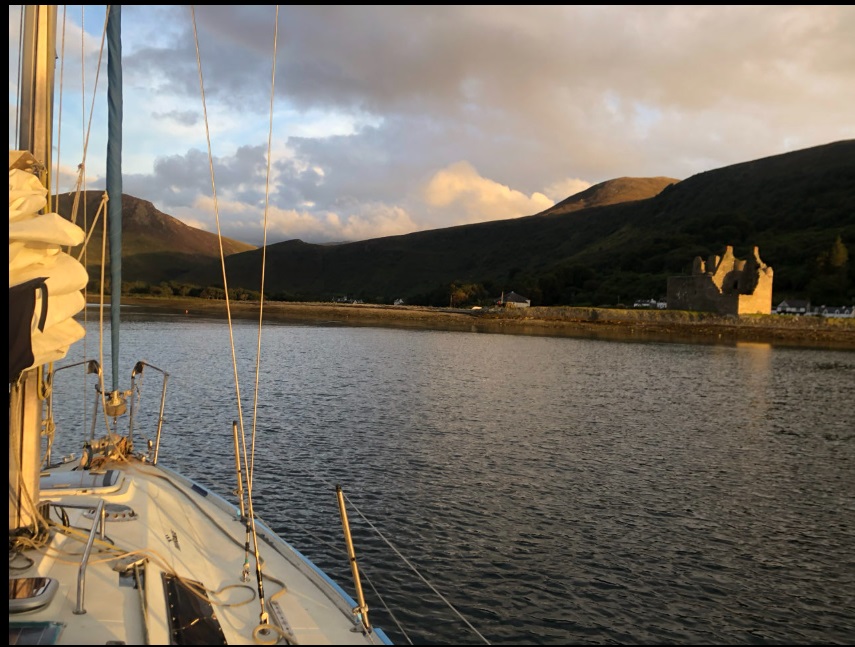
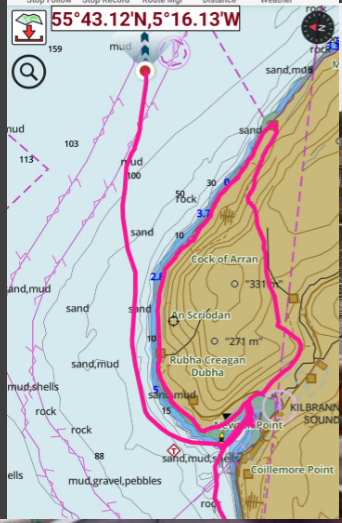
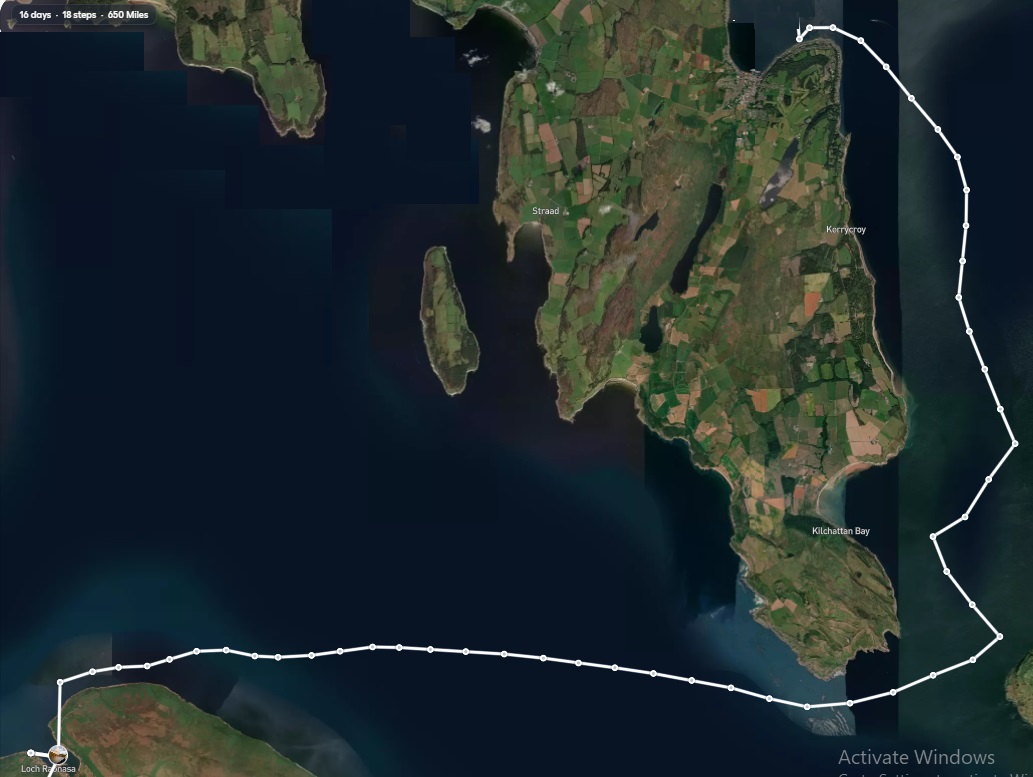
I went ashore and embarked on the scenic Cock of Arran route, which offers stunning views of the coastline. Along my journey, I came across a remarkable geological landmark that holds great historical significance. Nearly 300 years ago, the Scottish geologist James Hutton conducted groundbreaking research here, identifying unconformities in the rock layers that revealed gaps in the geological record. His meticulous observations and analyses led him to propose that the Earth is not merely thousands of years old, as commonly believed based on biblical interpretations, but rather billions of years old. This revolutionary idea challenged the prevailing notions of his time and laid the foundation for modern geology, marking a pivotal moment in our understanding of the planet’s history.
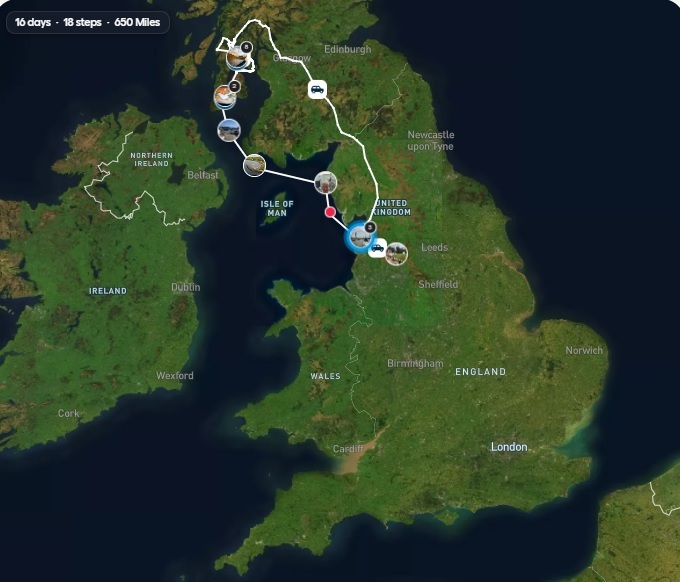
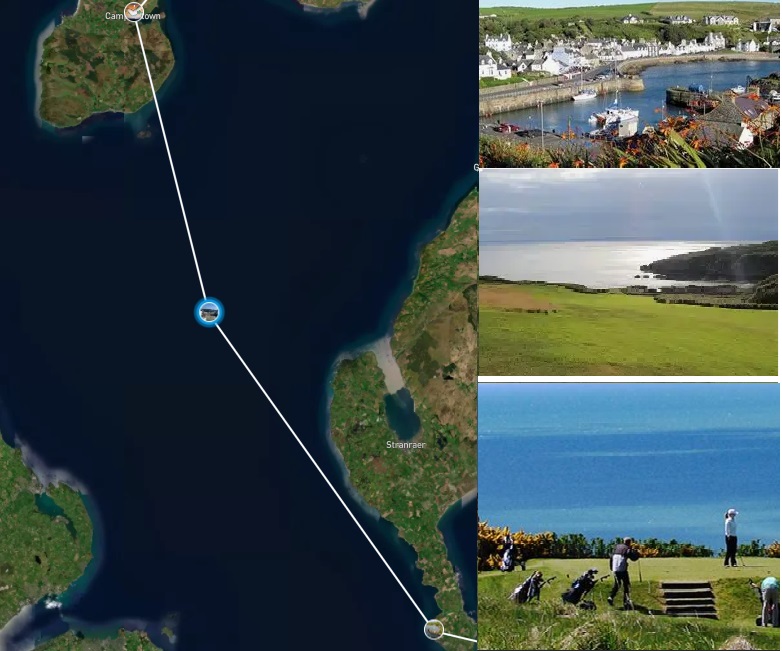
The above image shows my comings and goings, my anchorage and my walk around the ancient rock formations. I came back over the hill, which was extremely challenging, very steep, with thick heather.
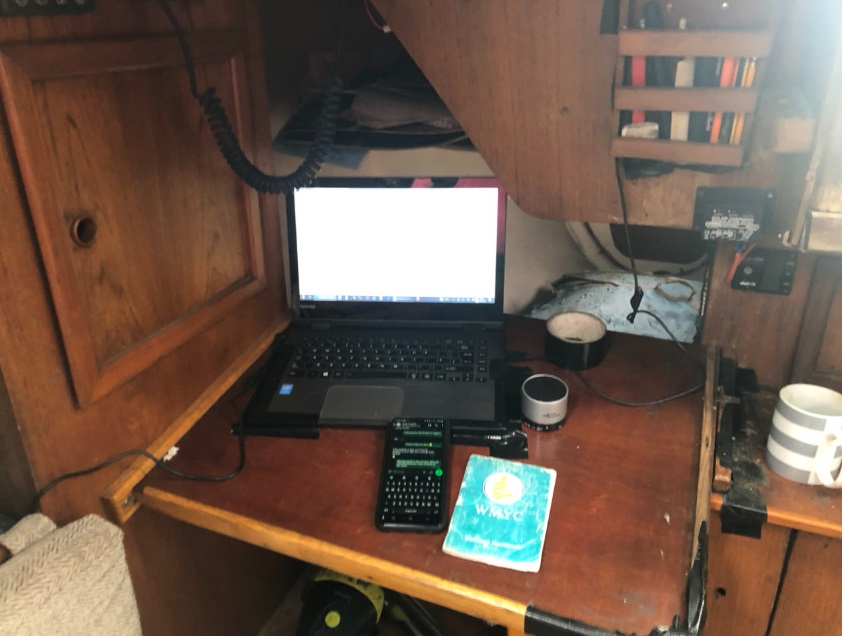
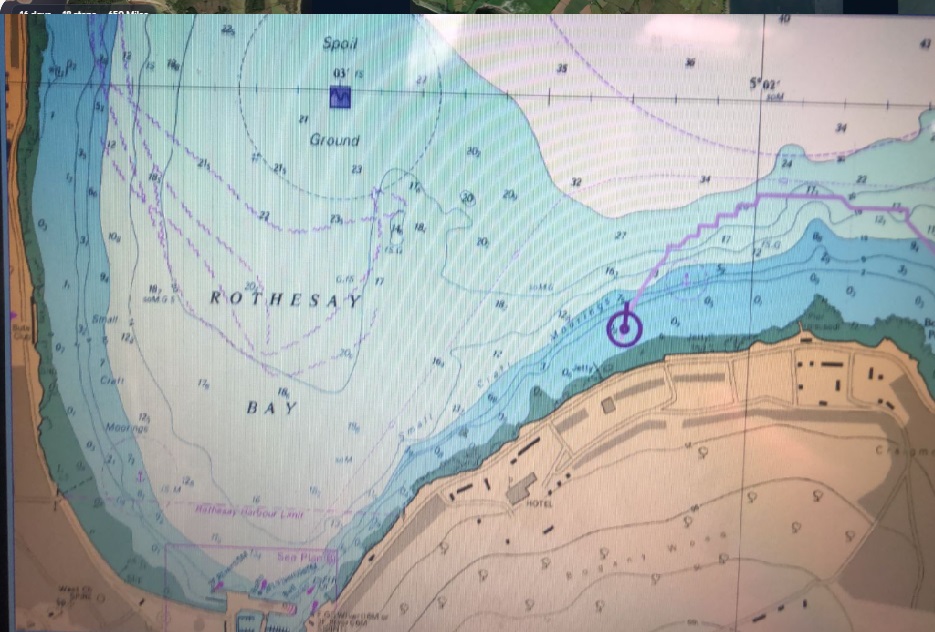
Jamila has an eclectic mix of three chartplotters, eliminating the need for paper charts and traditional RYA coastal skipper navigation skills. The first is a Windows laptop that runs a raster plotter, equipped with all the Admiralty charts for Great Britain. The second is a modern Android smartphone that features vector charts for the Irish Sea and the west coast of Scotland. Additionally, there is an older Garmin plotter from 2012, which is out of sight. All three chartplotters provide accurate positioning within ten meters. Ironically, the software and processors used in billion-dollar satellites orbiting in space are from an older generation.
Rothesay, Kyles of Bute
A wonderful day’s sail to Rothday. To begin with, it was perfect blue sky, blue sea, warm wind with no need for the iron donkey. Clouded over later, but nevertheless felt blessed.
Sailing in awe-inspiring scenery. The weather has been favourable, allowing for a broad reach across the head of the Isle of Arran, followed by four tacks—a couple to starboard and then a couple to port—into Rothesay Bay.
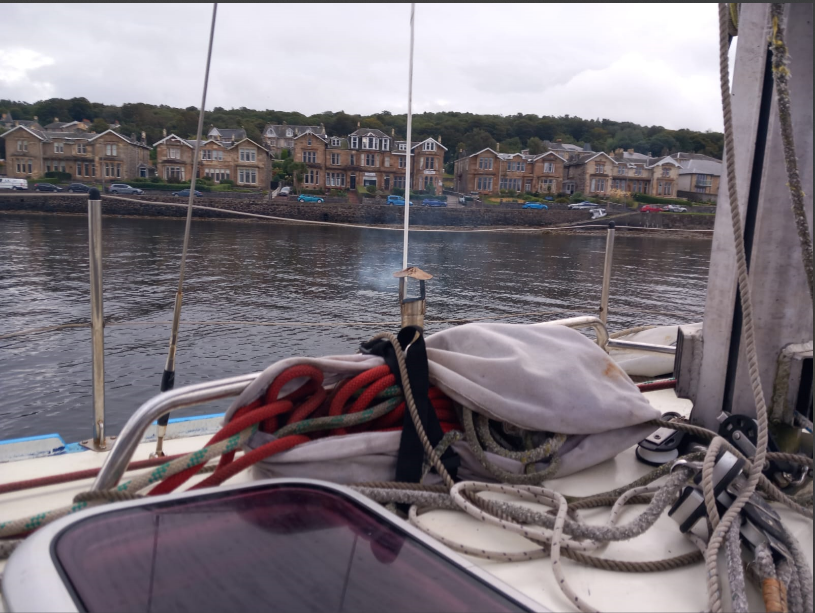
There are many beautifully solid stone houses along the seafront, built by successful Glaswegians during the heyday of the world’s first industrial revolution.
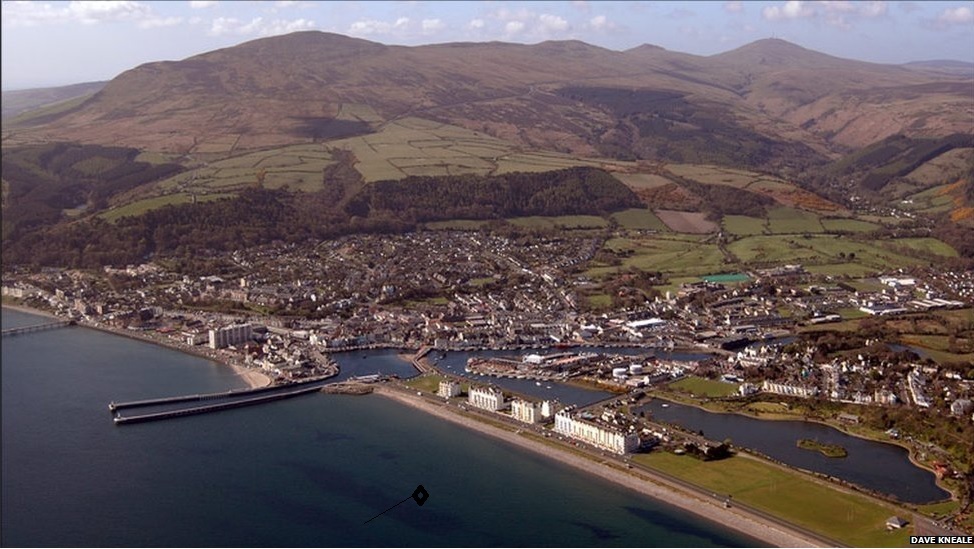
Jamila, a Wardleys Marine Yacht Club sailing sloop was sat at anchor in Ramsey Bay following a perfect passage from Fleetwood. She had been powered over the Irish sea by a beam wind, carried for the most part by favourable tides and not using a drop of diesel. It has to be said there is a pleasure to be had by ghosting up to an anchorage under reduced jib and mainsail then putting the bow into the wind such that the boat comes to a gentle halt all timed perfectly so as to engender a gentle drift astern, such that the Skipper can waltz forward and lower the anchor. Yes, it may look Cool as a Cucumber to anyone strolling along the Ramsey promenade, but a word of warning it sometimes goes embarrassingly wrong.
At anchor in Ramsey Bay
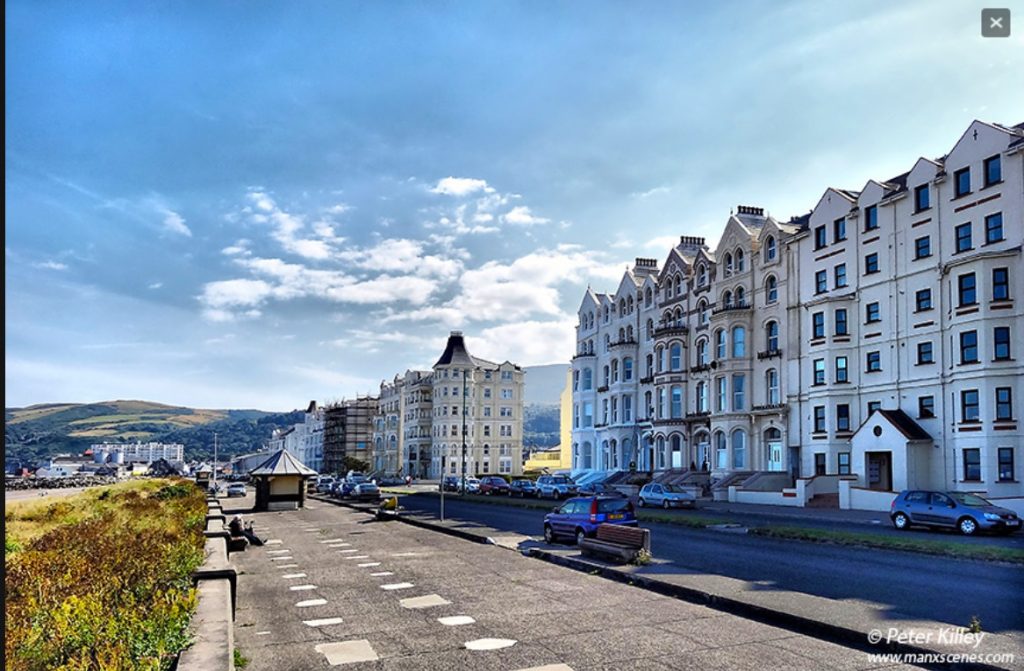
As discussed in in the first part of this trip, berthing in Ramsey was outlawed due to Covid. The skipper was by this time tired and was ready to put his head down. So following a last glance at Ramsey’s Georgian promenade terrace gently illuminated in soft pastel colours, and a final anchor check, the Wardleys Sailor hit the bunk to get some shut eye whilst the stars of the summer triangle revolved high overhead.
Getting deep nourishing sleep when single handed at anchor takes practice. It certainly helps when you are familiar with the territory. As for that night in Ramsey Bay, on the down-side I was not familiar, it was the first time, but on the up-side there was a reassuring anchorage symbol on the chart, I had a ROCNA type anchor dug in six metres below, and most importantly the weather forecast was good for the coming short night, so I was able to curl up on the starboard bunk feeling sufficiently relaxed to quickly fall into a long deep sleep.
They look lovely at night under allumination.
Four hours later a bizarre dream began to disturb me. There was a noise getting louder and louder that forced me in to semi consciousness. It was that of distant surf. It slowly dawned on me that I was indeed on a boat at anchor and this was no dream. It was still pitch black outside but with a tinge of morning twilight arriving in the east. The Ramsey promenade was now simply delignated by a simple line of street lights, and the Georgian terraces that had been previously illuminated, had disappeared into the dark. The surf was too close for comfort. A glance at the depth sounder set alarm bells ringing. Only one metre under the keel! I had calculated their being one and a half at low water the night before. And there was still an hour of ebb to go. I suspected that the situation was not that bad given the soft white sand all around, but then again there was a little bit of sea swell rolling in and a strengthening wind. Um, what was it to be? Snug back up into the sleeping bag? I knew from previous experience that further sleep would be difficult if nothing was done. So the engine was brought to life and engaged in tick-over slow ahead. Over twenty yards of wet cold chain were hauled onto the foredeck. With the anxiety reducing good deed done, and the sound of the surf further in the distance an extra hour of sleep was had.
Had the anchor not been shortened Jamila would have looked like this!
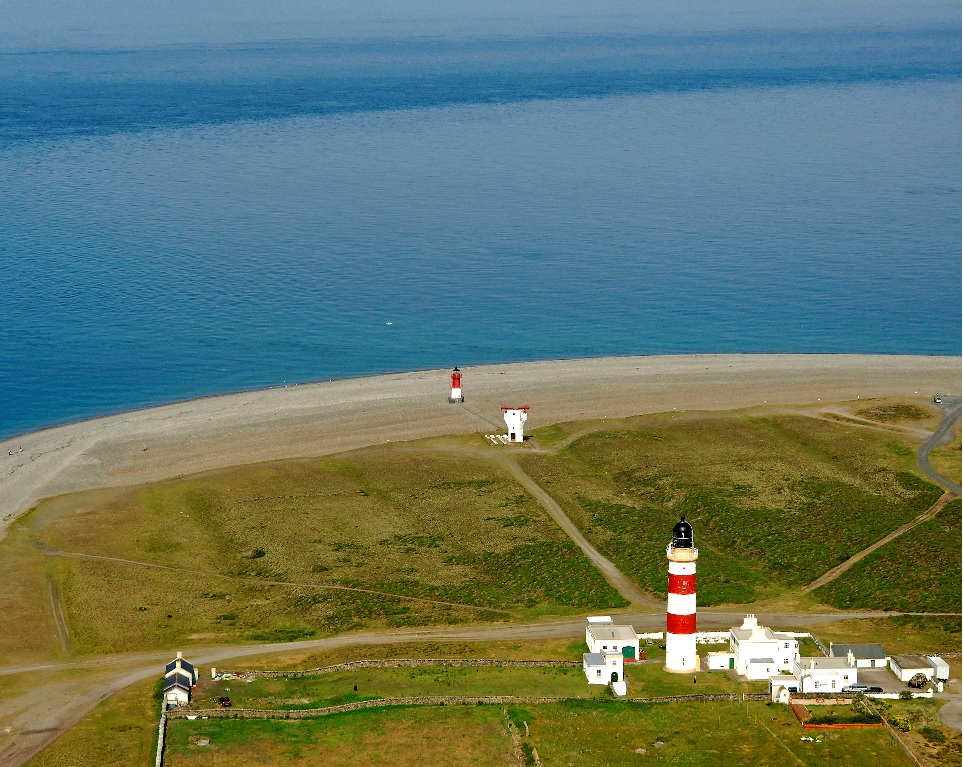
Jamila’s destination for the new day was Scotland. This was to be a passage across the north eastern part of the Irish sea to the small all tide harbour of Portpatrick. The wind was forecast as a Gentle Breeze but was closer to a Moderate Breeze and rising. Jamila could either pass close to the Point of Aire at the most northerly tip of the Island with the wind close on the nose, or take a detour around the Bahama Bank, The detour alone would take half a day’s extra at the very least. The north end of the Isle of Man had a fierce reputation for dangerous seas with a notorious tidal over-fall. The sailing guide recommended staying well clear of the bank at all costs once the tide was running. The guide says that a small boat should only pass at slack water, and stay within the deep channel that runs very close to the shore.
There was four hours to high water, and about that much windward sailing time required to reach the Point of Aire. So up went the sails and up came the anchor. As I did this, something caught my eye on the promenade 300 yards to stern. I recognize a pickup truck belonging to the harbourmaster with a distinctive yellow light. This vehicle is well known by those who have spent time against the Ramsey harbour wall. To allow ships through into the inner harbour, an impressive metal bridge painted in a colourful Victorian livery has to be swung open. To do this the truck, using its yellow flashing light, blocks the road. The harbourmaster then jumps out and climbs a short ladder on to the bridge and from a small cabin proceeds to swing the enormous metal structure. Then usually with a cheery smile, he leans out of a small sliding window and beckons the awaiting ships to enter. But what in heavens name was he doing on the promenade so early on a Sunday morning? Just maybe he was there keeping an eye on the lone Wardley’s sailor who being denied safe haven had been forced to swing at anchor in Ramsey Bay? It was probably not the case, but it was a nice thought anyway!
Point Of Aire on a calm day
The ensuing sail up the north east coast of the Isle of Man was brisk and efficient. Staying close to the shore put Jamila into a slight back eddy adding an extra half knot. In actual fact last of the flooding tide was whipping around the north of the island in the opposite direction. Had Jamila been half a mile further to the east, the half a knot or maybe more would have been at least two knots running in the other direction. As the well-known saying goes “There is no such thing as a free lunch”, (referring to the practice of offering “free lunches” to entice heavy drinking in pubs), equally applies to Wardley’s sailors getting freebies out at sea off the Isle of Man, since the pay-back of being in the pinch point between the land and the Bahama bank was yet to come.
There was still an hour left of flood tide when Jamila began to draw level with the Point of Aire lighthouse. By this time the wind had mounted to a strong breeze (F5) coming from the East, and the coast line suddenly twisted further round to the east forcing Jamila ever close to the wind at the critical point. The tip of the Island came into view. To my horror I noticed the waves were breaking violently on the beach just up ahead in a way you would associate with storm conditions, and not an F5. Then something very strange began to happen around me. The sea began to change is such a way that it wasn’t following the normal rules. It changed from regular lines of waves from the east into a boiling cauldron. Monster pinnacles of water started to tower above Jamila on all sides. It was like being in the Swiss alps except at one moment you were deep in the valleys and the next you were on top of the Matterhorn. The wind was good and steady and I should have been making a good four knots and be safe in spite of a nasty looking lee shore just to port!
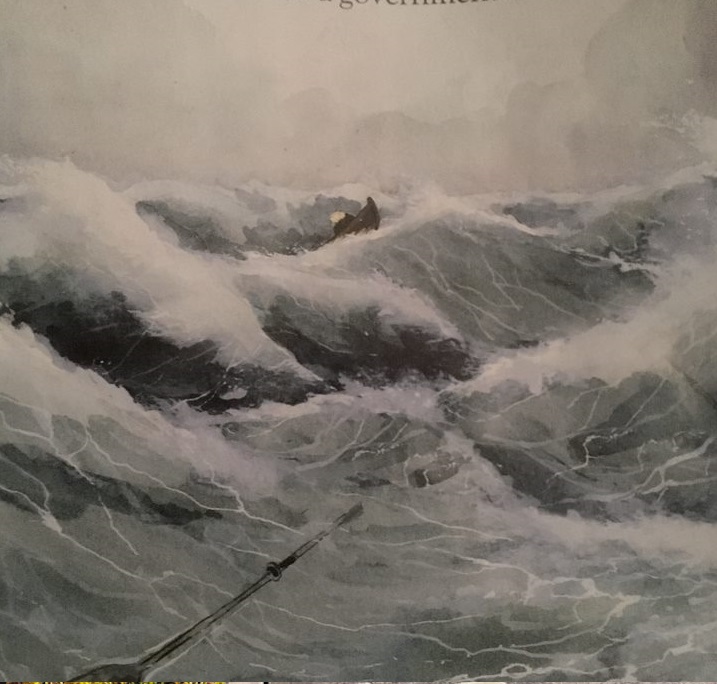
Point of Aire in a gale? The confused state of the sea in this illustration gives an indication of what the sea was like going around the tip of the Point of Aire.
My heart dropped into my stomach when I noticed I wasn’t moving. Worst still, I was being slowly and remorsefully sucked towards the violent breaking seas on the beach. It was as if some monster squid from Jules Vern’s ‘Around the world in Eighty days’ had taken hold of my keel and was dragging me to my doom. Suddenly something caught my eye on the shore. It was a flashing yellow light. I craned my head around ripping the hood from my head for a clearer field of vision. It was the harbourmaster parked on the very last bit of Island. He was gesticulating to me above the breaking waves with hand raised into the air. He was making a twisting action with his wrist. “Start the engine”!!
I had been caught like a rabbit in the lights of a passing car. On went the engine full ahead. It wasn’t the tide that was at fault, neither was it the wind. It was the remorseless heaving of the waves. The wind was being knocked from my sails and the bow was coming to a halt on the steepness of the waves. Amazingly they weren’t even breaking, they were just too much and too none sensical for a small sailing boat to make headway with the wind on the nose. So this is what they call a tidal over-fall. God only knows what it would like in a full gale. The engine had saved the day. Instead of being stopped dead, Jamila’s bow was now punching a white spume splattered hole straight through them. With reference to a Dirty Harry movie, it felt like I’d pulled out my very own MAGNUM 50 cal. and with great joy and entertaining relief had bad guys scattering.
And so the disorder didn’t last long. With the tip of the island slowly falling into the distance, the sea miraculously transformed into a milky flatness. This was a very strange sea state indeed, when all the time the wind was blowing a fresh breeze, and then some. This strange state persisted for a full nautical mile until eventually the prevailing waves reverted back to a long set of orderly parallel lines. Having cleared the land’s end a new course was struck to the North West. The effect of backing off the wind on to the said direction put the wind on the beam. Jamila was not now battling the weather head on, and so began to gather speed and even surf on the face of the occasional big wave that came along. In short, the sea had behaved in an extraordinary manner, and I freely confess that I had been truly ‘Gas Lighted’ by the ‘Point of Aire’. Somewhere in the murky distance across a shimmering sea lay the Mull of Galloway.
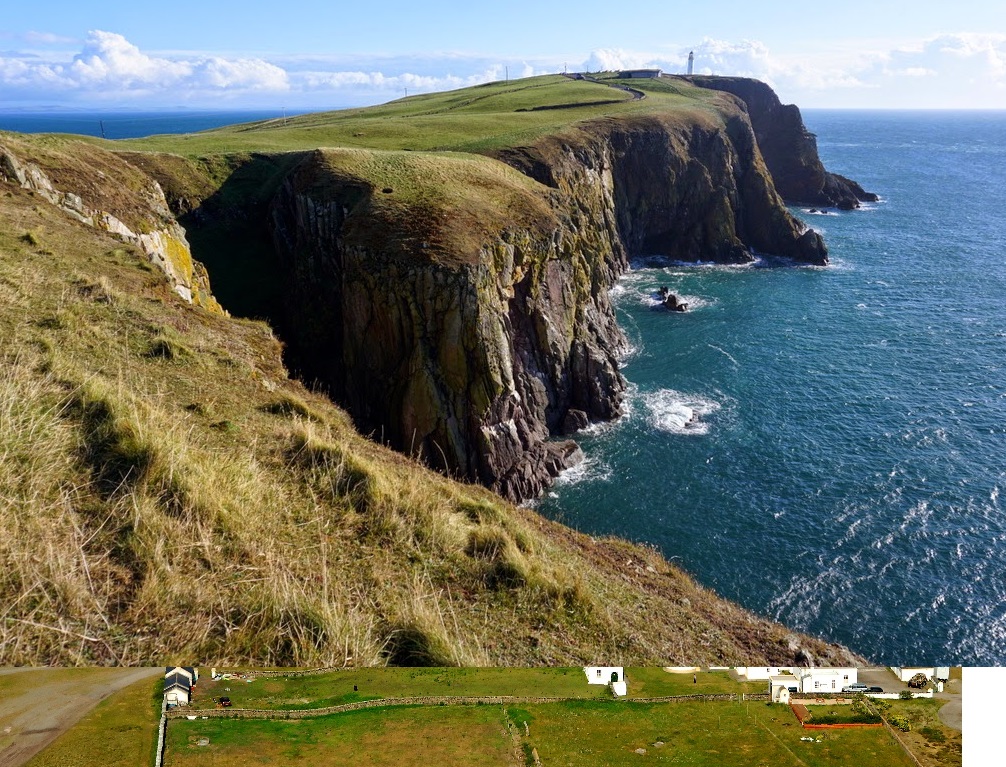
Mull of Galloway
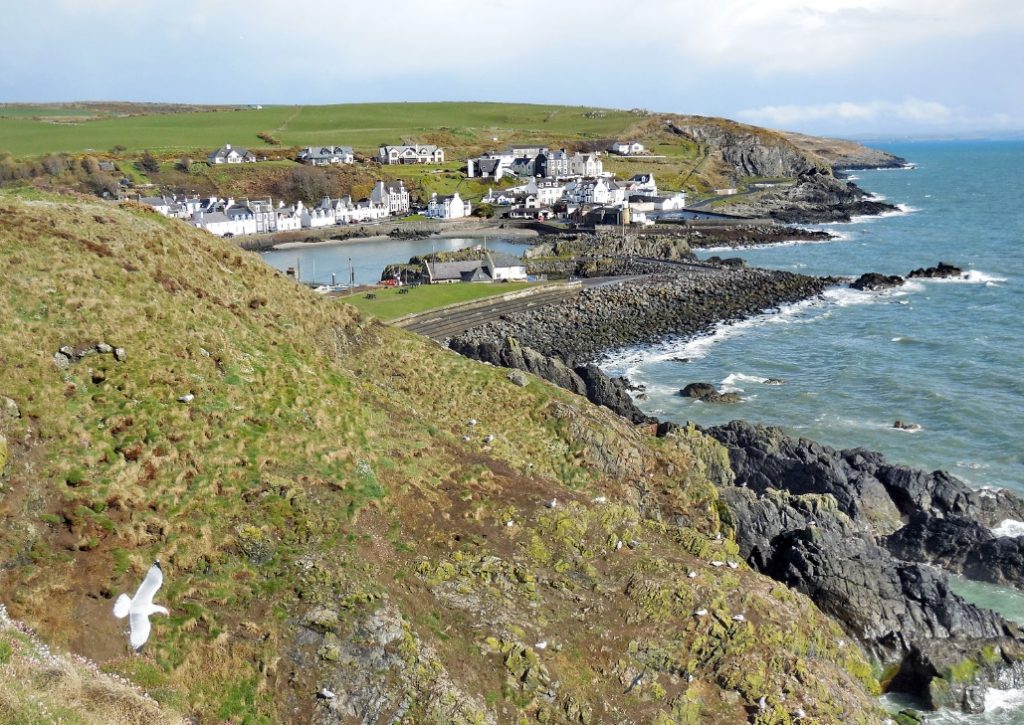
Many hours of coursing along in a declining wind had left Jamila somewhat under canvased, but eventually the coast of Scotland began to grow in size. After another short spell down below, the next visual check out on deck revealed the immensely tall cliffs of the Mull of Galloway in all their glory. The splendor was all the more emphasized when two yachts sailing incredibly close to the rocky shores were observed. At first I thought they might be Wayfarer dinghies since their white sails looked so small against the mighty cliffs. It turned out that in fact they were much bigger yachts on a heading to Ireland. After another forty minutes they were three miles up a head crossing my bow, and after yet another hour I could only just make out their white sails far to the west. Soon Jamila was also hugging the Galloway coast. As said, the wind was blowing away from the land so the dangers of a lee shore were more or less harmless. Eventually the cliffs reduced in stature revealing some very pleasant green countryside beyond. This last leg to the seaside village of Portpatrick dragged on a bit, and in fact it took longer than the open sea crossing just before. And now the thrust of the tide was no longer favourable where jamila had lost a knot of speed as a consequence. But still, the early part of the passage had been so rapid that there was no pressing rush to make it before the shops shut. The sea had become noticeably flatter too, being close to a windward shore, so maintaining progress to find a nice warm harbour side pub, despite the falling wind, was not going to be difficult. The entrance into Portpatrick was between a narrow gap in a rocky—potentially fibreglass crunching—coastline, and arriving from the south as most Wardley’s sailors would do, the main bulk of the town is more or less obscured by ‘Tandoo Point’ headland.
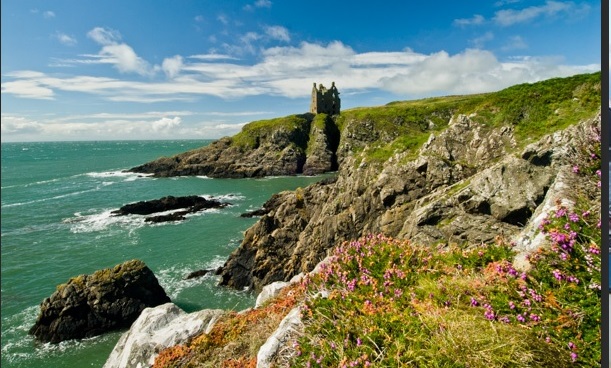
Tandoo Point
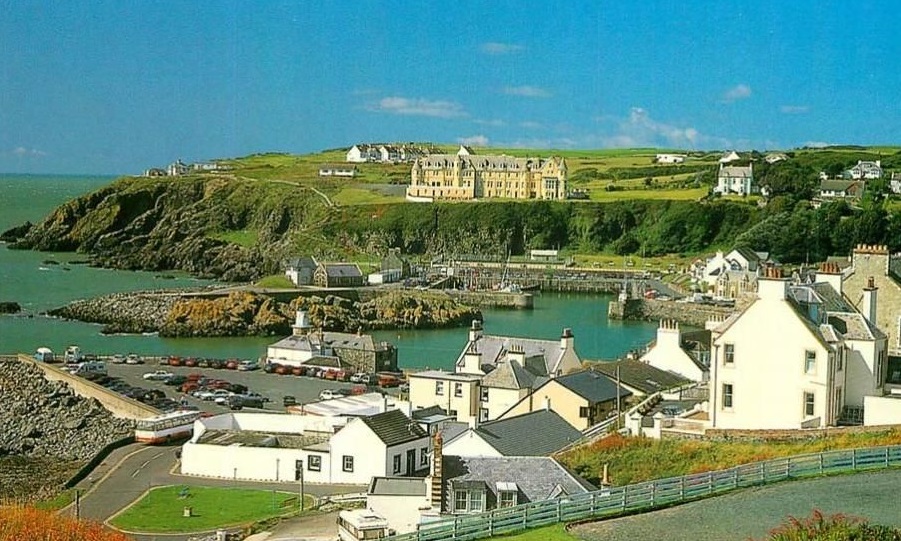
It was if Portpatrick was keeping its head down still expecting a shelling from one of the Kaiser’s battleships, It was not until arriving opposite to the entrance where a small beach and a coastal road lined with cottages revealed itself that I finally considered Portpatrick real and not a figment of the imagination. The entrance was between a gap in the rocks. The cruising guide instructions stipulate heading straight for the beach keeping a leading marker lined up with the white washed “Rose and Crown” pub and only when you are plumb opposite the stone walled entrance to the harbour do you execute a sharp 90 degree turn and then head into the main basin. Cutting the corner in an attempt to smooth out the turn will almost certainly run you aground on a submerged rock just to the left of the entrance.
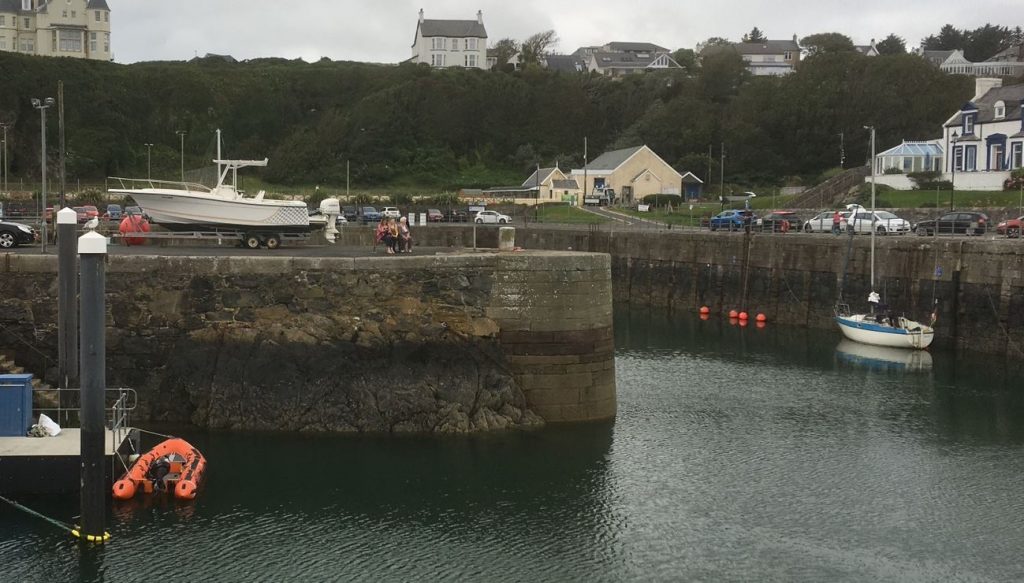
PortPatrick harbour. A very cosy sheltered haven for small boats.PortPatrick
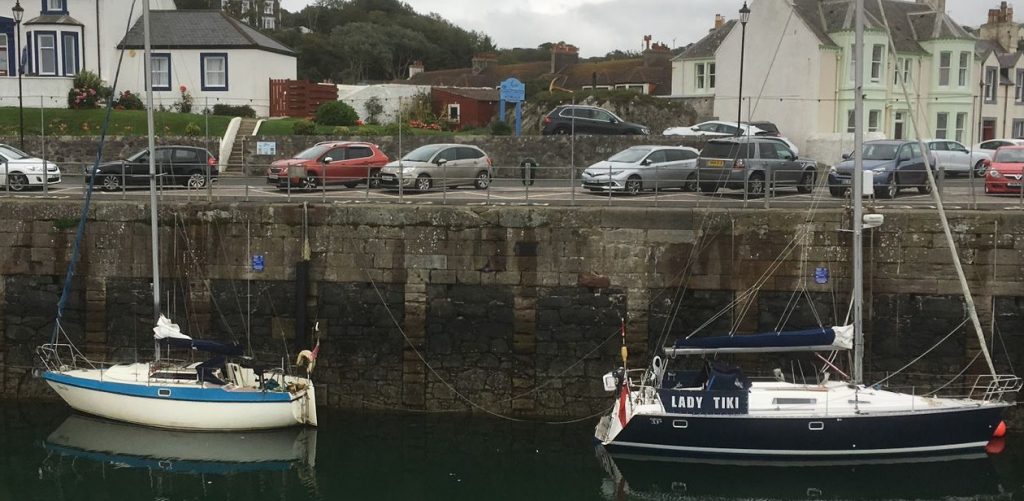
Now, imagine watching tele with your young family watching “Thomas the Tank Engine” steam into a small rural fishing port on his adventures. Well, there you have Portpatrick to a tee. There is even some fusion with another well-known TV show Balamory, because I’m sure I came across Mrs McCredie in a post office positioned not far from the water’s edge. I tied Jamila up against a dark towering and somewhat forbidding looking wall. Two giant sliding fenders on vertical rails kept the boat off the stone. The town’s plentiful array of pubs were choked-up with day trippers due to the lovely warm weather, and made worse by social distancing rules which caused hour long queues in some quarters. Instead I dined aboard on mash-get-smashed potato, fried spam, and garden peas. All that remained to do that day was to soak up the chocolate box harbour scene. As always, when the ambiance is perfect, which it was on that evening, even the ship’s stores tinned cuisine seemed to taste excellent. The skipper slept much better during the short summer night in Portpatrick. During the time of slumber Jamila quietly fell twenty feet down the harbour wall. It would have been nice to stay a little longer.
Jamila up against a wall.Barrow based Lady Tika arrived. Was nice to have a fellow Morecambe Bay sailor, first mate (Missus) and Labrador for company.
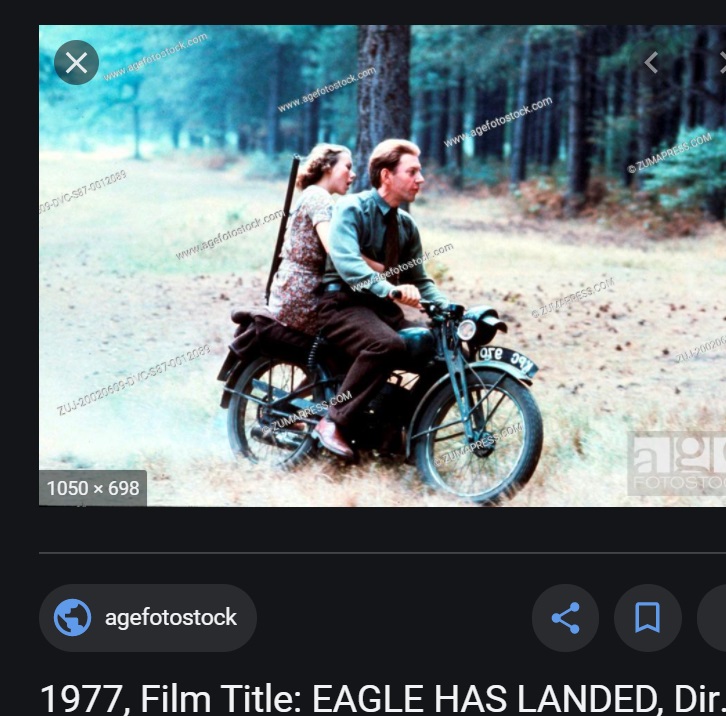
Still, this particular Wardley’s sailor had a tide to catch that would suck him up through the problematic stretch of fast flowing tidal water between Scotland and Ireland called the North Channel. Jamila’s destination was not a smart marina replete with floating pontoons, power points, and identikit bistro bars, but instead a WILD and potentially exposed sandy white bay with a little navigable creek running some way inland. The destination was called Cushendum situated on the north east coast overlooking Scotland’s Mull of Kintyre. After having scoped the location on Google Maps, it was tempting to venture up the creak and see the hinterland, but having recently re-watched the classic war film ‘The Eagles have landed’ where the German e-boat did venture in to such a creek but went haplessly aground sneaking out, helped dispel any such idea. Nevertheless the thought of making a fantasy motorcycle get-away across beautiful green north Antrim countryside with a sultry Jenny Agutter on the pillion did appeal.
On my departure from Portpatrick, a rather touching moment occurred. I was on the quayside taking the ropes from the bollards, with Jamila seemingly along way down the ladder. When a little boy five to six years old approached, somewhat walking a head of the rest of his family, appeared to be wholly mesmerised by the small fishing port ambiance—exactly as I would have been at his age. He had been watching the sailing boats coming and going during the morning. He shouted over and asked if he could come with me. I don’t think I appreciated how deadly serious his question was and I answered glibly, “You certainly can but you’ll have to ask your mother and my next stop is Ireland”. Mother had caught up by this time shaking her head with a mournful expression explaining that Ireland was too far to come and pick little Johnny up. Relieved that I wasn’t the one to break the bad news I quickly escaped down the long vertical ladder and cast off. As Jamila slowly motored away from the quay I looked up and saw a very stoic looking six year old waving me off with a tear in his eye. It was a bitter sweet but beautiful moment. Everything briefly seemed to fall into place. I was in a charming location, on a gorgeous day with a god gifted wind and tide all laid out at my disposal.
The passage plan from Scotland to Ireland up the North Channel was to make best use of the prevailing easterlies and ebbing tide and get close to land north of Belfast Lough and so benefit from the back Eddie when the tide turns and starts to pile in from the North Atlantic. The point where the northern back-eddy meets the vast mass of water surging south is an outcrop of headland half a mile to the north of my destination.
The greater part of the sail across the sea to Ireland was a pure sun and clear sky experience. The sea was a deep gushing blue all the way over punctuated with the odd white breaking wave. The noticeable change from my previous passages was the fact that the Irish sea at this point was constricting rapidly such that the sea as morphing into a shipping highway with an identifiable stream going north and a counter stream running south. As Jamila cut across the entrance of Loch Ryan, the equally busy stream of ferries cutting across the shipping lane between Scotland and Belfast were encountered. Out there on the ocean is something live affirming about seeing a P & O ferry cutting across the sea leaving a long white wake. In my mind at least this is the very essence of a summer holiday in full bloom. As the day wore-on the horizon began to reveal a long broken black line, as the hills of northern Ireland hove into view. A few hours later it was resolved into long continuous line. Finally cliffs and white sand and the glinting reflection of sun from windows of still distant houses. As Jamila pushed further northwards helped along by a favourable back-eddy running parallel to the coast, the sun disappeared behind a layer of grey cloud. At the same time the wind dropped off significantly but remained sufficient to maintain the promised ETA of around 8pm at Cushendun.
Over the sea to northern Ireland.
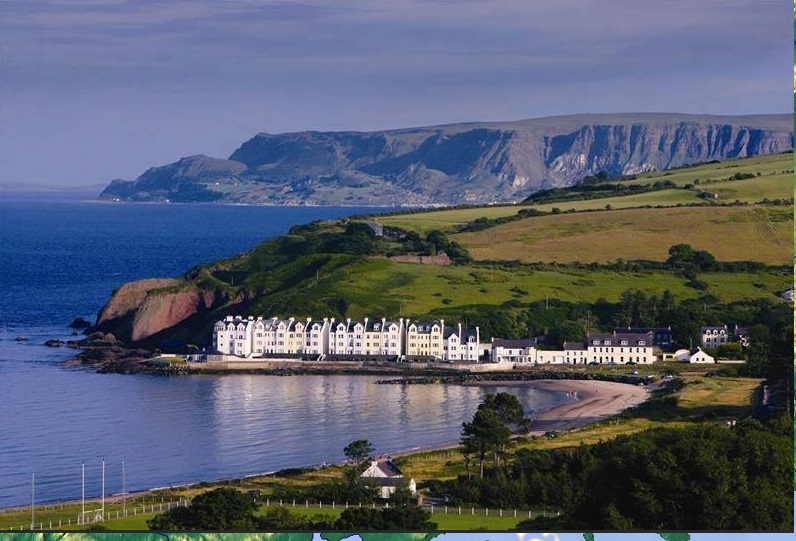
It was tempting to pull into Cushendall, which is a much larger town further to the south, but that would have meant further to go the following day and by this time I was well aware that tail end of Storm Ellen was well on its way. Cushendall was the first town I really got to look at up close. I could clearly make out the houses and see cars moving along the roads. Maybe another time. As I closed in on the sandy bay of my destination drizzle started to fall. The wind and died away almost completely and it was the last of the tide that was moving ever closer to my final anchorage. The engine went on at the very end mainly so that I could scout around a little both visually and studying the various depths using the sounder. The settlement consists of a spit of retro modern and original houses all joined together in a long line a bit like a classic terrace house and all painted bright white. To the right is the bay peppered with only a few original cottages and grander looking houses set further back in the distance, but remaining basically unspoilt by modern builders. Good on the folks at Cushendun!
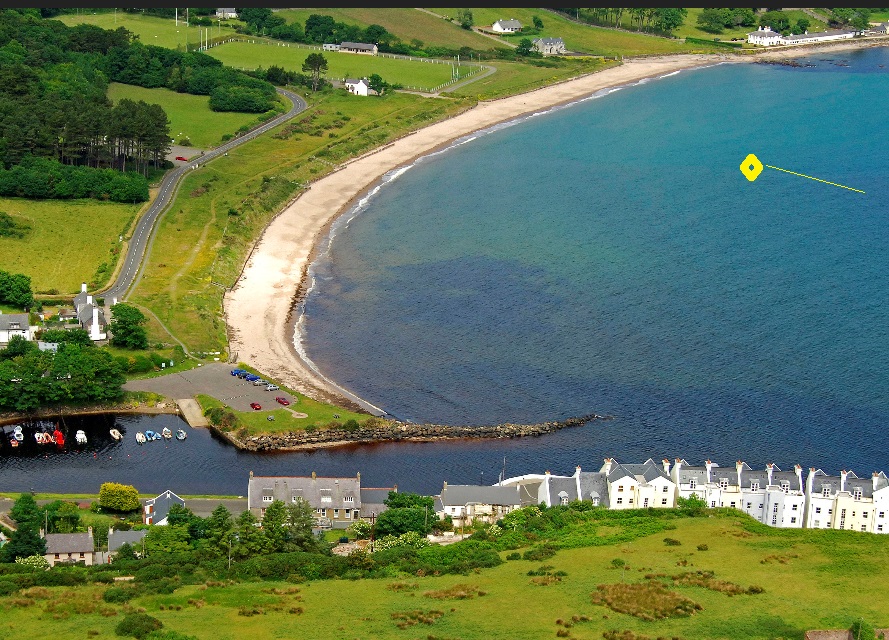
Triangle marks the anchorage in Cushendun bay.The beautiful Antrim coastline and the lovely Cushendun nestled in a sandy bay.
An evening at anchor was spent out in the cockpit under a very slight drizzle. Two to three families could be seen on the beach braving it in their bathing costumes, and to hell with the weather. Maybe one of these days some of them will also become sailors and sail around the shores of the Irish sea. And who knows…
The next instalment of the WMYC yacht Jamila’s summer cruise will cover the next two days of the passage from Cushenden in Northern Ireland to the sailing gem that is the ‘West coast of Scotland’. The ultimate destination is to a magical location called ‘The Fairy Isles’ tucked away at the top of Loch Sween.
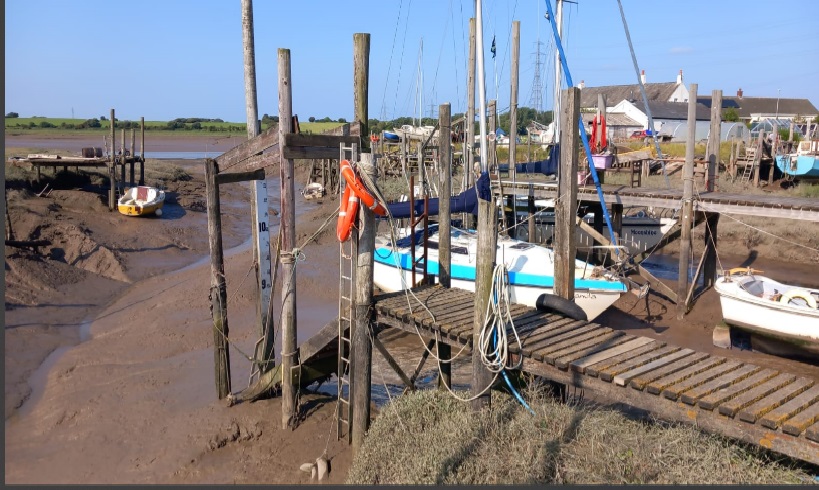
Winter days can be bleak and miserable, but when high pressure comes to dominate there is not a better time of the year for great quirky English scenery, and the best is surely to be found right in our WMYC boat yard. And don’t’ take my word for it, check out the number of people parked at the top of our Creek carrying expensive Nikons, Olympus OM1s’ and the like.
Note: the following photos are auto-sized so should be explorable by zooming-in.
Above: Norman Igrams’s Sika. One of many Wardley’s boats that have been all over the Irish sea and some. Norman was on his boat today making all and sundry cups of tea, and keeping everyone at a good 2 meters safe distance.
Looking down the creek toward the Wyre. Galadriel can be seen floating and showing off her sea kindly curves. Today the tide crept in at 13:36, lifting most boats but not all boats, and then crept away again whence it came.
Above: John Jacques’ ‘Barn Dancer’. She’s a supremely capable Marcon Sabre 27 that will take you anywhere you want. John is also a keen Drascombe Dabber sailor whose vanished mast can be seen rising yonder from a nearby mud berth.
Above: A closer look at ‘Barn Dancer’s well organised but simple cockpit. A nice generous centrally positioned ladder makes her easy to get on and off when dried out at Piel. Let’s hope that she gets a good run of sea miles in 2021, with her top notch Skipper at the helm.
Above: Barry’s de facto country cottage’s derriere. The most magnificent of all derrieres at the club. This great boat can be often seen in Douglas Harbour IoM, sometimes perched against the wall, affording her long standing WMYC skipper a better location-location-location ascetic than most country cottages you will see around.
This is Tom’s slim and sleek ‘Thunderball’. A Westerly 25 triple keeler. She’s a shallow daft go anywhere boat that is just as happy sailing out in an F7 wind as she is plonked on the mud a short distance from a waterside pub awaiting the return of her WMYC skipper. There are some good YouTube video clips of ‘Thunderball’ out in Morecambe Bay revelling in choppy seas. She is a solid a boat to be sure.
Above: ‘Peter Duck‘ is a WMYC modified Sailfish 18 with additional glassed in concrete ballast and a keel suspended from an open steel frame as opposed to the original enclosed glass fibre moulding. She’s amassed a record of fifty four Morecambe Bay crossings in all weather, and has explored the upper reaches of Morecambe Bay like no other boat in the yard.
WMYC member Billy’s Annabelle. And what a boat! She has a classic semi-planning hull. And a classic sea going boat’s bow for punching safely though seas at displacement speeds and a wide flat stern enabling her to rise up on the plane at 20knots when sea conditions permit. And all from a super economical 45hp Honda outboard. You could say she has the best of both worlds. And as for the comfort afforded by her superstructure, need I say more…
Above: ‘Wispering Wind’ Is a forty foot, go anywhere in the world, deep keel, ocean yacht. She is still under construction, requiring her two junk rig masts erecting and her cabin interior fitting out. After that she will be heading straight off to warm exotic places, such that are not obtainable in our beloved Morecambe Bay. And in doing so, long sought after sailing dreams will become a reality, and I dare say by proxy, also enjoyed by the greater WMYC community. Good luck on ya John, and do keep in touch once you’re gone.
Above: Here’s a eclectic photo of a the happy band of WMYC club boats across the creek.
There is just a little bit of telephoto to squash together all what we like.
And that is, comfortably inland where life is pastural and song birds sing, but not far from seaborn adventure where the waves crash and the seabirds shriek.
Above: And finally a photo of Steve Adams, Norman Igram, and Jim Preston all in covid-19 camouflage. As can be seen, WMYC sailors are as safety conscious on land as they are on the sea.
A friendly base for Yacht Cruising on Morecambe Bay