Tag Archives: Sailing Morecambe Bay

Wardley’s Sailor’s 2025 cruise to the Kyles of Bute

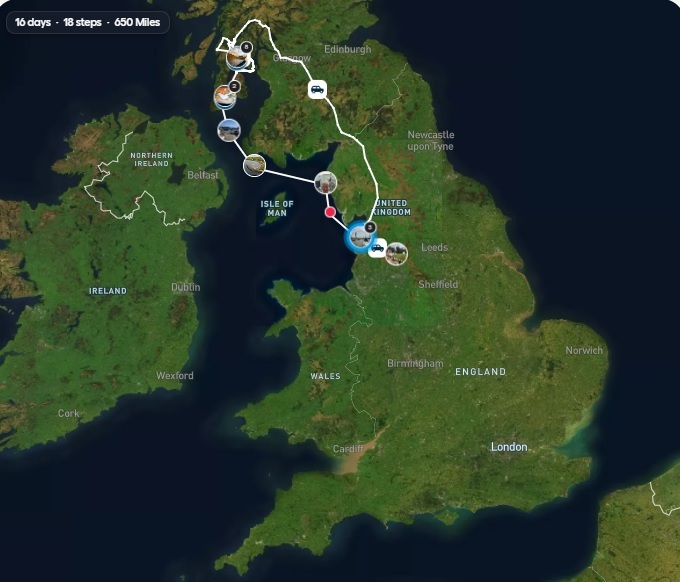
Jamila’s summer cruise took us across the Irish Sea, with the wind pushing north toward Scotland. I hadn’t sailed those waters in years, and knowing that two weeks wouldn’t be enough for a truly relaxed trip, I chose to go slow. The plan was to find a mooring at the end of the holiday and return in September to sail her home.

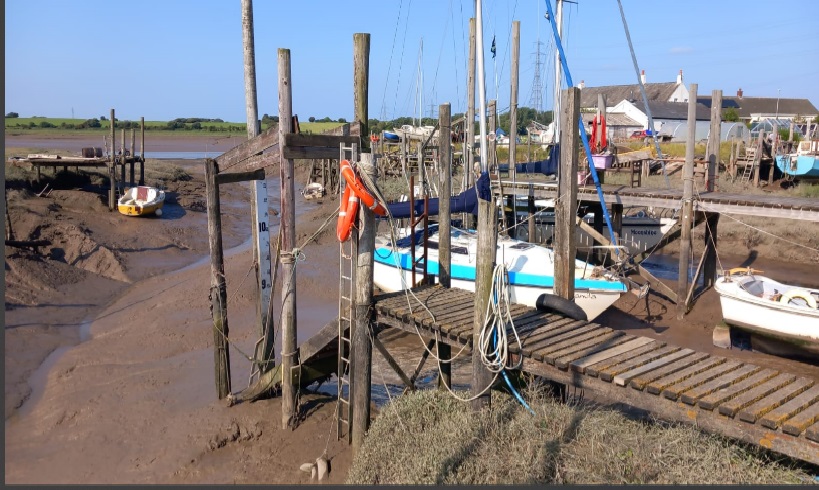
Jamila getting ready

Loading all the supplies onto the boat was a considerable task. I had kit, tools, heating fuel, food, drinks, medical supplies, entertainment, and plenty of diesel. As always, there were items I completely forgot or, even more foolishly, things I had thought of and prepared but had left behind. I finally said farewell and pushed off shortly before an astronomically low spring tide, allowing some leeway to free the keel if I got stuck leaving the creek..

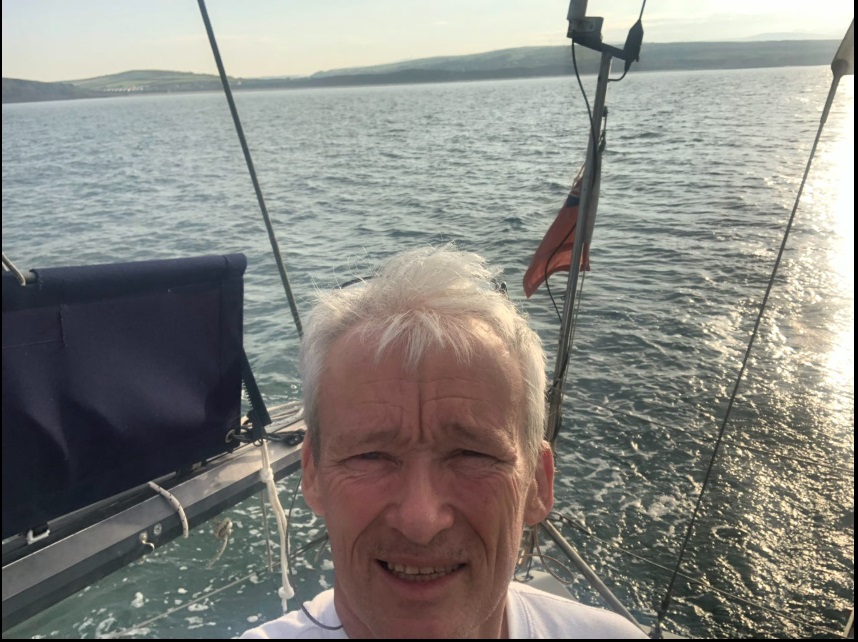
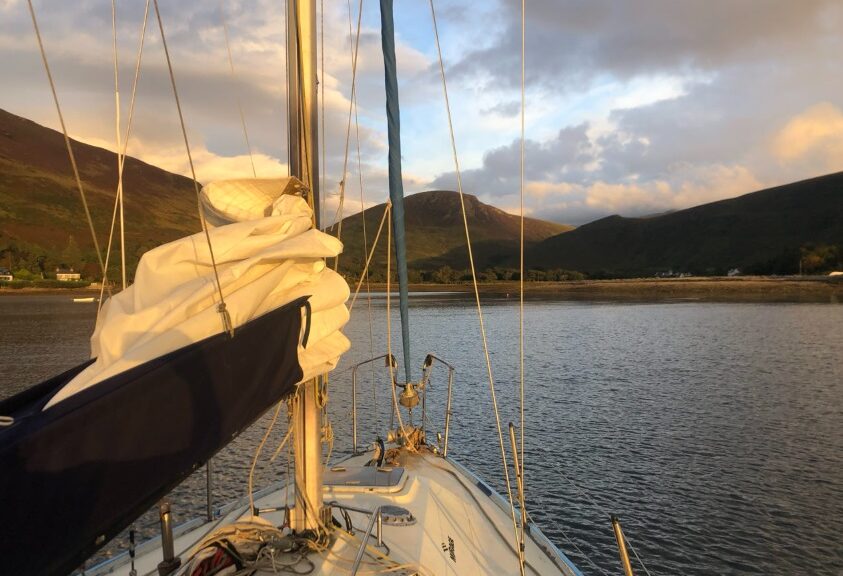
The journey was a lengthy motor sail along the beautiful Cumbrian coast, where I stayed close to the shore to fully appreciate my surroundings. I loved the experience, enjoying the views of serene bays, hidden beaches, and charming coastal towns that dotted the landscape. The wind was almost nonexistent, with only gentle cat’s-paws shimmering on the surface of the sea coming from the east. This eased any anxieties I had about anchoring in exposed waters, a necessity that would inevitably arise as the daylight and my energy began to fade. As night fell, I continued sailing for a while, spending a good hour perched on the bow and scanning the darkening waters for the telltale buoys of lobster pots. The distant sparkle of lights from the seaside villages twinkled like stars against the shore.
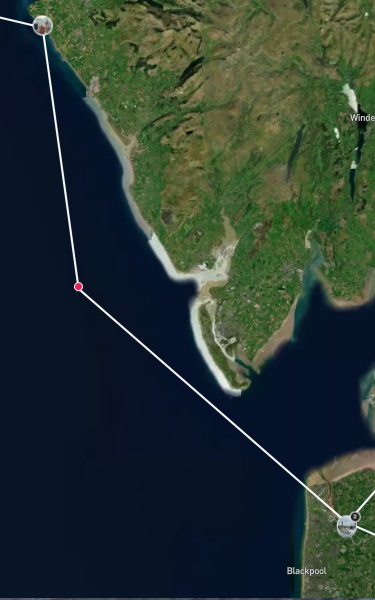
A sunrise start, Port Logan about a mile behind.

I anchored in the bay of St Bees, and it caught on the first try, holding steady all night. The night was calm and beautiful, and I slept soundly. At 6 a.m., I woke to a quiet scene with little happening around the beach. Thirty years earlier, I had arrived one morning and set off on Wainwright’s Coast to Coast walk.

I left St. Bees and headed northwest, passing the Isle of Man on my left and Luce Bay on my right. Before long, the Mull of Galloway appeared on the horizon. With a favourable tide, my boat, Jamila, surged ahead, at times reaching speeds of 8 knots toward the looming cliffs, only to slow to 2 knots due to back eddies. About an hour later, while continuing along the Scottish coast.

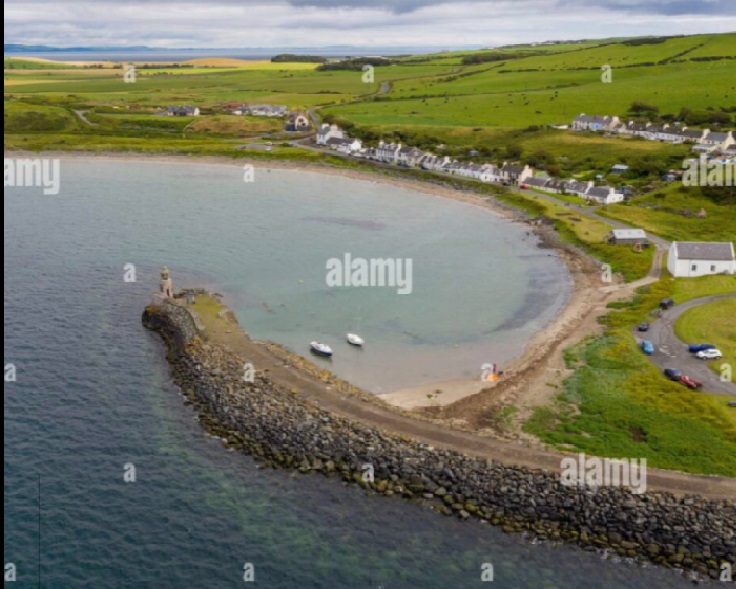
An hour before dark, I arrived at Port Logan Bay. It was a wide bay with white sands, a welcoming spot that provided good shelter from the easterly wind. Eventually, I found the perfect place to drop anchor.
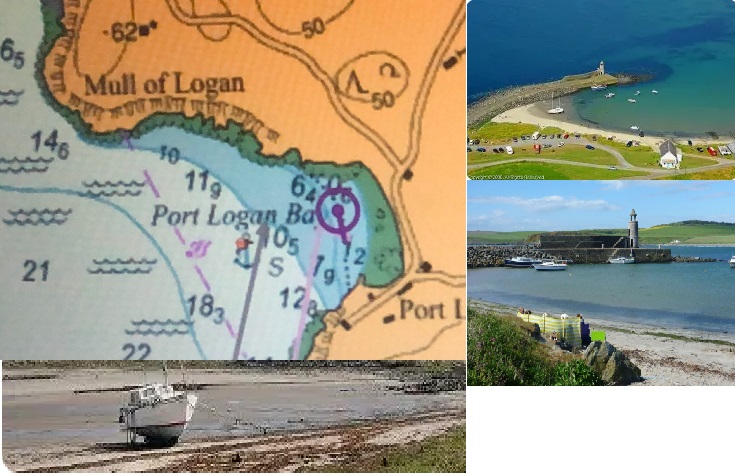
The perfect spot was close inshore, where I could immerse myself in the vibrant scene unfolding before me. The ‘getting a bit shallow’ at low tide wasn’t a worry as there was little swell, and what wind there was came off the land. My two bilge keels and their bolts would get an easy time!

Small boats bobbed gently on the shimmering water, while colourful canoes and lively inflatables wove in and out among them. Fathers and sons, boyfriends and girlfriends, laughter and chatter filled the air as young couples shared tender moments, capturing memories that would linger in their hearts long after the day ended. The sun sparkled on the water’s surface, adding a magical glow to the atmosphere, making each interaction feel truly special.
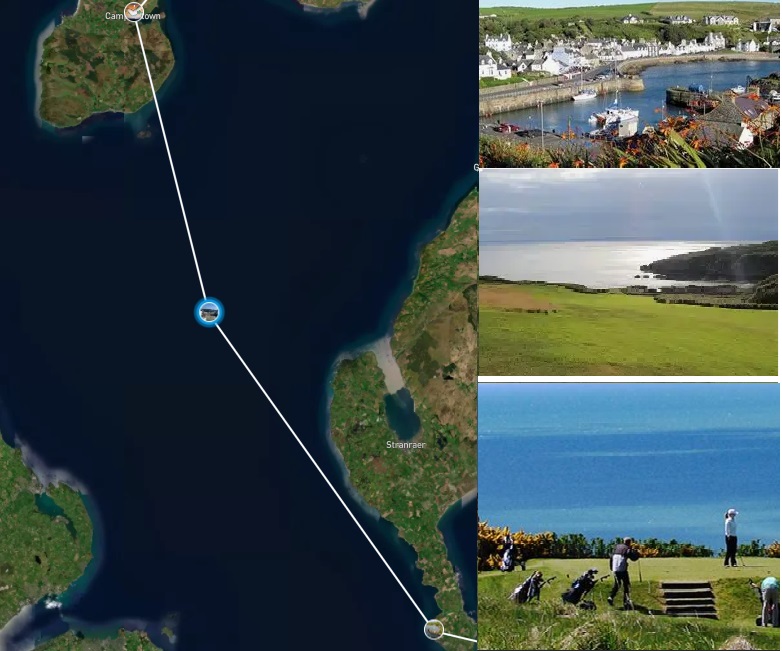
The next leg of the journey was up the North Channel as far as Campbeltown, which is tucked in behind the Mull of Kintyre. A bit of history: during World War II, the North Channel served as the final stage for crucial convoys travelling from the United States, and many sailors felt a palpable sense of elation after surviving the crossing. For Jamila, it was a calm departure from Port Logan. However, as I passed Port Patrick, the wind picked up, and by the time I entered the Firth of Clyde, conditions had changed.
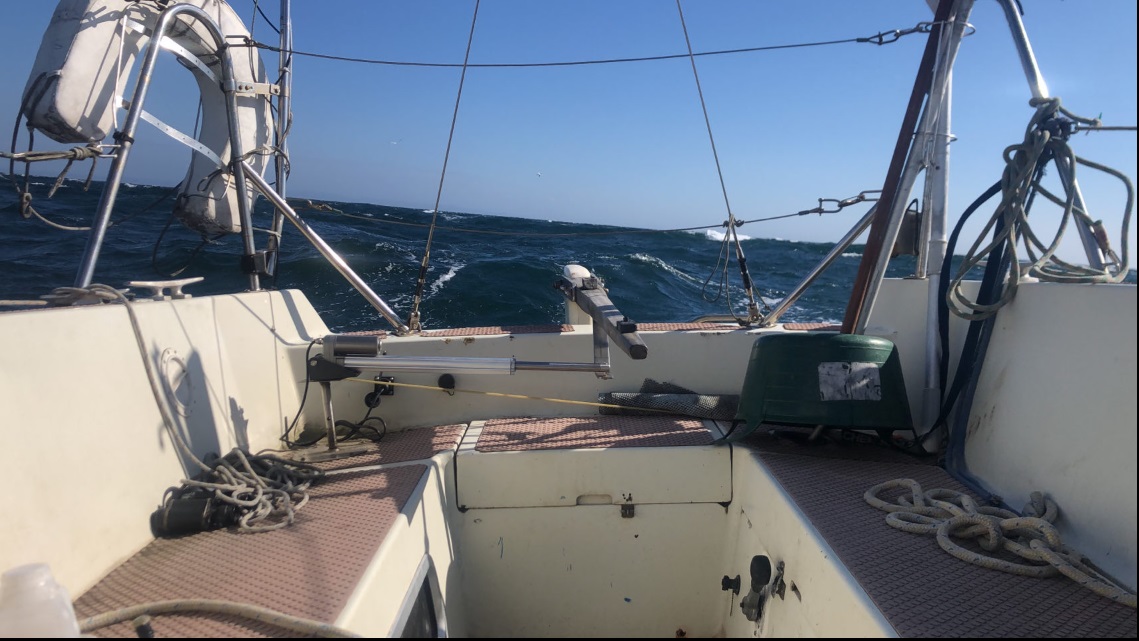
This was the first part of the trip to experience strong winds. Hitherto, the two preceding passages were in light winds, motor sailing to maintain sensible arrival times.
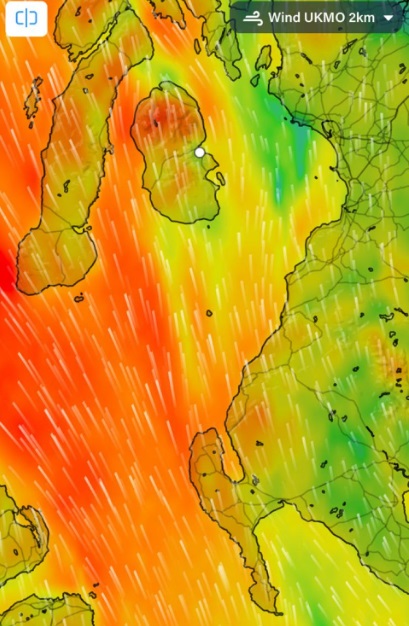
Strong southerly winds, two deep reefs in the mainsail, and enough jib to balance things out.
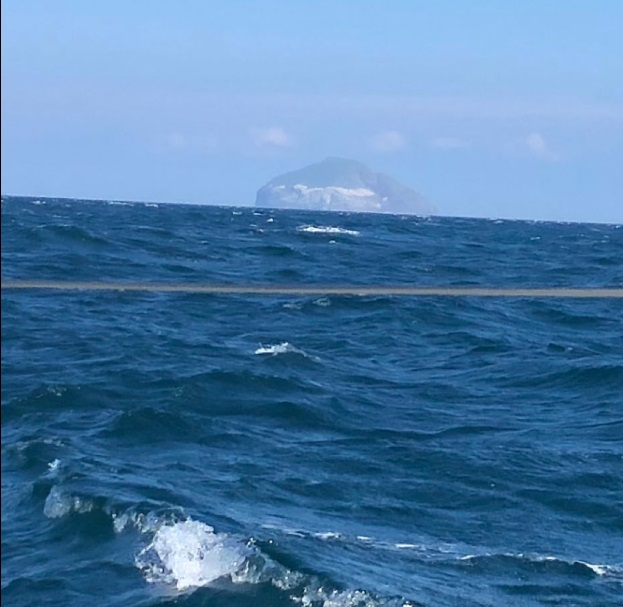
One of the greatest delights of this passage was the breathtaking view of Ailsa Craig, a striking rocky island that majestically guards the entrance to the Firth of Clyde. This solitary island, adorned with a lush canopy of vibrant trees, evokes an aura more reminiscent of a tropical paradise than its Scottish surroundings. Its rugged cliffs rise dramatically from the dark blue waters, suggesting the whispers of hidden treasures buried somewhere within its mysterious embrace. One can’t help but imagine that this enchanting island holds countless secrets waiting to be discovered.

Campbeltown

After an excessively windy sail down the east side of Kintyre, I was relieved to find myself in the sheltered waters near the large island that guards the entrance. I managed to reach someone on the VHF radio and located the first suitable finger pontoon, where I tied up with the help of another sailor. The sunny blue sky, which had been quite windy, changed overnight. In the morning, Campbeltown appeared gloomy, leaving me feeling down and reluctant to do anything—an anticlimactic moment. However, my spirits lifted when the sun came out later in the day. I was able to buy twenty litres of 30/70 diesel and some other supplies before leaving Campbeltown for a relatively short passage along the west side of Arran to Lochranza.

I enjoyed a remarkable sailing journey down from Campbeltown. Shortly after departing the marina, I hoisted my creamy white sails and swiftly navigated past the imposing island that stands guard at the entrance. The wind, a robust F4/F5 blowing from the southwest, propelled me forward with enthusiasm. As I set my course northward, with the rugged Kintyre peninsula to my port side and the picturesque Isle of Arran to starboard, I found myself with four hours of uninterrupted sailing. This was the perfect opportunity to delve into the settings of my new Tiller Pilot and juxtapose its performance with my less-than-reliable in heavy weather, Simrad autopilot. The results of my comparisons were quite intriguing. I discovered that the Pelagic Tiller Pilot outperforms the Simrad when a firmer hand is required to maintain course; translate: it works whenever. However, the Simrad truly shines when it comes to making lighter adjustments; it appears to have an inherent ability to recognise cyclical movements in the wind and sea. This means it understands when only a gentle nudge is needed to keep the vessel on track, ensuring a smoother, more comfortable ride.
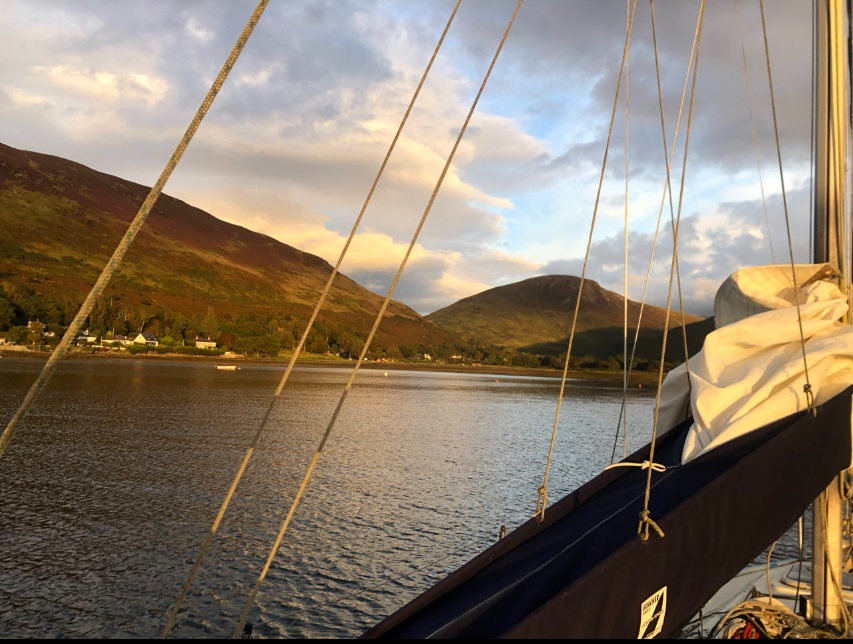
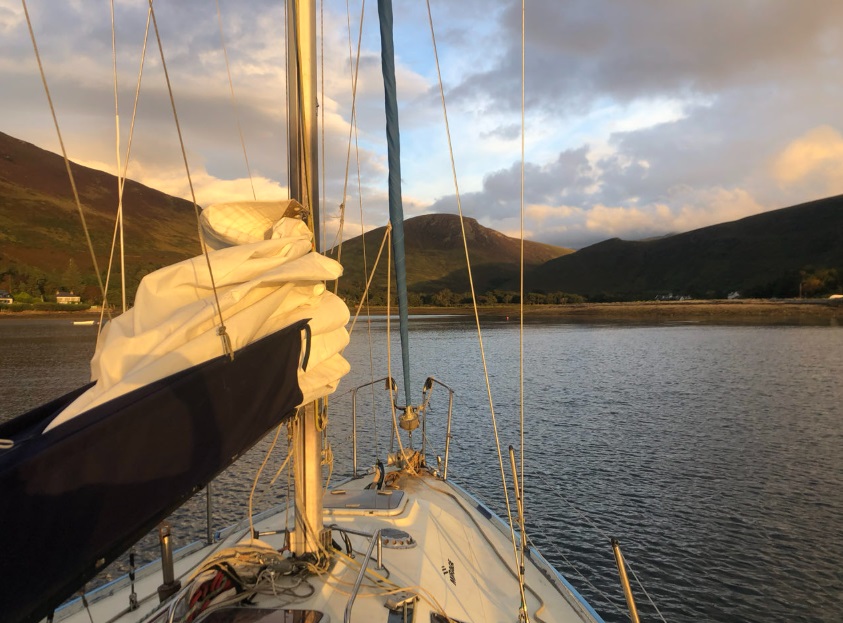
I went ashore and embarked on the scenic Cock of Arran route, which offers stunning views of the coastline. Along my journey, I came across a remarkable geological landmark that holds great historical significance. Nearly 300 years ago, the Scottish geologist James Hutton conducted groundbreaking research here, identifying unconformities in the rock layers that revealed gaps in the geological record. His meticulous observations and analyses led him to propose that the Earth is not merely thousands of years old, as commonly believed based on biblical interpretations, but rather billions of years old. This revolutionary idea challenged the prevailing notions of his time and laid the foundation for modern geology, marking a pivotal moment in our understanding of the planet’s history.
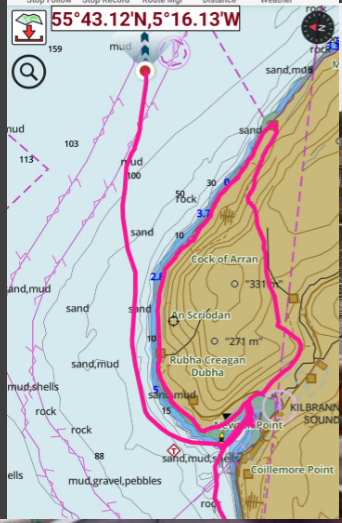
The above image shows my comings and goings, my anchorage and my walk around the ancient rock formations. I came back over the hill, which was extremely challenging, very steep, with thick heather.
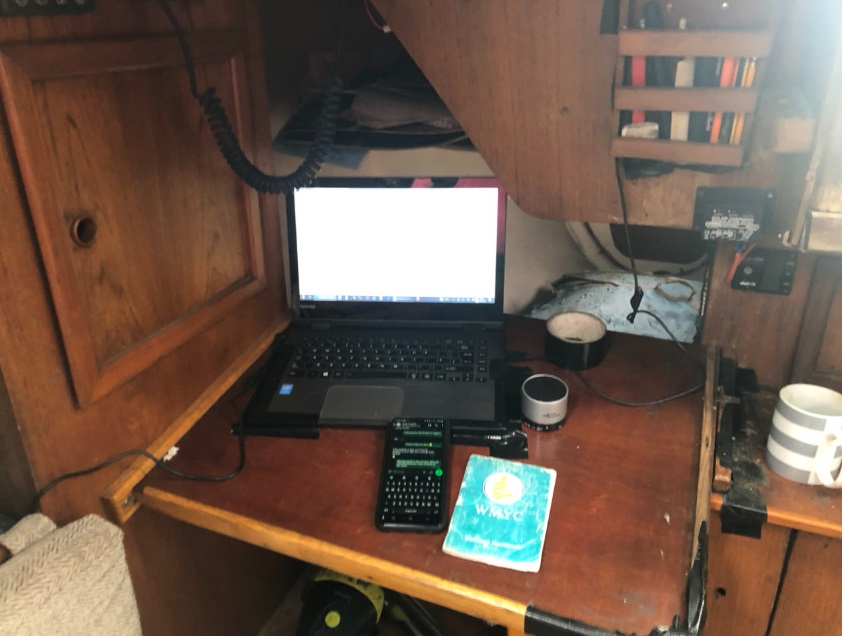
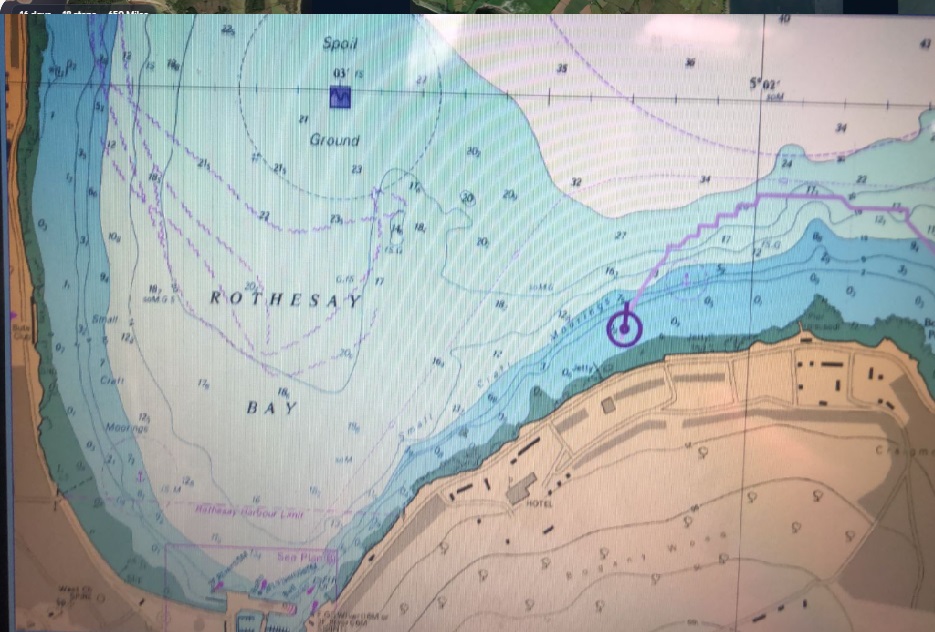
Jamila has an eclectic mix of three chartplotters, eliminating the need for paper charts and traditional RYA coastal skipper navigation skills. The first is a Windows laptop that runs a raster plotter, equipped with all the Admiralty charts for Great Britain. The second is a modern Android smartphone that features vector charts for the Irish Sea and the west coast of Scotland. Additionally, there is an older Garmin plotter from 2012, which is out of sight. All three chartplotters provide accurate positioning within ten meters. Ironically, the software and processors used in billion-dollar satellites orbiting in space are from an older generation.

Rothesay, Kyles of Bute
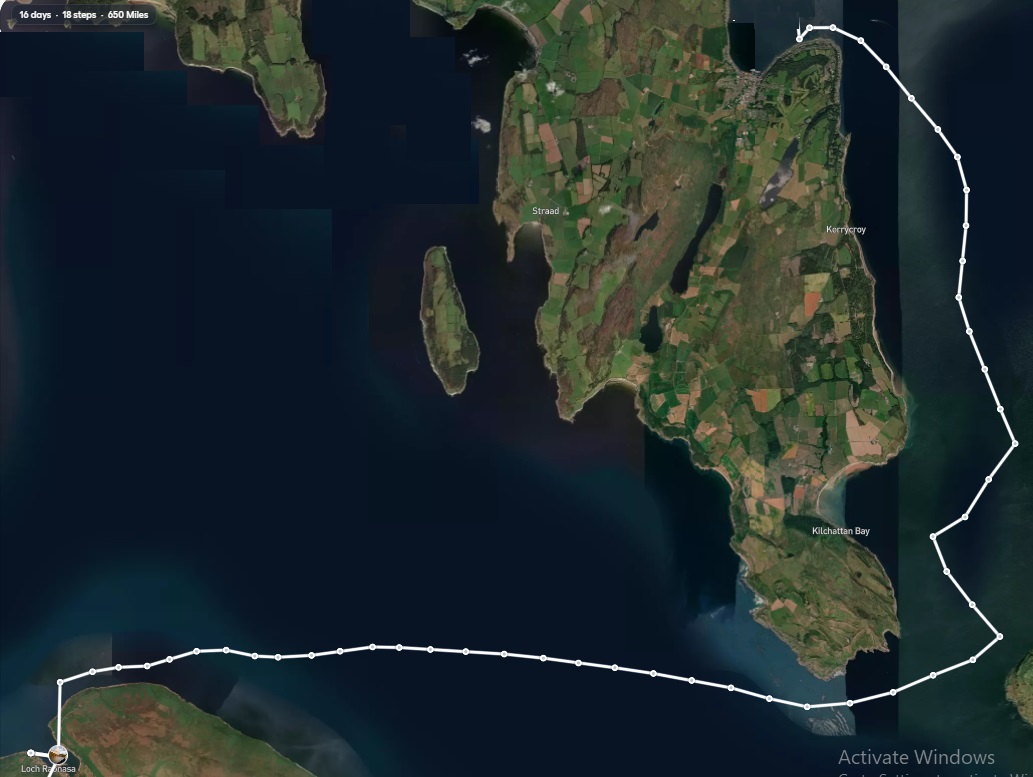
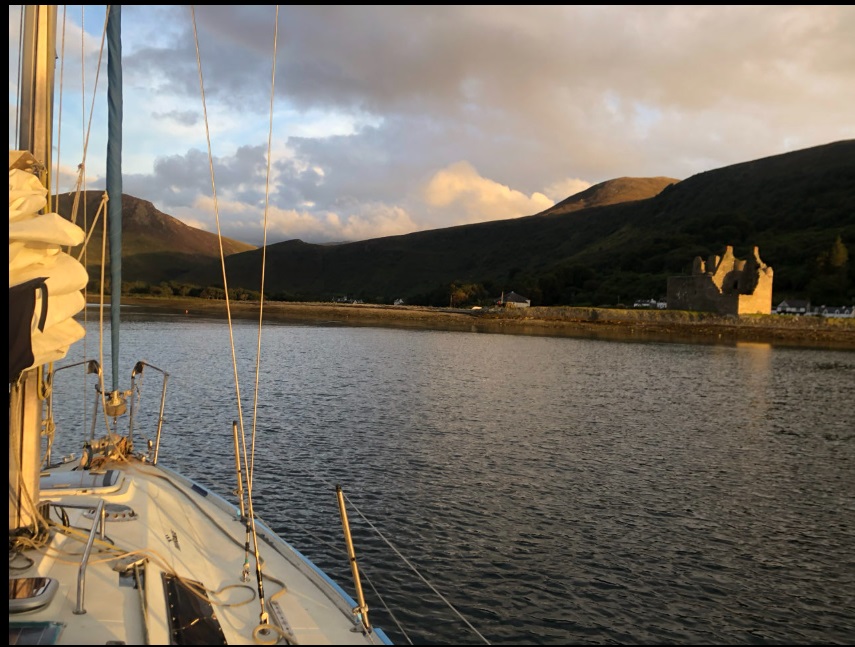
I am now sailing in awe-inspiring scenery. The weather has been favourable, allowing for a broad reach across the head of the Isle of Arran, followed by four tacks—a couple to starboard and then a couple to port—into Rothesay Bay.
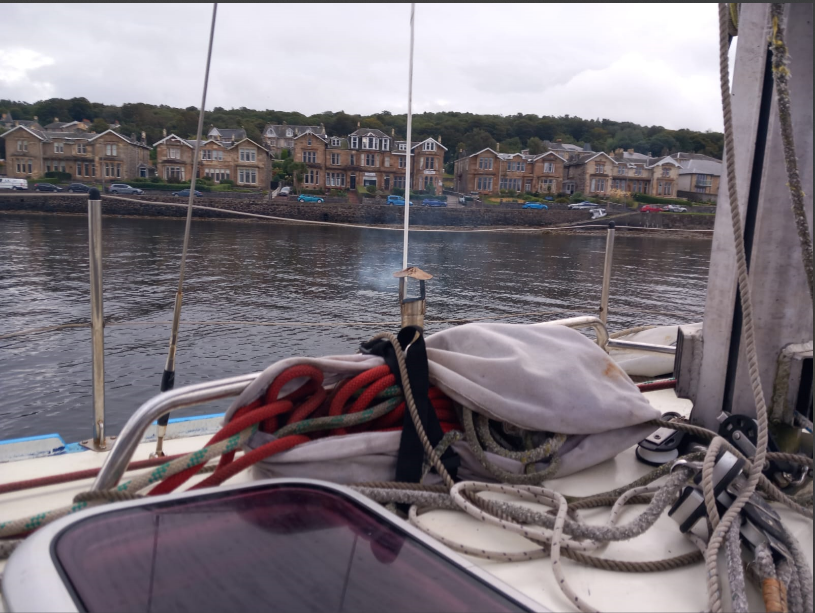
There are many beautifully solid stone houses along the seafront, built by successful Glaswegians during the heyday of the world’s first industrial revolution.

To be continued…

Preparations for Crane-In 2025 are underway. (Sunday 27th April)

It is that time of year again, dear members. The clocks have advanced, casting longer shadows as daylight stretches wide. In their fleeting splendour, the daffodils have danced upon the breeze and now, in retreat, remind us of nature’s inspiring beauty. As the weather whispers promises of warmth, we find ourselves at the start of another summer season, filled with promise and possibility.

In the enchanting enclave of our club, a vibrant array of yachts stirs to life, marking the arrival of a new season. This remarkable transformation is the result of tireless dedication from our club members. Fresh coats of antifouling glisten in the sunlight, while the beautifully oiled wooden gunwales ripple with elegance. The superstructures, expertly jet-washed, stand proudly in their renewed splendour. Above, innovative electronic aerial wind speed devices emerge from the mastheads, accompanied by the sturdy overhead stainless steel structures on cockpits, all contributing to this magnificent tapestry of club life (not to mention the chatter, ribaldry, cups of tea and bacon sandwiches). It is a sight to behold—a testament to the passion and commitment.

The annual general meeting is now firmly behind us, and I am pleased to report that it was a resounding success. All members agreed on the path and the election of club officers to navigate the way forward. I am delighted to announce, at least for the first time here on the website, that Terry Hindmarsh will take on the role of Commodore, a position of great responsibility as we look to the future. Let us also take a moment to extend our gratitude to our departing Commodore, Phil Walker, who has shown immense dedication and resilience, steering the club through tough times in recent years. Together, we stand ready to embrace the challenges ahead with renewed vigour and daring do.

I invite you to examine the following photos, vividly illustrating the tireless dedication invested in preparing the club for Crane-In. Additionally, some poignant images serve as a sobering reminder that, sometimes, good things come to an end.

Mud Creek sailing habitats, notably our esteemed Wardleys Marine Yacht Club, are not a gift from Mother Nature to the people of the Fylde Coast but instead a testament to the unwavering dedication and tireless efforts of a small group of passionate enthusiasts with high-pressure, high-maintenance petrol pump-powered hoses. (on this day: Johns B&G. Nick. M, Andy. S, Terry. S) Their commitment over many years has transformed this landscape, fostering a vibrant sailing community that thrives despite the challenges posed by the elements. Here, we are pumping out our No. 1 berth ready for the big day.

Allow me to introduce you to John Gorse and John Bradbury, two exemplary club stalwarts. Whenever an initiative is underway, you can be assured that these distinguished individuals are at the forefront, playing a pivotal role in guiding our collective efforts toward a good outcome. Their unwavering commitment and capability truly embody the spirit of our club.
And, behold our splendid new commodore, resplendent in all his mud creek finery, ready to roll up his sleeves and stuck into the delightful world of hosing out! Not only does he possess a commendable grasp of club affairs that would make any bureaucrat take note, but he’s also remarkably adept at wielding a high-pressure jet. Well done, Terry! Keep up the good work!
Remember that beautiful Red Dragon we craned out late last year? Although she was undoubtedly a work of art, built entirely of wood with a mix of galvanised rigging wire and Tufnell era fittings, she was unfortunately too far gone to be resurrected. We couldn’t find a wealthy benefactor willing to do her justice. Nobody had the deep pockets and facilities necessary. We reached out to various organisations, including the  Dragon Owners Association, but to no avail. In the end, she was cut up and given a Viking funeral of sorts, in the traditional WMYC way.
It was an undeniably dismal undertaking, one that inspired little enthusiasm among even the most ardent heavy machinery aficionados. There are those among us who would gleefully brandish a big boy’s powerful rotary saw, relishing the chance to carve up a wooden boat with frightening fervour. Yet, on this occasion, the atmosphere was notably lacklustre.  Deep down, we found ourselves in agreement: in her prime, she was the vessel we would most want to skipper, slicing through the chop of Morecambe Bay, under a taught white cloud of sail with a magnificent grandeur.. Ah, the dream of it!
Ashes to ashes, dust to dust. RIP, lovely Red Dragon.

First Sail to Piel, 5th and 6th February 2023, missing lady?

Wardley Marine Yacht Club sailors Malcolm and Simon collect the cup for the first sail over to Piel this year!

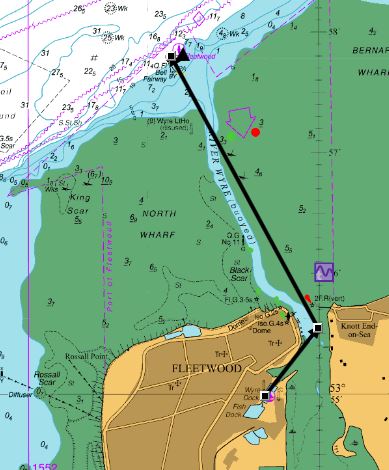
The barometer was high on this cold February Sunday morning, stopping the tide from reaching its predicted height. Come high water (11.15), Jamila was still aground in the mud. But, with her engine shuddering at full-speed astern in a pool of gurgling and bubbling water, her twin keels were begrudgingly dragged from her underwater shackles, free to go where ever she wanted. Out on the river Wyre, a significant search was taking place using helicopters and high-speed RIBs. Over the preceding week, TV news reports had beamed to the public at large an image of a woman with an attractive smile who had gone missing on the river near the upstream village of St. Michael. She had been missing for some time, and social media speculation on what might have happened was rife. Noticeably more walkers than ever could be seen treading the footpaths on both sides of the river, looking this way and that way but in particular onto the water. So, with a sense of morbid excitement, the two crew set off down the Wyre en route to Piel Island. The sea state was calm but allied with a strong outgoing tide and the iron donkey chattering down below; Jamila made her way at a steady five knots towards the mouth of the river.
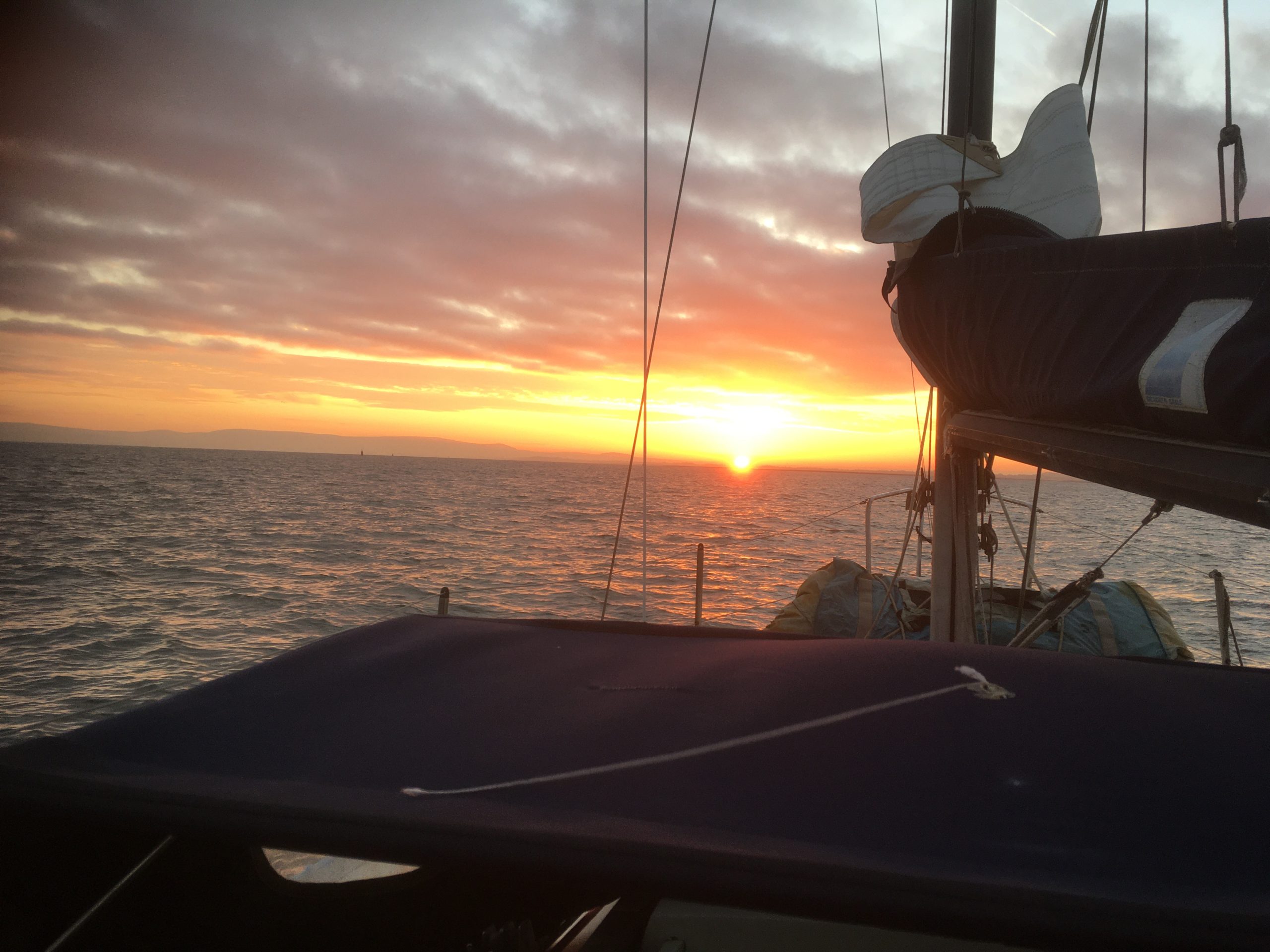
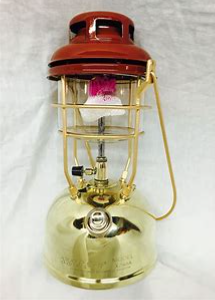
All too soon, it was four-thirty on Monday morning with the alarm ringing. We pulled ourselves into action with just a cup of tea and yoghurt, and departed thirty minutes later into a sea illuminated by a moonlit sky. Sunrise came around at about seven-thirty; see the photo above. Bacon, baked beans and crusty thick brown bread and butter were eaten on the move whilst crossing Mort Bank. All progress was made under engine as there was little wind, and handling the cold ropes and sails would have been hard on the hands. Feeling a bit soft and vulnerable vis-a-vis the elements at this time of the year, we maintained the stove and tilly lamp stoked with fuel, which served well on the voyage back, where crew and skipper could take turns in the cabin keeping warming.
Tilly Lamp
We duly arrived at Knott End-on-Sea and picked up a buoy near the golf course at 8:30 am. High tide was predicted at 11.30, thus a two-hour wait imposed by mother nature before going up the river. All went nicely whilst navigating the last of the flood tide. After entering Wardley’screek, the skipper positioned Jamila perfectly by the jetty and was duly complemented by the crew. In fact, it was the mud that should take the glory, for it was the mud that stopped the boat perfectly on station, so that the ropes could be tied easily and at our leisure. As soon as the docking chores were completed, the crew took off rather too quickly, but a little later, the skipper was pleasantly surprised by a deliciously served luncheon of clubhouse-cooked cheese-on-toast. Capital stuff!

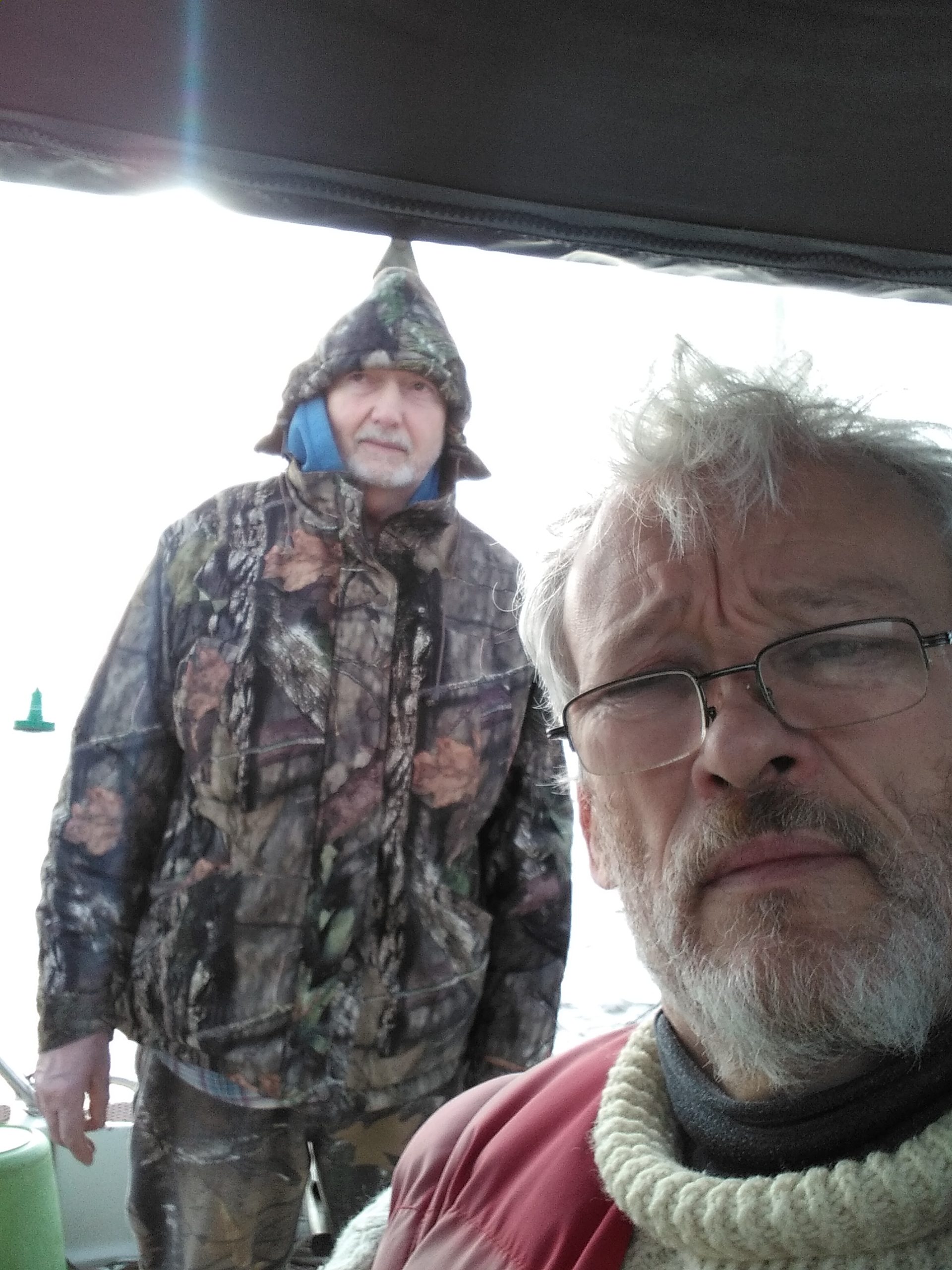
In conclusion, we both had a jolly good time sailing to Piel Island and back, stayed warm and dry, met up with some pals, fed well, drank some wine and ale, and had no mishaps along the way. Job done I’d say!

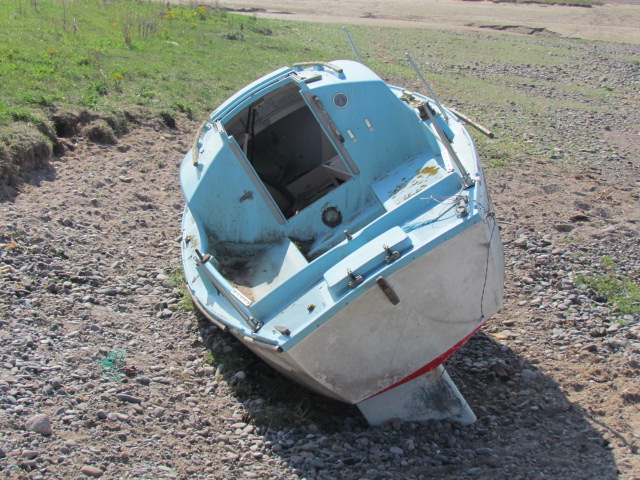
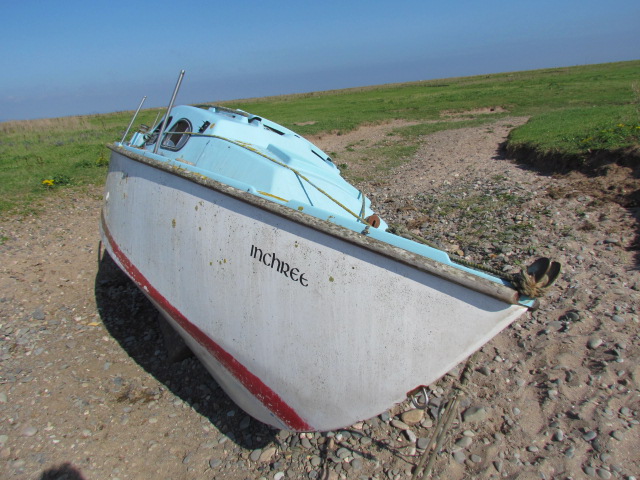
The boat called ‘Inchree’ – September 2019

It is so sad to see once well  founded boats left neglected and abandoned. But then again our boat builders need a steady stream of new orders to support the livelihood of themselves and their families. So maybe  we should just accept that there will always be the boats of summer-day past, the boats of summer-day present, and the boats of summer-day  future.  Let us just remember the old and discarded as fondly as we can.

The stretch of tidal water called Bass Pool on the south side of Piel Island has been a focal point for WMYC sailors in 2019.  Abandoned over looking the castle, as high up as can be carried by the tide, where the sand and  seaweed give way to grass, lies a boat called ‘Inchree’.


Inchree’s view over Bass Pool and Piel Island beyond


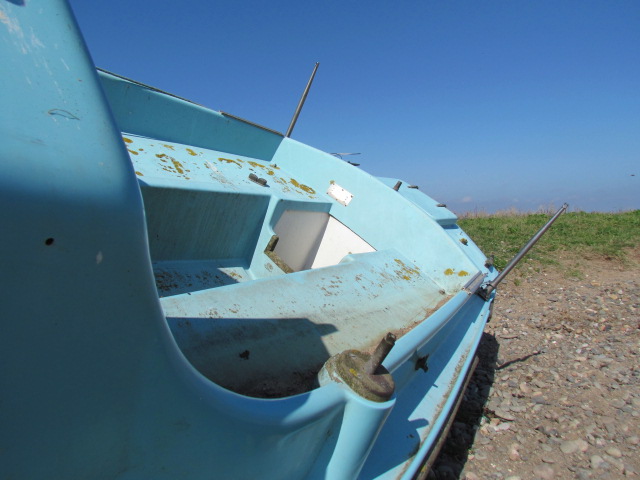
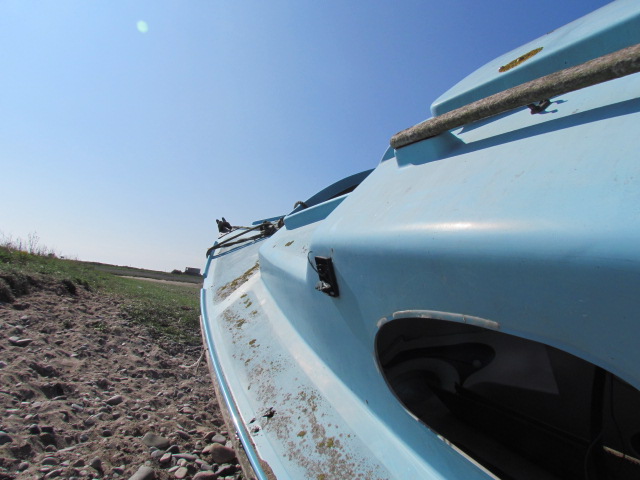
Inchree has lost her bilge keels but still retains her big central block of pig iron. In her day, to keep the crew secure, stanchions once surrounded the boat, but only three now remain. The guardrail wire has long since corroded away.


She’s so slim!  But that is how boats had to be in the 50s and 60s. They had to be able to sail to windward. The idea of relying on the superbly reliable power of a modern engine was never fully factored into the equation.


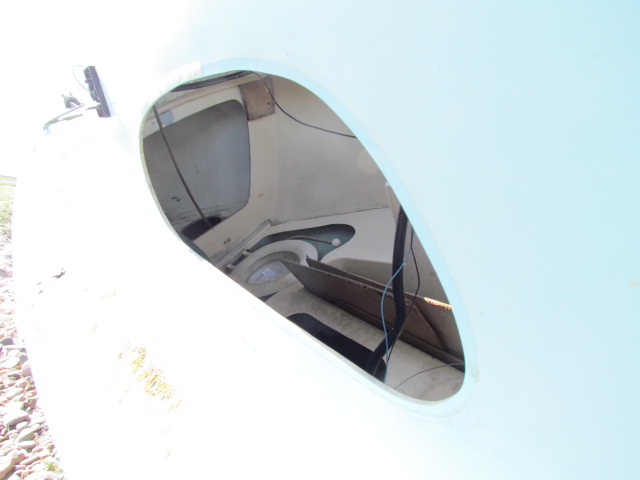
Nevertheless she was equipped with an engine well that would take a small  3hp to get her home in a flat calm. Her owner wouldn’t need to hang over the stern in a seaway to operate the outboard. As can be seen, the port winch has succumbed to the passing years and is missing, but hidden from view, her starboard twin is still there and can be turned by hand, albeit with difficulty..


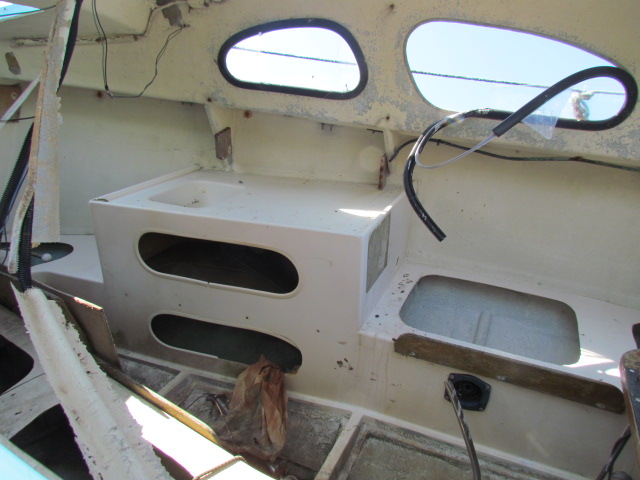
‘Inchree’s cabin by modern standards is very compact. Perhaps in the days before the cheap high calorie modern diet we didn’t need so much room to move about. Still, a quick glance is evidence alone that the designer thought long and hard to ensure the most convenient internal arrangement.


As already said, she had been well thought out. She possessed every convenience that was required in her time.. All members of the family were sure to want to come along and join the adventure.


Look at this photograph. With a bit of imagination one can imagine the water surging asunder, and possibly feel ‘Inchree’s bow rising and falling on the passing peaks and troughs. And maybe see a young child, proud of his father at the helm, peering through the window feeling both safe and exhilarated by the sight of the foaming sea.


Her name can still be seen clearly inscribed upon her bow. A proud owner there once was!


Well, time to get back to the mother ship and set sail to the English seaside resort of Morecambe, which is the next port of call.


Wardley’s sailors away we go.